True Fit vs Fit Analytics
By the ZeDaq.ai team · · 7 min read
On this page
True Fit and Fit Analytics are both enterprise sizing tools that tell shoppers which size to buy, but they get there differently. True Fit leans on a large network of purchase and return data plus the shopper's own closet, while Fit Analytics asks the shopper a few questions and compares the answers with similar shoppers.
Both sell mainly to larger apparel retailers through a demo, with no public price list. If you run a smaller store and want to see the wider field, our roundup of the best virtual try-on apps for Shopify covers tools you can install yourself.
Every fact about each vendor below comes from its own website, checked November 2026. Features change often, so confirm details with each vendor before you sign.
What is the short answer for busy teams?
Here is the comparison at a glance. Each row is based only on what the vendor's live site says.
| True Fit | Fit Analytics | |
|---|---|---|
| Main sizing product | Fit guidance and an AI shopping agent | Fit Finder |
| How the shopper gets a size | Closet items, preferences and network data | Answers size and fit preference questions |
| Data behind it | Purchase, fit, keep and return outcomes | Purchase, return, body and garment data |
| Virtual try-on | Yes, on the shopper's photo | Not mentioned |
| Retailer reporting | Reporting Center | Size and body data for product development |
| Setup routes | Shopify integration, partners, MCP, API | Ready-made surfaces, customization or API |
| Public pricing | None listed | None listed |
| How to buy | Get a demo | Contact sales |
Sources: True Fit's homepage and Fit Analytics' Fit Finder page, checked November 2026.
How does True Fit build a size recommendation?
True Fit bases its guidance on what happened after past purchases. Its site says it draws on "20 years of real purchase-and-return outcomes across apparel and footwear", according to True Fit's website.
It then layers personal signals on top. The site lists items in the shopper's closet, fit-related reviews and preferences such as a looser or more tailored fit. Guidance can be general ("this style runs small") or personal to the shopper.
What else does True Fit offer?
True Fit has widened beyond a size button. Its site lists:
- An agentic AI shopping agent that answers size and fit questions on product pages, category pages, search and the homepage.
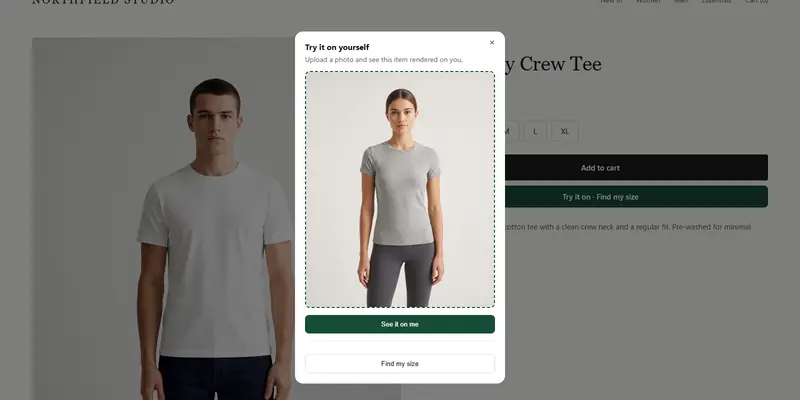
- Virtual try-on, which shows the style on the shopper's own photo next to fit guidance.
- Fit intelligence through MCP. MCP (Model Context Protocol) is a standard way to plug data into AI assistants, so a retailer's own AI tools can query True Fit's fit data.
- A Reporting Center with reports such as Size Sampling, Fit Consistency and Top Closet Brands.
- A delivery offering that attaches size and fit data to orders for couriers and marketplaces.
On platforms, the site mentions a Shopify integration, Shopify Plus Certified status, technology partners, webhooks and a Partner API.
How does Fit Analytics build a size recommendation?
Fit Analytics' main sizing product is Fit Finder. The shopper answers a short set of size and fit preference questions. Fit Finder then uses machine learning to compare those answers with similar shoppers and returns a size and fit suggestion, as described on the Fit Finder product page.
The site says the system is learned from real purchase outcomes. Its homepage describes "a decade's worth of purchase, return, body, and garment data" in one system.
A few practical details stand out:
- No shopper account. The site says shoppers don't need to sign up to use Fit Finder.
- Fit Cues. On eligible products, a size hint appears before the shopper asks for one.
- Size systems and languages. It supports major regional systems such as EU, UK and US, and lists 49 languages on the Fit Finder page.
- Retailer data. Retailers get size and body-related data to use in product development.
What else does Fit Analytics offer?
The Fit Analytics homepage also lists an AI Shopping Assistant that helps with size, style, budget and context. For setup, it offers ready-to-deploy surfaces, customization of key parts, or bespoke journeys through an API.
Where do the two tools really differ?
The biggest difference is where the shopper's information comes from.
Starting point. True Fit can start from brands and items the shopper already owns. Fit Analytics starts from the shopper's answers to its questions.
Scope. True Fit now pairs sizing with virtual try-on and an AI agent. Fit Analytics pairs Fit Finder with an AI shopping assistant for size, style and budget questions.
AI plumbing. True Fit offers its data to a retailer's AI stack through MCP. Fit Analytics offers an API for custom journeys.
Merchandising data. Both feed data back to the retailer. True Fit packages it as named reports. Fit Analytics describes size and body data for product teams.
Shopper effort. Closet-based guidance draws on items the shopper already owns. A question flow asks the shopper about their size and how they like clothes to fit. Think about which your shoppers will find easier on a phone.
Each approach has a weak spot worth testing. A closet step has less to work with when the shopper owns no well-known reference item. A question flow depends on how well the shopper knows their own body. A good demo should show you what each tool does in those cases.
Neither vendor publishes prices. That usually means a sales process, a contract and an integration project, which suits teams with a developer or agency on hand.
If neither fits your stage, see our guide to Fit Analytics alternatives for fashion stores for smaller and self-serve options.
Which one should you shortlist?
Use this checklist in your demo calls. Ask both vendors the same questions so you can compare answers side by side.
- Do your shoppers already buy from well-known brands? Closet-based guidance like True Fit's depends on recognizable reference items.
- Do you want try-on in the same contract? True Fit lists virtual try-on. Fit Analytics' pages don't mention it.
- How many languages and size systems do you sell in? Ask each vendor for their list, and compare with Fit Analytics' published 49 languages.
- Who will run the integration? Ask for a timeline, the platforms each supports on your stack, and what your team must build.
- What reports do you need? Ask to see a sample report on real data, not a slide.
- What does it cost at your order volume? Neither lists a price, so get a written quote and contract terms.
For a wider look at closet-based sizing and its rivals, the guide to True Fit alternatives for fashion stores compares other approaches.
What if you're a smaller store without a sales cycle?
Enterprise sizing tools are built for retailers with large catalogs and integration teams. A smaller store often needs something it can install, set up from its own size chart and test the same day.
ZeDaq.ai takes that self-serve route. Its Find my size feature uses one photo plus the shopper's height. The measuring runs on the shopper's device, and the result is matched to your own size chart, with one chart per garment type: tops, outerwear, dresses and bottoms. If the shopper falls between two sizes, it suggests the larger one.
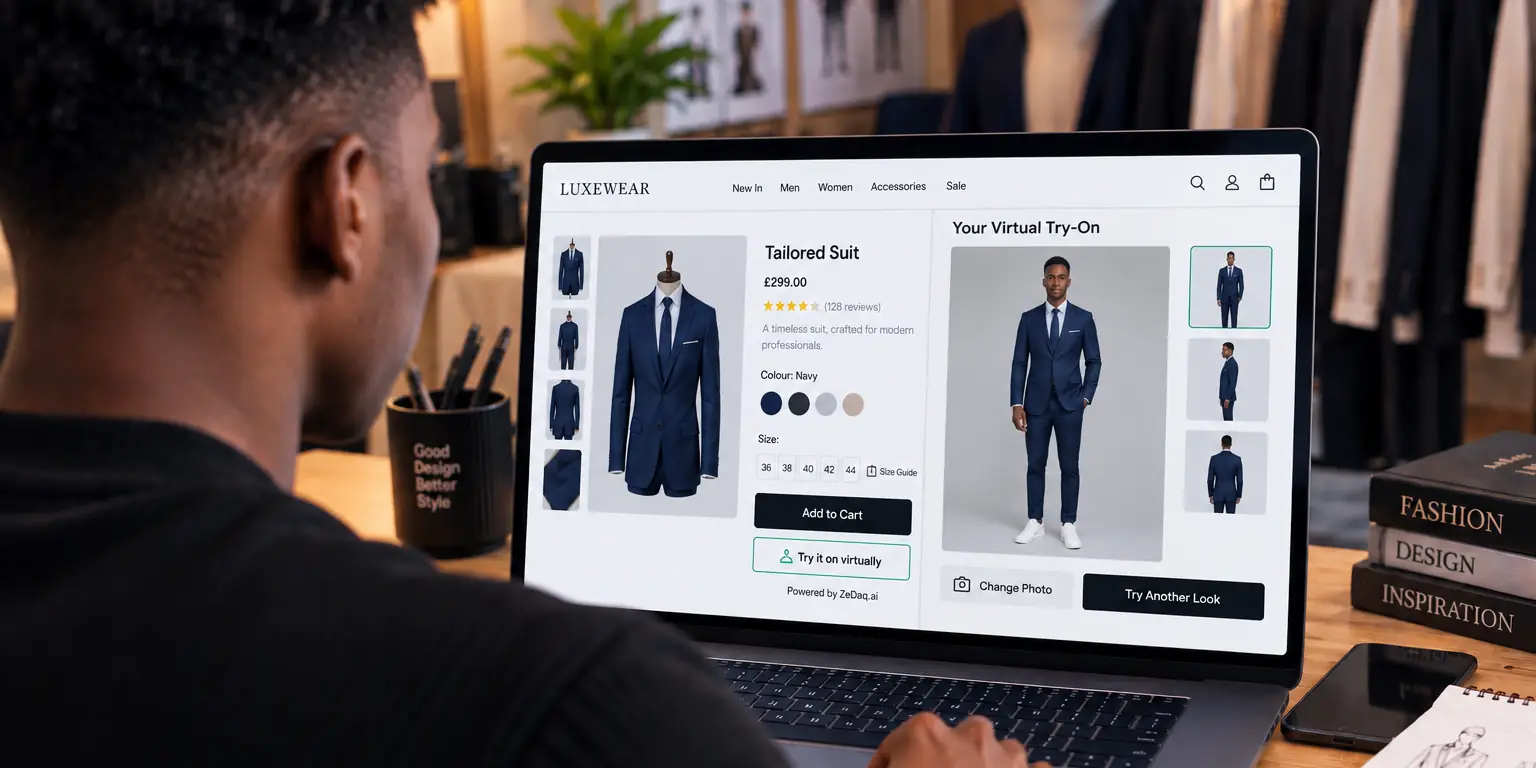
The same widget adds AI virtual try-on, so the shopper sees your real garment on their own photo. You can add it through the Shopify app, a script tag for WooCommerce, Wix, Squarespace or custom sites, or the REST API. The steps for a Shopify store are in our guide on how to add virtual try-on to Shopify.
There is a Free plan to test with, and paid plans start with Micro at $14 a month. Every paid plan has a 3-day free trial, and current limits are on the ZeDaq.ai pricing page. ZeDaq.ai is newer than both vendors above and has no App Store reviews yet, so test it on your own products before you rely on it.
Test photo-based sizing on your own size chart
FAQs
Is True Fit or Fit Analytics cheaper?
Neither vendor lists prices on its website as of November 2026. Both ask you to book a demo or contact sales, so request a written quote for your order volume.
Do shoppers need an account to use Fit Finder?
No. Fit Analytics' site says shoppers can use Fit Finder without creating an account.
Does True Fit offer virtual try-on?
Yes. True Fit's site lists virtual try-on that shows a style on the shopper's own photo, paired with its fit guidance.
Do these tools work on Shopify?
True Fit's site mentions a Shopify integration and Shopify Plus Certified status. Fit Analytics says Fit Finder integrates with any device or platform, so ask its team about your specific stack.
Can I use my own size chart with either tool?
Neither vendor's homepage explains how your own size chart is loaded. Ask each one during the demo, and ask how they handle styles that run small or large.
Try ZeDaq.ai free
Virtual try-on and Find my size for your store, plus client, order and invoicing tools for tailors, in one subscription.