Blue Light Glasses Online: Using Try-On to Sell Fashion Frames
By the ZeDaq.ai team · · 5 min read
On this page
- Why is fashion eyewear hard to sell online?
- How does live-camera try-on help?
- Which frame styles do shoppers compare most?
- What product information should you add next to the try-on?
- How should you photograph fashion frames?
- How do you write product descriptions for blue light glasses?
- How should you set up the shopper journey?
- What should you watch for with live-camera try-on?
- Can you use try-on for new collections?
- How can you tell whether try-on is working for your store?
- What does it cost to try?
- What if you sell clothes as well as frames?
To sell blue light glasses online, let shoppers see the frames on their own face with a live-camera try-on, and back it up with clear photos, frame dimensions and plain lens information. Shoppers buy these glasses partly for looks, so seeing the style on themselves matters as much as the lens.
This guide is for store owners selling fashion-led computer glasses. The same try-on approach that works in a virtual fitting room for clothing websites applies to frames, because shoppers have the same question: how will this look on me?
Why is fashion eyewear hard to sell online?
Frames are worn on the face, so shoppers cannot judge them from a product photo on a model. Common doubts include:
- Will this shape suit my face?
- Is the frame too wide or too narrow?
- Will the color look right against my skin tone?
Blue light glasses add a second layer of doubt about what the lenses do. Be careful here. Do not make health claims. If you describe the lens coating, say what the manufacturer states and stick to that.
How does live-camera try-on help?
ZeDaq.ai offers a live-camera eyewear try-on. The shopper opens the try-on on your product page, allows camera access, and sees the frame on their face as they move. They can compare several styles quickly without ordering each one.
Try the live demo with a pair of frames
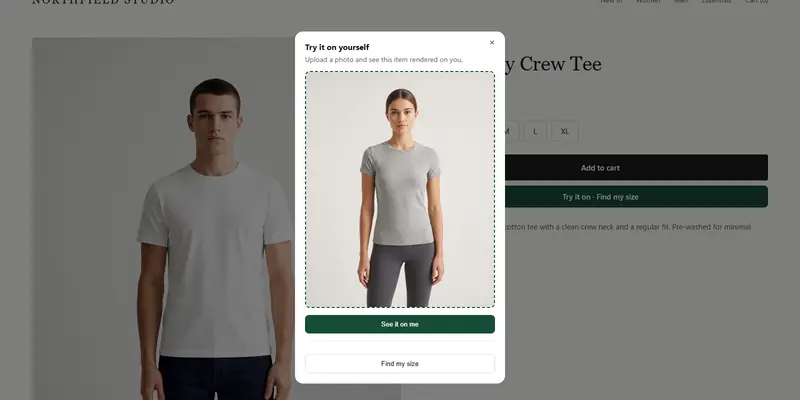
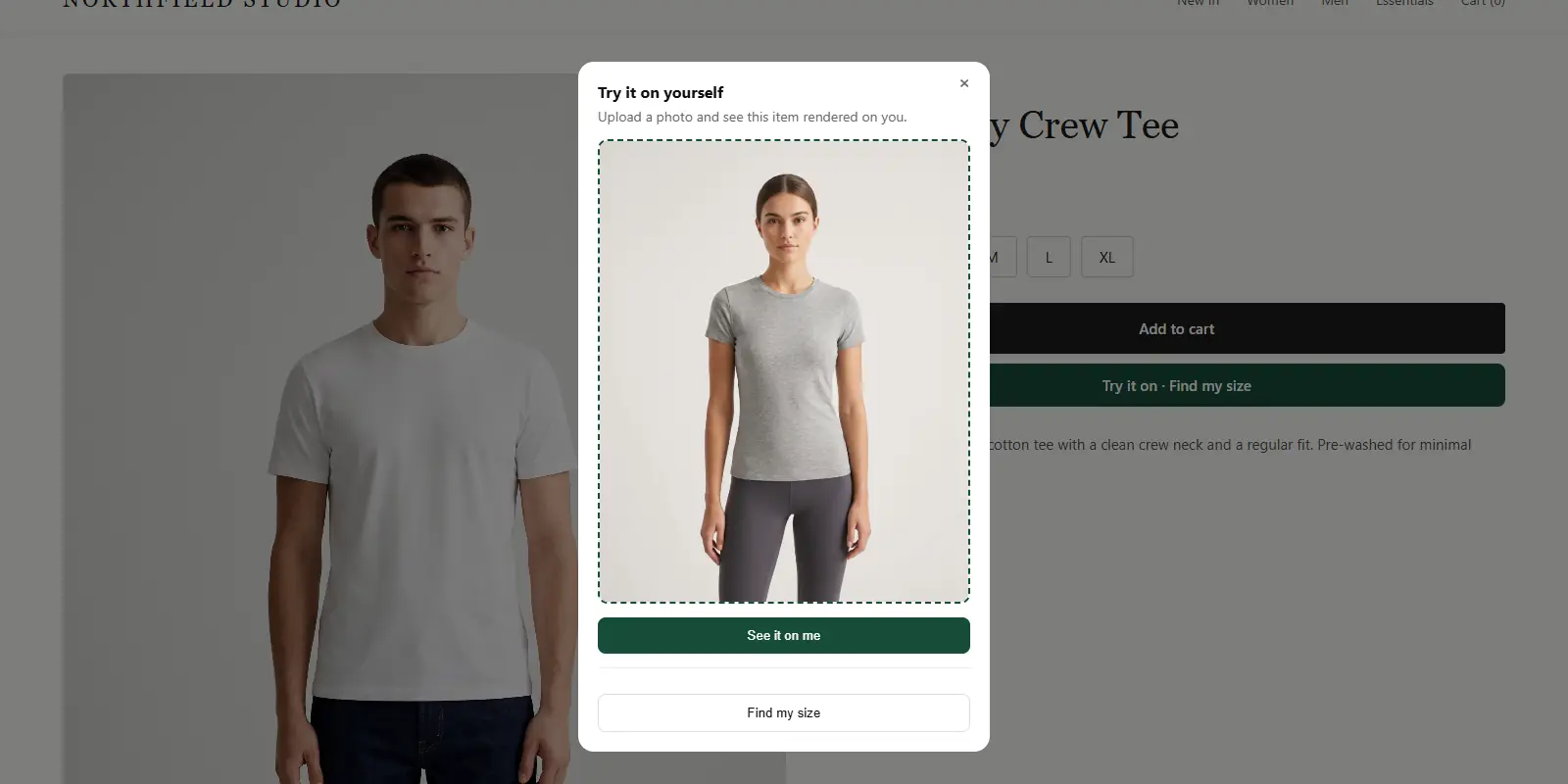
Try it on yourself
Live renderUpload a photo, pick a piece, see it rendered on you.
Pick something to try on
Which frame styles do shoppers compare most?
Shoppers tend to compare shapes rather than brands. Round, square, cat-eye and oversized frames each flatter different faces, and a shopper may not know which they prefer until they see them on. Offering try-on across a small group of shapes lets them find a favorite by looking, not by guessing from names.
Group your collection by shape on the collection page, and use plain labels such as "round" or "rectangular". Add a second filter for color, since tortoiseshell, black and clear frames sell differently.
What product information should you add next to the try-on?
Try-on shows style, but shoppers still need facts. Include:
- Frame dimensions. Lens width, bridge width and temple length, taken from the manufacturer.
- Frame material and weight, if you have them.
- Lens options. Clear blue light coating, prescription option, or non-prescription only.
- Fit notes. Say if a frame runs wide or narrow.
- Care and return terms. Keep the policy easy to find.
If you also sell optical frames, the guide to adding glasses try-on to an optical ecommerce site covers prescription-specific points.
How should you photograph fashion frames?
Use plain backgrounds and show the frame from the front, side and at an angle. Add at least one photo worn by a model, and one flat photo for scale. Show a tinted lens in daylight and indoors, because the color shifts.
How do you write product descriptions for blue light glasses?
Keep descriptions short and factual:
- Lead with the style and who it suits, in plain words.
- List the lens coating as the manufacturer describes it.
- Give measurements in millimeters.
- Mention the case, cloth or accessories included.
- State clearly whether the lenses are plain or can take a prescription.
Avoid vague phrases that promise results. Shoppers trust a calm description more than a loud one, and you reduce the risk of breaking advertising rules.
How should you set up the shopper journey?
Think of the path as four steps:
- The shopper lands on a collection page and picks a frame shape.
- They open the product page and read the key facts.
- They try on two or three styles with the camera.
- They add the best match to the cart and check delivery and return terms.
Make sure the try-on button sits near the main photo so it is easy to find on a phone. Test the page on a real device. A button hidden below long text will go unused.
What should you watch for with live-camera try-on?
Camera try-on depends on lighting and the shopper's device. Suggest a well-lit spot and a steady hold. Be honest that a screen cannot show weight or how a frame feels on the nose, so keep your return policy clear.
Tell shoppers that camera access is only requested when they tap the try-on button. Add a line to your privacy page that explains what you collect, in line with your local rules.
Can you use try-on for new collections?
Yes. A try-on lets you test interest in styles before they are in stock. The guide to using try-on to sell pre-orders and new collections shows how stores do this.
How can you tell whether try-on is working for your store?
Use your own store data, not outside claims. Compare the same product pages before and after you add try-on, and keep the time window long enough to cover normal weekly traffic.
Useful signs to watch:
- Do shoppers who open the try-on add to cart more often than those who do not? Remember that people who try on may already be keener to buy.
- Do customer messages about "will it suit me" drop?
- Do return reasons shift away from "style did not suit me"?
Treat early results as hints. Change one thing at a time and keep notes, so you know what caused any difference. A small store with few visits should wait longer before trusting a trend, because a handful of orders can swing the picture.
What does it cost to try?
ZeDaq.ai has a Free plan at $0, which includes 3 try-ons a month, so you can test the experience before paying anything. Paid plans start with Micro at $14 a month, and the first month is $1 on a first paid monthly plan, then $14 a month. Every paid plan has a 3-day free trial with no card required. See the current pricing before you decide.
What if you sell clothes as well as frames?
Many fashion stores pair accessories with outfits. Frames use the live-camera try-on, while garments use a photo-based try-on and a size recommendation. The guide to AI size recommendation for fashion stores explains the garment side.
See frames on a real face
FAQs
Do blue light glasses need a prescription?
No. They can be sold with non-prescription lenses, and some stores also offer prescription versions. State clearly which options you offer.
Does eyewear try-on need an app download?
The live-camera try-on runs on your store page, so shoppers do not install a separate app. They allow camera access in their browser.
Can I make health claims about blue light lenses?
Stay with what the lens manufacturer states and your local advertising rules. When in doubt, describe the coating and leave out medical promises.
How do I show frame size online?
List lens width, bridge width and temple length in millimeters from the maker's specifications. Add a fit note such as narrow, medium or wide.
Try ZeDaq.ai free
Virtual try-on and Find my size for your store, plus client, order and invoicing tools for tailors, in one subscription.