Face Shape Guide for Glasses: What Retailers Should Show
By the ZeDaq.ai team · · 4 min read
On this page
A good face shape guide for glasses shows shoppers how to spot their face shape, which frame shapes tend to contrast with it, and why frame width matters more than shape alone. Keep the advice as a starting point, then let shoppers check frames on their own face.
This guide is for optical and eyewear store owners building a help page. For the wider picture of showing products on shoppers, see the guide to a virtual fitting room for clothing websites, which covers the same ideas for apparel.
What face shapes should the guide cover?
Most guides use five or six common shapes. Describe each in one line, with no jargon:
- Round. Width and length are similar, with soft edges.
- Oval. Slightly longer than wide, with a gently curved jaw.
- Square. A strong jaw and a forehead about as wide as the jaw.
- Heart. A wider forehead that narrows toward the chin.
- Diamond. Wide cheekbones with a narrower forehead and chin.
- Long (oblong). Noticeably longer than it is wide.
Tell shoppers that most faces blend shapes, so the label is a guide, not a rule.
How can shoppers find their face shape?
Keep the steps short, because shoppers will abandon a long quiz.
- Pull hair back and look straight at a mirror or a phone camera.
- Compare the width of the forehead, cheekbones and jaw.
- Note whether the jaw is rounded or angular.
- Pick the shape that matches best.
Add a note that a clear selfie or a mirror works fine, and that no measurement is exact.
Which frame shapes suit each face shape?
A common styling idea is contrast: angular frames soften a round face, and rounder frames soften an angular one. Present the table below as a style tip, not a fact about every face.
| Face shape | Frame idea to suggest |
|---|---|
| Round | Angular or rectangular frames |
| Oval | Most shapes work; choose by taste |
| Square | Round or oval frames |
| Heart | Frames that are wider at the bottom |
| Diamond | Oval or cat-eye frames |
| Long | Taller frames that add depth |
This is an example guide based on common styling advice, so adjust it to your catalog and brand voice.
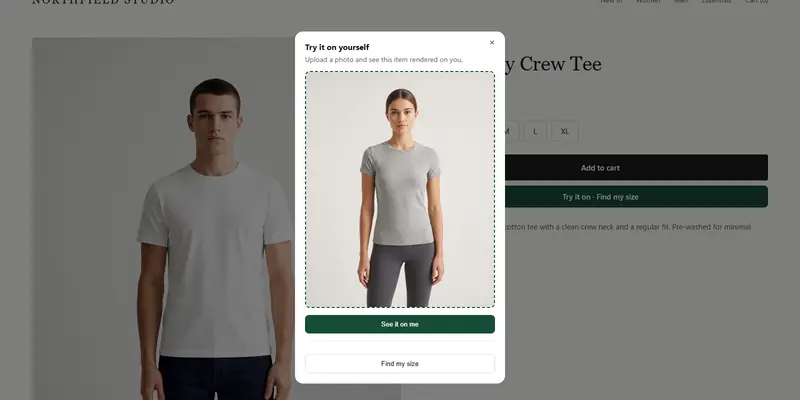
Try the live-camera eyewear demo
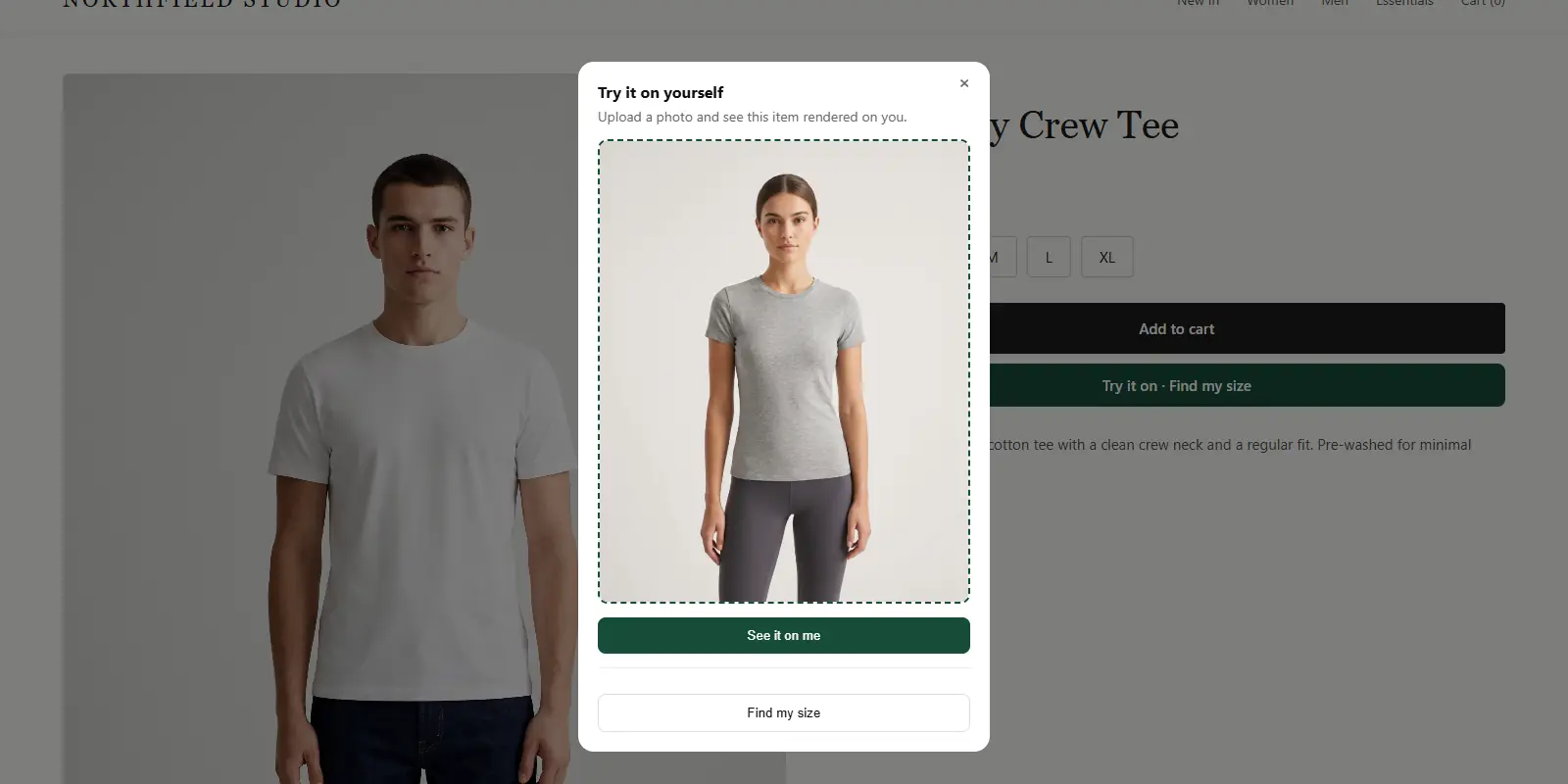
Try it on yourself
Live renderUpload a photo, pick a piece, see it rendered on you.
Pick something to try on
Why does frame width matter as much as shape?
Shape is a style choice, and width is a fit choice. A frame that is too narrow pinches at the temples, and one that is too wide slides down the nose.
Ask shoppers to check the frame width printed on the arm of their current glasses, then compare it with your product listings. The article on frame width and face shape goes deeper on matching the two.
How should you present the guide on the page?
Layout matters because most shoppers read on a phone. Keep the guide scannable.
- Use one small icon or sketch per face shape. Shoppers match shapes faster by sight than by text.
- Keep each description to one line. Long paragraphs get skipped.
- Link each frame suggestion to a filtered collection. For example, link "angular frames" to the rectangular frames in your catalog.
- Add a closing line. Say that the guide is a starting point and that shoppers should try frames before they decide.
Write the guide for all shoppers. Avoid words that suggest one "correct" look, and describe frames by their features, such as shape, width and color.
Update the page when your range changes. A guide that points to frames you no longer sell frustrates shoppers and wastes the visit.
What should the retailer's page also include?
Besides the shape table, add these items:
- Frame measurements in millimeters on every product page.
- A short fit note, such as "narrow fit" or "wide fit".
- Photos from the front and the side.
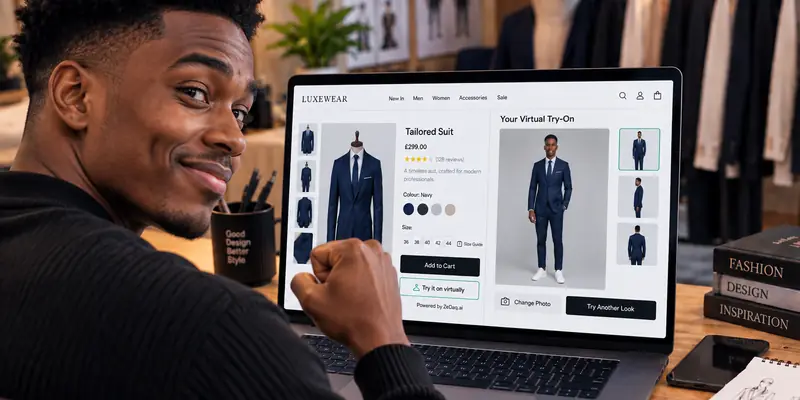
- A way to try frames on. ZeDaq.ai offers live-camera eyewear try-on, so shoppers see frames on their own face in real time.
If you sell eyewear, the camera raises privacy questions. The guide to webcam glasses try-on privacy questions lists what shoppers tend to ask. If your store runs on WooCommerce, see virtual try-on for WooCommerce for the options.
Keep your tone neutral and kind. People are sensitive about their faces, so describe frames by what they do, such as "adds width" or "adds depth", and avoid saying a shape is "good" or "bad".
Finally, check that the guide works for every shopper who visits. Use plain text alongside images, so it is readable with a screen reader, and make sure buttons are large enough to tap on a phone.
Review the guide whenever you add new frame styles, so the table always matches what shoppers can actually buy from you today.
Let shoppers see frames on their own face
FAQs
How accurate is a face shape guide?
It is a styling starting point. Most faces blend shapes, so shoppers should try frames before deciding.
Do I need a quiz on my site?
Not necessarily. A short description of each shape and a table of frame ideas is enough for most stores.
Is frame shape or frame width more important?
Width affects comfort and fit, while shape is mostly about style. Show both on the product page.
Can shoppers try glasses on without a face shape guide?
Yes. A live-camera try-on lets them judge frames directly, and the guide supports the choice.
Try ZeDaq.ai free
Virtual try-on and Find my size for your store, plus client, order and invoicing tools for tailors, in one subscription.