True Fit Alternatives for Fashion Stores
By the ZeDaq.ai team · · 7 min read
On this page
The main True Fit alternatives for fashion stores are Fit Analytics, Virtusize, Sizebay, Easysize, Kiwi Sizing and ZeDaq.ai. Each one recommends a size in a different way, from shopper data and questionnaires to size charts and body scans, so the right pick depends on your store's size and the data you already have.
ZeDaq.ai publishes this blog, so every competitor detail below comes only from that company's own website or Shopify App Store listing, linked in the text and checked November 2026. Features and prices change, so confirm on each vendor's page before you sign anything. If you also want shoppers to see clothes on their body, our roundup of the best AI virtual try-on apps for Shopify covers the try-on side.
What does True Fit offer?
According to True Fit's website (checked November 2026), True Fit gives shoppers a single size recommendation based on body characteristics, past purchases and fit preferences such as a looser or more tailored fit. It says its recommendations draw on many years of purchase and return outcomes across apparel and footwear.
Its current product list includes:
- an AI shopping agent that answers size and fit questions
- a virtual try-on that lets shoppers preview a style on their own photo
- fit data that retailers can connect to their own AI tools
- a reporting center with fit and demographic analytics
- a product for delivery platforms and marketplaces
True Fit covers menswear, womenswear, kids' apparel and footwear. The site doesn't publish prices. Its main call to action is to book a demo.
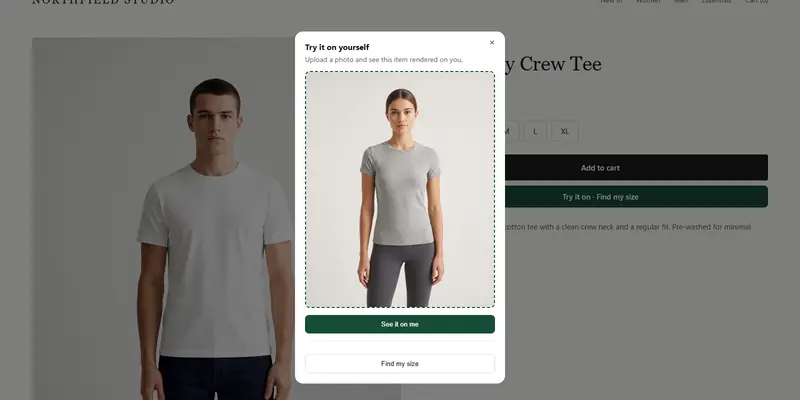
Try a body-scan size recommendation yourself
Try it on yourself
Live renderUpload a photo, pick a piece, see it rendered on you.
Pick something to try on
Why do stores look for apps like True Fit?
Stores usually search for True Fit competitors for practical reasons, not because a tool is weak. Common ones:
- Budget clarity. Some teams want a price they can see on a page before talking to sales.
- Store size. A smaller Shopify store may want an app it can install and test the same afternoon.
- Data they own. Some brands want recommendations to come from their own size chart, not a shared shopper network.
- Try-on as well as sizing. Others want the shopper to see the garment, not only a size label.
- Platform. Stores on WooCommerce, Wix or a custom build need something that works outside Shopify.
Knowing which of these matters most to you narrows the list quickly.
Which True Fit alternatives should you compare?
Here is how each option describes itself on its own site. Prices are shown only where the vendor publishes them.
| Tool | How it recommends a size | Published price | Source (checked November 2026) |
|---|---|---|---|
| True Fit | Shopper body data, purchase history and fit preferences | Not published; demo | truefit.com |
| Fit Analytics | Fit Finder size advice based on shopper preferences and fit modeling | Not published | fitanalytics.com |
| Virtusize | Fit recommendations, plus visual size charts | Shopify: $1 first month, then from $39/mo | virtusize.com/pricing |
| Sizebay | Height, weight and age for clothing sizes | Not published; demo | sizebay.com |
| Easysize | Fit Quiz with no measurements or body scans | Not published; demo | easysize.me |
| Kiwi Size Chart & Recommender | Size charts plus AI size recommenders | Free, then $7.99, $14.99 and $26.99/mo | Shopify App Store |
| ZeDaq.ai | One photo plus height, matched to your own size chart | Free, then from $14/mo | zedaq.ai/en/pricing |
Fit Analytics
Fit Analytics' website describes two products: an AI Shopping Assistant that handles size, style and budget questions, and Fit Finder, a size recommendation tool shown when a shopper hesitates over fit. It says retailers can use ready-made surfaces, customize them, or build their own journeys through an API. Prices aren't listed. For a closer look at these two, see True Fit vs Fit Analytics.
Virtusize
Virtusize offers fit recommendations, Virtusize Table for visual size charts, and a data product for marketing and buying teams. It lists support for Shopify, Magento, WooCommerce, Salesforce Commerce Cloud, BigCommerce and custom or headless sites. Brands can upload size data as CSV, Excel, PDF or a product feed.
Sizebay
Sizebay offers size recommendation, virtual try-on for clothes and shoes, managed size charts and product discovery tools. For clothing, shoppers enter height, weight and age. For shoes, it analyzes foot shape and past size preferences. Pricing isn't listed.
Easysize
Easysize runs a Fit Quiz. Shoppers answer a few questions, with no weight, body measurements or scans. It offers a version for Shopify and Shopify Plus and one for custom platforms, and it localizes the widget into many languages.
Kiwi Size Chart & Recommender
Kiwi's Shopify listing focuses on size charts: importing charts from images, descriptions or CSV, auto-applying guides to collections, and AI size recommenders on higher plans. It has a free plan and published monthly prices, with extra charges based on order volume on some plans.
ZeDaq.ai
ZeDaq.ai measures the shopper from one full-length photo plus their height. The pose analysis runs on the shopper's device, and the measurements are matched to your own size chart, with one chart per garment type: tops, outerwear, dresses and bottoms. If a shopper falls between two sizes, it suggests the larger one.
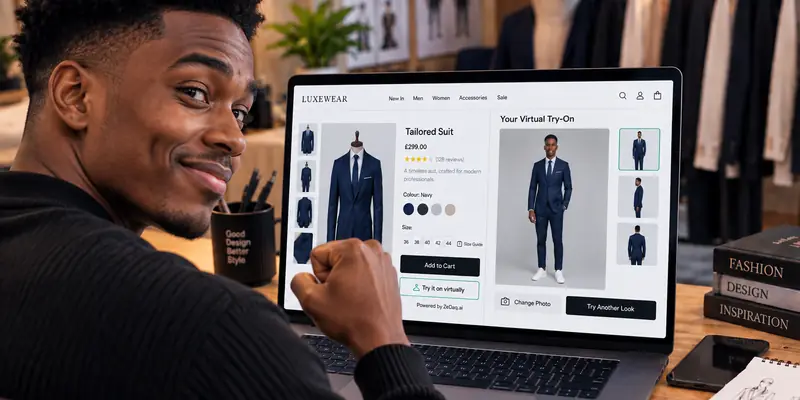
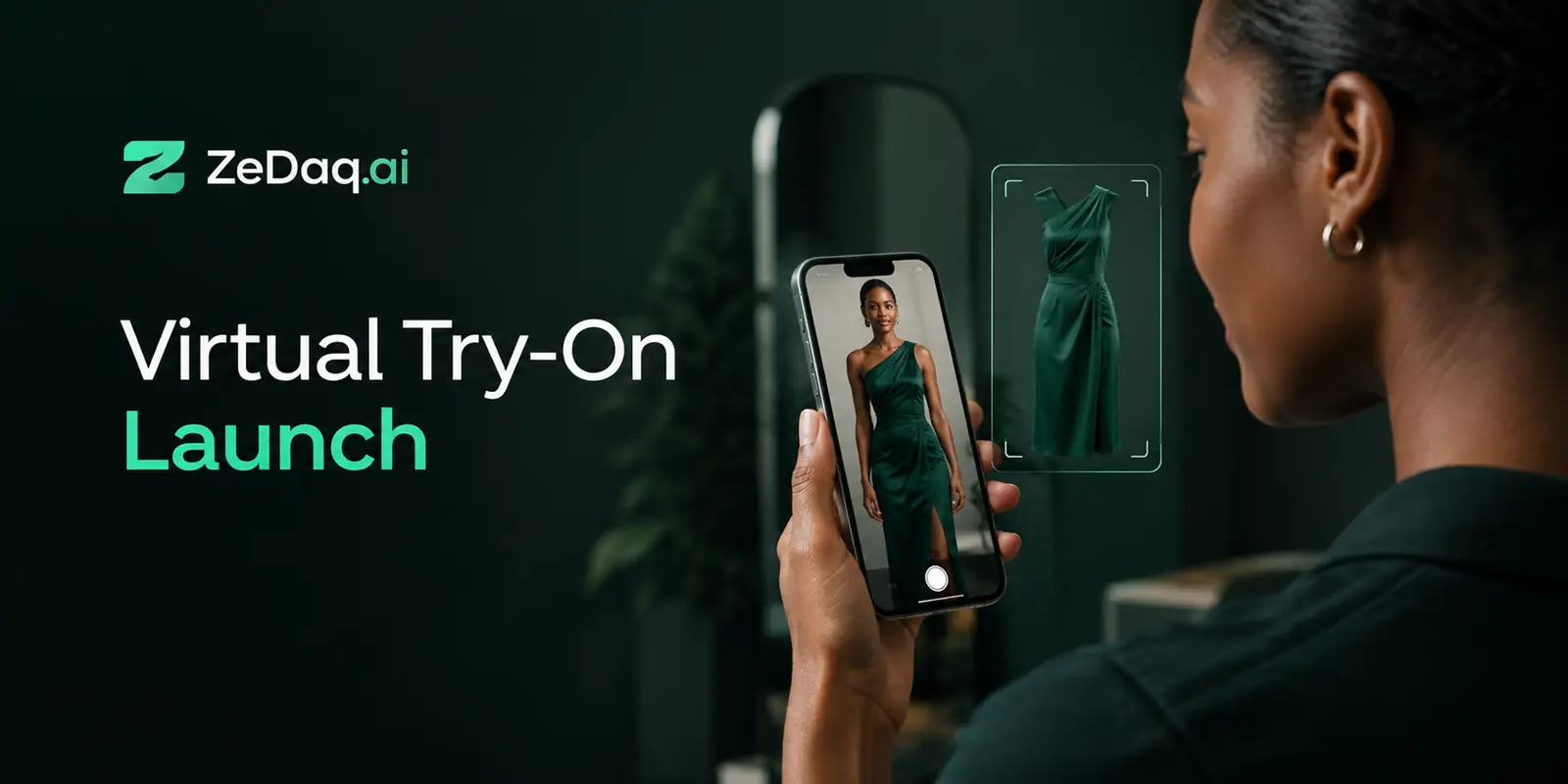
It also offers AI virtual try-on, where the shopper sees your real garment on their own photo, and live-camera eyewear try-on. ZeDaq.ai is newer than the other tools here and has no Shopify App Store reviews yet, so test it on your own products before you decide.
How do the sizing methods differ in practice?
The method changes what the shopper has to do, and what you have to set up. Take one shopper, 168 cm tall, looking at a fitted dress in your store.
- Shopper-data tools such as True Fit ask about her body and the brands she already wears, then compare against what similar shoppers kept.
- Questionnaire tools such as Easysize ask a few questions about fit and preference, with no measuring.
- Height, weight and age tools such as Sizebay's clothing sizing estimate her size from those three inputs.
- Size chart tools such as Kiwi show your chart clearly and, on higher plans, add a recommender on top.
- Photo-scan tools such as ZeDaq.ai take one photo and her height, estimate chest, waist and hips, and match them to your dress chart.
None of these is right for every store. A brand with years of sales data and a large catalog has different needs from a new label with one size chart and a few hundred products.
How do you choose the right fit tool option?
Use this checklist when you shortlist two or three tools.
- Write down your platform. Confirm each vendor lists it on their own site.
- Check what data the tool needs from you. Some need your size charts, some need product feeds, some need sales history.
- Decide what the shopper should do. Answer questions, enter height and weight, or take a photo.
- Ask for prices in writing. If a vendor doesn't publish them, ask how charges scale with orders or traffic.
- Test on your hardest product. Pick the item with the most fit complaints and see what each tool recommends.
- Ask about shopper data. Find out what is stored, where, and for how long.
If a full virtual fitting room is on your list, our guide to virtual fitting rooms for clothing websites explains how try-on and sizing work together on a product page.
How much do True Fit competitors cost?
Only some vendors publish prices, and they are listed in the table above with links. True Fit, Fit Analytics, Sizebay and Easysize don't show prices on the pages we checked, so you'll need to ask them.
ZeDaq.ai has a Free plan with 3 try-ons and 3 measurements a month. Paid plans are Micro at $14 a month, Starter at $49, Growth at $129 and Scale at $299. Every paid plan has a 3-day free trial with no card required.
For a similar comparison that starts from Fit Analytics, see Fit Analytics alternatives for fashion stores.
Test photo-based sizing on your own size chart
FAQs
Is there a free alternative to True Fit?
Some tools have free plans, including Kiwi Size Chart & Recommender and ZeDaq.ai, according to their own pricing pages. Free plans have usage limits, so check what each one includes.
Does ZeDaq.ai work outside Shopify?
Yes. Besides the Shopify app, there is a script-tag widget for WooCommerce, Wix, Squarespace and custom sites, locked to your store's domain, and a REST API.
Do I need my own size chart for these tools?
It depends on the tool. Chart-based tools such as Kiwi and ZeDaq.ai use your chart directly, while shopper-data tools rely more on their own data. Having a clean chart helps with any of them.
Which True Fit alternative also offers virtual try-on?
On their own sites, Sizebay and ZeDaq.ai both list virtual try-on alongside sizing, and True Fit lists one too. Compare how each one shows the garment before choosing.
Try ZeDaq.ai free
Virtual try-on and Find my size for your store, plus client, order and invoicing tools for tailors, in one subscription.