Can Virtual Try-On Show Sequins and Embellished Garments?
By the ZeDaq.ai team · · 4 min read
On this page
- What does try-on do well with embellished garments?
- What is hard to show?
- How should you test your own embellished pieces?
- How do you photograph embellished garments for better results?
- Which embellished garments suit a try-on button best?
- What else should the product page include?
- How does this compare with other difficult garments?
- What should you tell the shopper before they try?
Virtual try-on can preview the shape, length and fit of sequins and other embellished garments on a shopper's body, but you shouldn't expect it to reproduce every sparkle or bead. Fine, repeating detail is the hardest thing for any image-based try-on to match.
This guide is for store owners selling party wear and occasionwear who want honest expectations. For the basics, see the overview of a virtual fitting room for clothing websites.
What does try-on do well with embellished garments?
The core value of try-on is fit and look. For an embellished dress, a try-on image can help the shopper judge:
- Silhouette. Whether the cut is fitted, flared or straight.
- Length. Where the hem falls on their body.
- Neckline and sleeves. How they sit on the shoulders and chest.
- Overall color. How the main color looks against their coloring.
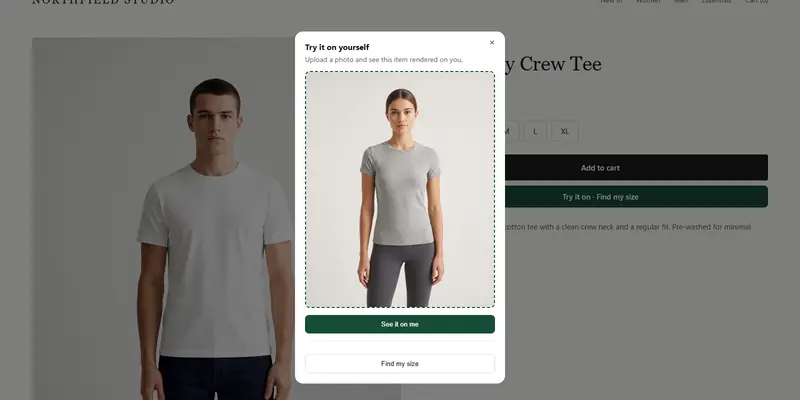
ZeDaq.ai's try-on lets a shopper upload one photo and see the store's real garment on their body. That is a preview built from your garment image.
Try a party-wear piece on your own photo
Try it on yourself
Live renderUpload a photo, pick a piece, see it rendered on you.
Pick something to try on
What is hard to show?
Fine surface detail is where results are least predictable. Watch for these:
- Individual sequins or beads. Small pieces may look softer or less distinct than in your product photo.
- Sparkle and shine. Light bouncing off sequins changes with every angle, and a still image can't capture that.
- Intricate patterns. Detailed beading or embroidery may simplify.
- Texture and weight. A heavily beaded skirt hangs and moves differently from a plain one.
Related limits apply to other fabrics. The article on whether try-on can show fabric drape covers how movement is hard to show, and the one on reversible and convertible garments covers another edge case.
How should you test your own embellished pieces?
Results depend on your garment photo and the shopper's photo, so test before you decide.
- Choose three pieces: a lightly sequined one, a heavily beaded one and a plain control.
- Run each through try-on using a few different body photos.
- Compare the try-on image with your product photo, zoomed in.
- Note what changes: pattern, color, density or edges.
- Decide which pieces suit a try-on button and which need more explanation.
How do you photograph embellished garments for better results?
A clear garment image gives the try-on more to work with:
- Use a plain background and even light.
- Show the whole garment, flat or on a mannequin, from the front.
- Avoid harsh glare that hides the pattern.
- Keep the file sharp and in focus.
Don't rely on this alone. Check the result with your own products.
Which embellished garments suit a try-on button best?
Not every piece needs the same care. Garments where the cut matters more than the surface are the safest to start with:
- A sequined top with a simple shape, where length and neckline are the main questions
- A party dress with beading only at the neckline or hem
- A jacket with a small amount of embroidery
- A skirt where the shopper mostly wants to see the hemline
Pieces covered edge to edge in dense beadwork carry more risk, since most of what sells them is the surface. For those, lead with your own close-ups and treat try-on as a fit check.
What else should the product page include?
Because try-on may not show texture, add other evidence next to it:
- Close-up photos of the embellishment in daylight and indoor light
- A short video showing sparkle and movement
- A note on fabric, weight and lining
- A line stating that the try-on is a fit preview, not an exact copy of the beading
Setting this expectation protects the shopper's trust. The same applies to returns, so mention care and fit in your policy. If you sell on other platforms, the WooCommerce try-on guide shows how the widget works there.
Try it on your own garment photos
How does this compare with other difficult garments?
Embellished pieces sit alongside sheer, flowing and reversible items as hard cases. In all of them, the try-on handles the shape well and the surface less well. The sensible response is the same: test your own products, show real photos next to the try-on and be honest about what the preview is.
The wording you use on the page matters. A line such as "See how the cut fits you. Close-up photos show the beadwork" sets a clear expectation.
What should you tell the shopper before they try?
A short note near the button sets the right expectation. Say what the preview is for: seeing the cut, length and fit on their own body. Say what it is not: an exact picture of every bead. Shoppers who know this are less likely to feel misled, and they will look at your close-ups with the right question in mind.
FAQs
Will the sequins look exactly like my product photo?
You can't count on it. Treat the result as a preview of fit and overall look, and show close-ups for the detail.
Is try-on still useful for party wear?
Yes, for fit questions such as length, neckline and silhouette. Those are things a flat photo can't answer.
What if my garment is heavily beaded?
Test it first. If the result loses too much detail for your standards, leave the button off that product or explain its purpose clearly.
Does it work on a phone?
Shoppers use try-on on the store's own site, and phones are common for shopping. Test your pages on your own phone to see the experience.
Try ZeDaq.ai free
Virtual try-on and Find my size for your store, plus client, order and invoicing tools for tailors, in one subscription.