Fit Analytics Alternatives for Fashion Stores
By the ZeDaq.ai team · · 7 min read
On this page
- What does Fit Analytics offer today?
- Why do stores look for an alternative?
- How do the alternatives compare at a glance?
- Which alternatives use purchase and return history?
- Which alternatives use shopper profiles or simple questions?
- Which alternatives predict or measure the body?
- Which alternatives are chart-based Shopify apps?
- How do you choose the right Fit Analytics alternative?
- How should you run a side-by-side trial?
The main Fit Analytics alternatives for fashion stores are True Fit, Virtusize, Sizebay, Bold Metrics, Kiwi Sizing and ZeDaq.ai. They differ most in how they decide a size: shopper questions, past purchases, size charts, predicted body data or a photo scan.
Fit Analytics sells to apparel retailers through a sales process, so many smaller stores look for something they can install themselves. If try-on matters as much as sizing, our roundup of the best AI try-on apps for Shopify covers that side.
Disclosure: ZeDaq.ai is our product. Every competitor fact below comes from that company's own live website or Shopify App Store listing, linked in place and checked November 2026.
What does Fit Analytics offer today?
Knowing what you're replacing makes the comparison fairer. Fit Analytics' main sizing product is Fit Finder. The shopper answers a few size and fit preference questions, and machine learning compares the answers with similar shoppers to suggest a size, per the Fit Finder page.
The same page says shoppers don't need an account, that Fit Finder supports 49 languages, and that it covers major size systems such as EU, UK and US.
The Fit Analytics homepage also lists an AI Shopping Assistant for size, style and budget questions. Retailers can use ready-made surfaces, customize parts of the experience, or build their own journeys through an API. The homepage shows no prices.
Why do stores look for an alternative?
Common reasons include:
- No public pricing. You need a sales conversation before you know the cost.
- Integration effort. Custom journeys and API work suit teams with developers.
- A different method. Some stores want sizing based on the shopper's body, not on answers to questions.
- Try-on in the same tool. Fit Finder is a size advisor, and its page doesn't mention virtual try-on.
- Platform fit. A Shopify store owner may want an app they can install in minutes.
How do the alternatives compare at a glance?
| Tool | How it decides a size | Try-on | Pricing shown | How you start |
|---|---|---|---|---|
| True Fit | Purchase and return data, closet items, preferences | Yes, on shopper's photo | None listed | Get a demo |
| Virtusize | Fit profiles | Not described | Shopify: $1 first month, then from $39/mo | Shopify app or script tags |
| Sizebay | Height, weight and age for clothes | Yes, clothes and shoes | None listed | Schedule a demo |
| Bold Metrics | 4 to 6 inputs turned into body measurements | Not listed | None listed | Request a demo |
| Kiwi Sizing | Size charts and custom recommenders | Not listed | Free, then $7.99 to $26.99/mo | Shopify app |
| ZeDaq.ai | One photo plus height, matched to your chart | Yes, on shopper's photo | Free, then $14 to $299/mo | Shopify app, script tag or API |
All competitor details are from the linked pages, checked November 2026.
Which alternatives use purchase and return history?
True Fit
True Fit is the closest like-for-like swap for a large retailer. Its guidance draws on about 20 years of purchase, keep and return data across apparel and footwear, according to True Fit's homepage. It can personalize using items the shopper owns and preferences such as a looser or more tailored fit.
The same page lists virtual try-on on the shopper's photo, an AI shopping agent, fit data for other AI tools through MCP (Model Context Protocol, a standard way to connect data to AI assistants), and a Reporting Center. It mentions a Shopify integration and says its shopping agent is Shopify Plus Certified. There is no public price.
We compare these two vendors directly in True Fit vs Fit Analytics.
Which alternatives use shopper profiles or simple questions?
Virtusize
Virtusize says shoppers get their size in under 30 seconds, based on more than 250,000 fit profiles, per the Virtusize homepage. It covers apparel, footwear, bags and kids' products.
It lists Shopify, Magento, WooCommerce, Salesforce Commerce Cloud, BigCommerce and custom or headless setups. Setup is described as two script tags, and you can upload size data as CSV, Excel, PDF or a product feed.
Its pricing page shows Virtusize for Shopify at $1 for the first month, then from $39 a month. Virtusize Core is "pay as you grow," with pricing tied to Virtusize-assisted conversions.
Sizebay
Sizebay's Size & Fit tool asks shoppers for only their height, weight and age for clothes, according to Sizebay's website. For shoes, it looks at foot shape and past size preferences across brands.
Sizebay also lists virtual try-on for clothes and shoes using the shopper's own photo, automatically managed size charts, and Fashion Hub tools for product discovery. It shows no pricing and asks you to schedule a demo.
Which alternatives predict or measure the body?
Bold Metrics
Bold Metrics asks the shopper for 4 to 6 inputs, such as height, weight, age and fit preference. It builds a "digital twin," works out more than 50 body measurements and matches them to the brand's garment data, per Bold Metrics' homepage. The site says no photos or measuring tapes are needed.
Its products include a ready-to-install Smart Size Chart, an API called Virtual Sizer and Virtual Tailor for made-to-measure. It lists no prices. Our full comparison is in ZeDaq.ai vs Bold Metrics.
ZeDaq.ai
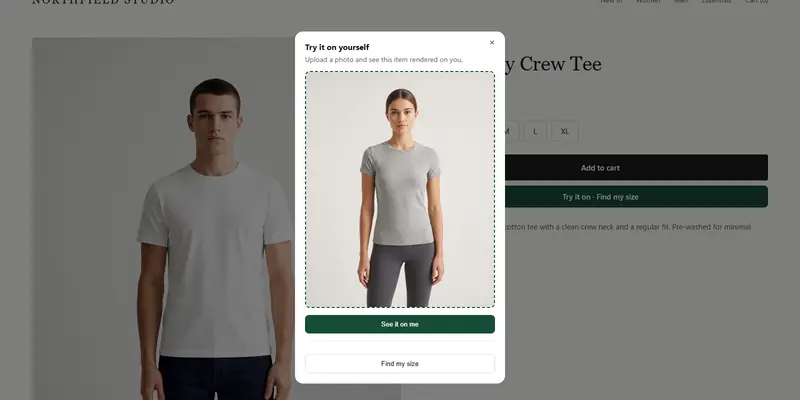
ZeDaq.ai measures from a photo instead of predicting from answers. The shopper taps "Find my size," uploads one full-length photo and enters their height. The 30-second scan matches their measurements to the size chart you enter, one per garment type: tops, outerwear, dresses and bottoms. Without a chart, it uses a generic UK, US, EU or AU chart.
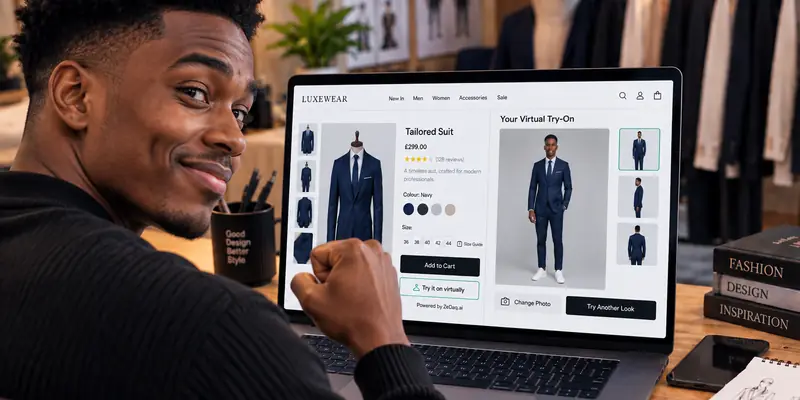
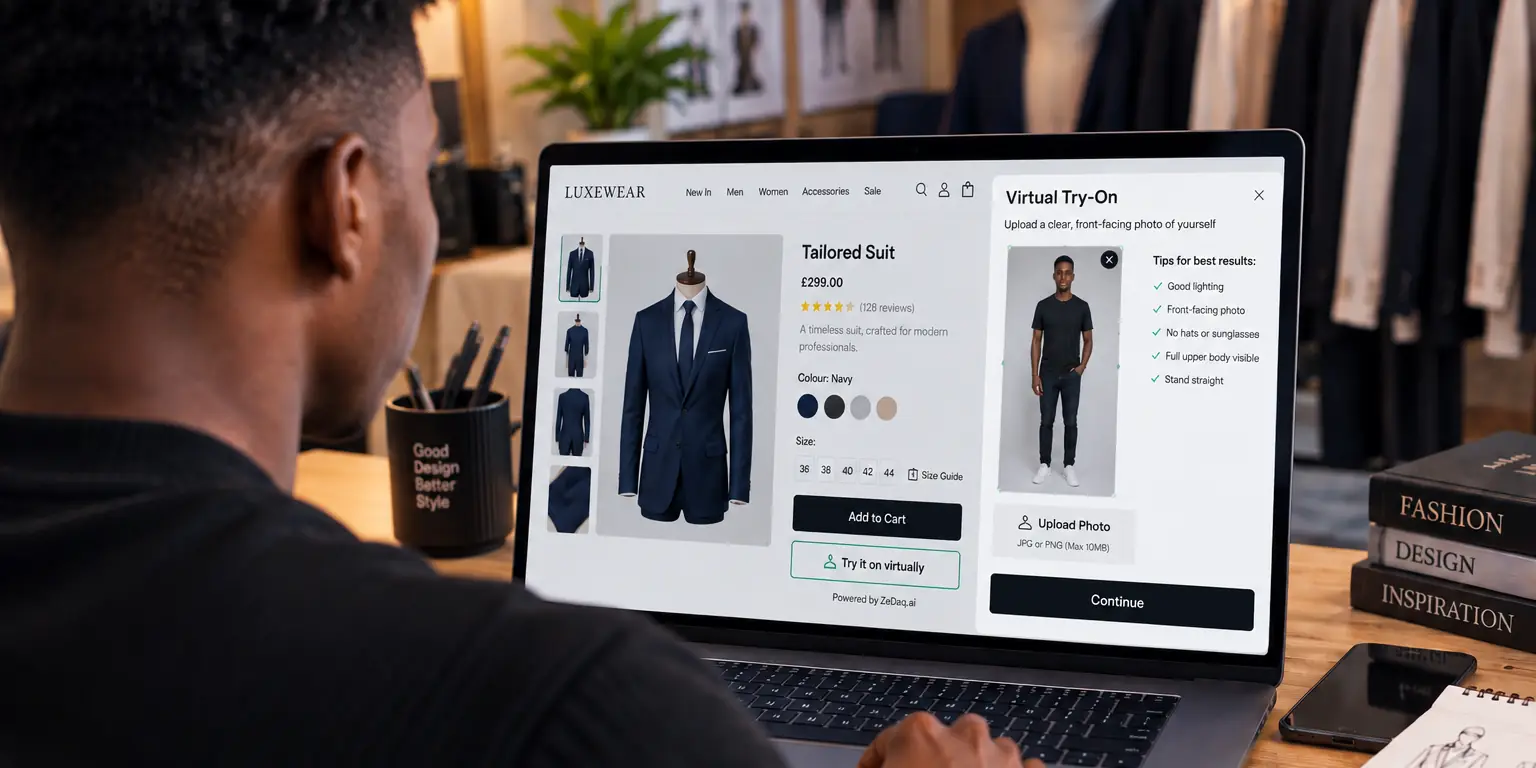
The same widget offers AI virtual try-on, so shoppers see your real garment on their own photo. You can add it with the Shopify app, with one script tag on WooCommerce, Wix, Squarespace, BigCommerce or a custom site, or through the REST API. The Shopify steps are in our guide on how to add virtual try-on to Shopify.
Try photo sizing and try-on yourself
Try it on yourself
Live renderUpload a photo, pick a piece, see it rendered on you.
Pick something to try on
Which alternatives are chart-based Shopify apps?
Kiwi Sizing
Kiwi Size Chart & Recommender, by Staytuned, adds size charts, size guides and fit recommendations to Shopify product pages. Its Shopify App Store listing shows a rating of 4.7 from 1,242 reviews.
The listing shows four plans: Free with up to 3 size charts and a Kiwi watermark, Premium at $7.99 a month, Plus at $14.99 and Ultimate at $26.99. Paid plans have a 14-day free trial. The listing notes that additional charges based on order volume apply on Plus and Ultimate.
A chart app is a good fit if your main problem is that shoppers can't find or read your size guide.
How do you choose the right Fit Analytics alternative?
Work through these questions in order. Each one narrows the list.
- Do you want a sales-led contract or self-serve? True Fit, Sizebay and Bold Metrics ask for a demo. Kiwi Sizing, Virtusize for Shopify and ZeDaq.ai let you start yourself.
- What platform are you on? Shopify stores have the most self-serve options. Other platforms should check each vendor's support.
- How should the shopper give their data? Questions, past purchases, a size chart or a photo scan. Ask a few customers which they'd prefer.
- Do you want try-on too? True Fit, Sizebay and ZeDaq.ai list it. The others' pages don't.
- What is your budget? Compare published prices first, then request quotes from vendors that don't publish them.
For closet-based and enterprise options beyond these six, see our list of True Fit alternatives for fashion stores.
How should you run a side-by-side trial?
Before you commit, test two or three shortlisted tools on the same products.
- Choose the five styles with the most fit questions or exchanges.
- Ask five people who know their correct size in those styles to test each tool.
- Record each suggested size and whether it matched reality.
- Time each flow on a phone from product page to result.
- Check what each tool needs from you: garment data, charts or nothing.
- Note the total monthly cost at your expected volume.
ZeDaq.ai's Free plan is $0 with 3 try-ons, 3 measurements and 5 invoices a month, enough to run this test. Paid plans are Micro at $14 a month, Starter at $49, Growth at $129 and Scale at $299, each with a 3-day free trial and no card required. See the current ZeDaq.ai plans for limits.
Compare photo sizing against your current tool
FAQs
Is there a free alternative to Fit Analytics?
Kiwi Sizing has a free plan with up to 3 size charts, per its Shopify listing. ZeDaq.ai has a free plan with 3 measurements a month.
Which alternative needs no shopper photo?
The size advisors from Fit Analytics, Sizebay and Bold Metrics work from shopper answers. Bold Metrics says no photos are needed at all.
Which alternatives include virtual try-on?
True Fit, Sizebay and ZeDaq.ai list virtual try-on on their sites. Check each one's current page, since features change.
Can I use my own size chart with these tools?
Kiwi Sizing and ZeDaq.ai are built around your size chart, and Virtusize accepts uploaded size data. Ask the demo-led vendors how they import your charts.
Try ZeDaq.ai free
Virtual try-on and Find my size for your store, plus client, order and invoicing tools for tailors, in one subscription.