DHL vs FedEx vs UPS for Shipping Clothes From Nigeria
By the ZeDaq.ai team · · 7 min read
On this page
- Why can't one courier be "best" for every brand?
- How do you get a fair comparison between DHL, FedEx and UPS?
- What does size-based weight mean for clothes?
- How should you prepare customs paperwork for clothing?
- What service differences matter for fashion orders?
- What should your shipping page tell customers abroad?
- Should you use one courier or several?
- How do you keep return shipments rare?
There is no fixed winner among DHL, FedEx and UPS for shipping clothes from Nigeria; the best courier is the one that gives you the lowest landed cost and a reliable transit time for your parcel size, destination and customs paperwork. Rates change with weight, route and account terms, so the only fair comparison is three quotes for the same parcel on the same day.
This guide gives you a repeatable way to get those quotes and judge them, plus packing tips that matter for garments. If you are building an online fashion brand for buyers abroad, our guide to virtual try-on for African fashion brands covers the sizing and product-page side.
Why can't one courier be "best" for every brand?
Because the price you pay depends on details only you know. Courier prices change with:
- Weight and size of the parcel. Couriers charge on actual weight or on size-based weight, whichever is higher.
- Destination country and city. A route to London is priced differently from a route to Toronto or Houston.
- Speed. Express services cost more than economy services.
- Your account. Businesses that ship often may be offered negotiated rates.
- Extras. Insurance, pickup, signature on delivery and duty handling.
A blog that names one "cheapest" courier is guessing about your parcel. We don't publish rates here. Instead, use the method below to compare the three on your real shipments.
How do you get a fair comparison between DHL, FedEx and UPS?
Step 1: Define two standard parcels
Most fashion brands ship a few common sizes. Define two:
| Parcel | Example contents | What to record |
|---|---|---|
| Small | One dress or two shirts, folded in a mailer | Weight in kg, and length × width × height in cm |
| Medium | A full agbada set or three ready-to-wear pieces in a box | Weight in kg, and length × width × height in cm |
Weigh and measure them packed, exactly as you would ship them.
Step 2: Pick your top destinations
Look at your last three months of orders and list the three countries and cities you ship to most.
Step 3: Get quotes on the same day
Request a quote for each parcel to each destination from each courier's Nigeria site:
If the online tool doesn't quote your route, call or visit a local office and ask for the same details.
Step 4: Record everything in one table
| Courier | Service name | Destination | Parcel | Quoted price | Promised transit | Duties handled how | Pickup offered |
|---|---|---|---|---|---|---|---|
| DHL | |||||||
| FedEx | |||||||
| UPS |
Compare price per parcel, but also transit time and how duties are handled. A cheaper quote with a surprise duty bill for your customer can cost you the sale.
Step 5: Ship a test parcel with each
Send one real order, or one parcel to a friend abroad, with each courier. Note the actual delivery time, the tracking quality and whether the receiver got any extra charges.
What does size-based weight mean for clothes?
Couriers use a formula that turns the parcel's size into a "volumetric" or "dimensional" weight. You pay for whichever is higher: the real weight or the size-based weight. Each courier publishes its own formula on its site.
Clothes are light but bulky, so this rule hits fashion brands hard. A puffy box of folded garments can be charged as if it weighs much more than it does.
Ways to keep size-based weight down:
- Use poly mailers for soft items. They wrap close to the garment.
- Fold flat and press out air. A vacuum-style bag helps for bulky pieces.
- Pick the smallest box that fits. Keep a few standard box sizes.
- Skip heavy gift boxes for international orders, unless the customer pays for premium packaging.
- Ship structured pieces in boxes only when needed, such as a gele or a stiff headpiece that must hold its shape.
How should you prepare customs paperwork for clothing?
Every international parcel needs a clear description of what's inside, its value and where it was made. Customs officers in the destination country use this to decide on duties and taxes.
Write descriptions that are specific:
| Vague | Clear |
|---|---|
| Clothes | Women's cotton dress, woven |
| Fabric | Men's three-piece agbada set, cotton blend |
| Gift | Women's ankara print skirt and top, cotton |
Also check:
- Value. Declare the real sale price. Under-declaring can delay the parcel or cause penalties.
- Commercial invoice. Couriers usually ask for one on international shipments. Each courier's site explains its format.
- Who pays duties. Decide whether you or the customer pays import charges, and say so on your product page and at checkout.
Rules vary by destination country, so check that country's customs authority page for anything specific to textiles.
What service differences matter for fashion orders?
When you compare quotes, look beyond price. These points shape the customer's experience:
- Tracking detail. Can your customer follow the parcel from Lagos to their door?
- Delivery attempts. What happens if the customer isn't home?
- Duty collection. Does the courier collect duties before delivery, and how is the customer told?
- Pickup. Will the courier collect from your workshop, or do you drop off?
- Drop-off locations. How close is the nearest office to your workshop?
- Returns. Can a customer abroad send an item back easily if needed?
Ask each courier these questions directly. The answers often decide the choice when prices are close.
What should your shipping page tell customers abroad?
A clear shipping page answers questions before they reach your inbox. It also builds trust with buyers who have never ordered from a Nigerian brand before.
Include these points:
- Which courier you use, or that you choose the best courier per route.
- Processing time. For made-to-order pieces, say how many working days you need to sew before the parcel leaves.
- Typical transit time by region, based on your own test shipments, not a guess.
- Who pays duties and taxes. Say it in one plain sentence.
- How tracking works. Tell customers when they will get a tracking link.
- What happens if a parcel is delayed in customs. Give a contact and a promise to follow up.
- Your returns and alterations policy for international orders.
A short example
"We sew each piece to order in Lagos and ship within 7 working days. You'll get a tracking link by email the day it leaves. Import duties, if any, are paid by you on delivery."
Change the details to match your real process, then keep the page up to date when anything changes.
Should you use one courier or several?
Starting with one keeps things simple: one account, one invoice, one set of labels. As volume grows, some brands split by route, for example one courier for the UK and another for North America, based on test results.
Review every quarter. Quote the same two standard parcels again and see whether your choice still holds.
How do you keep return shipments rare?
International returns are expensive. The customer often pays to send it back, or you pay, and either way the margin on that order is gone. For clothing, wrong size is a common trigger, and it's one you can address before the parcel ever leaves Lagos.
Three practical steps:
- Publish a clear size chart in centimeters and inches for every garment type.
- Collect measurements for made-to-measure orders in a structured way, not scattered across chats. Our comparison of MySize and ZeDaq.ai for measurement capture looks at two ways to do that.
- Add size recommendation and try-on to your product pages. Shoppers abroad can't visit your studio for a fitting, so give them the next best thing online.
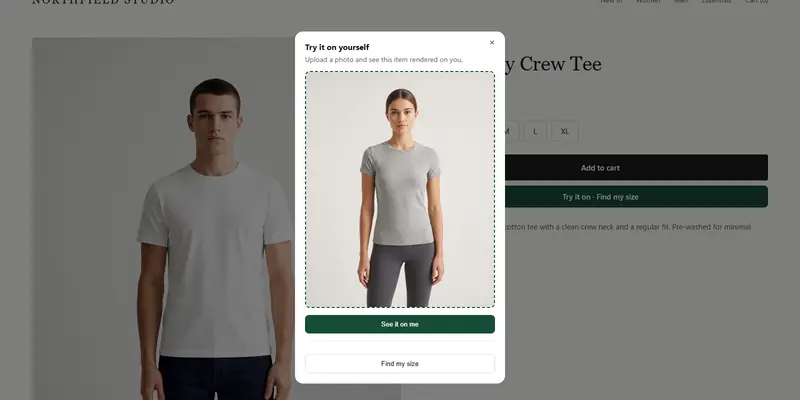
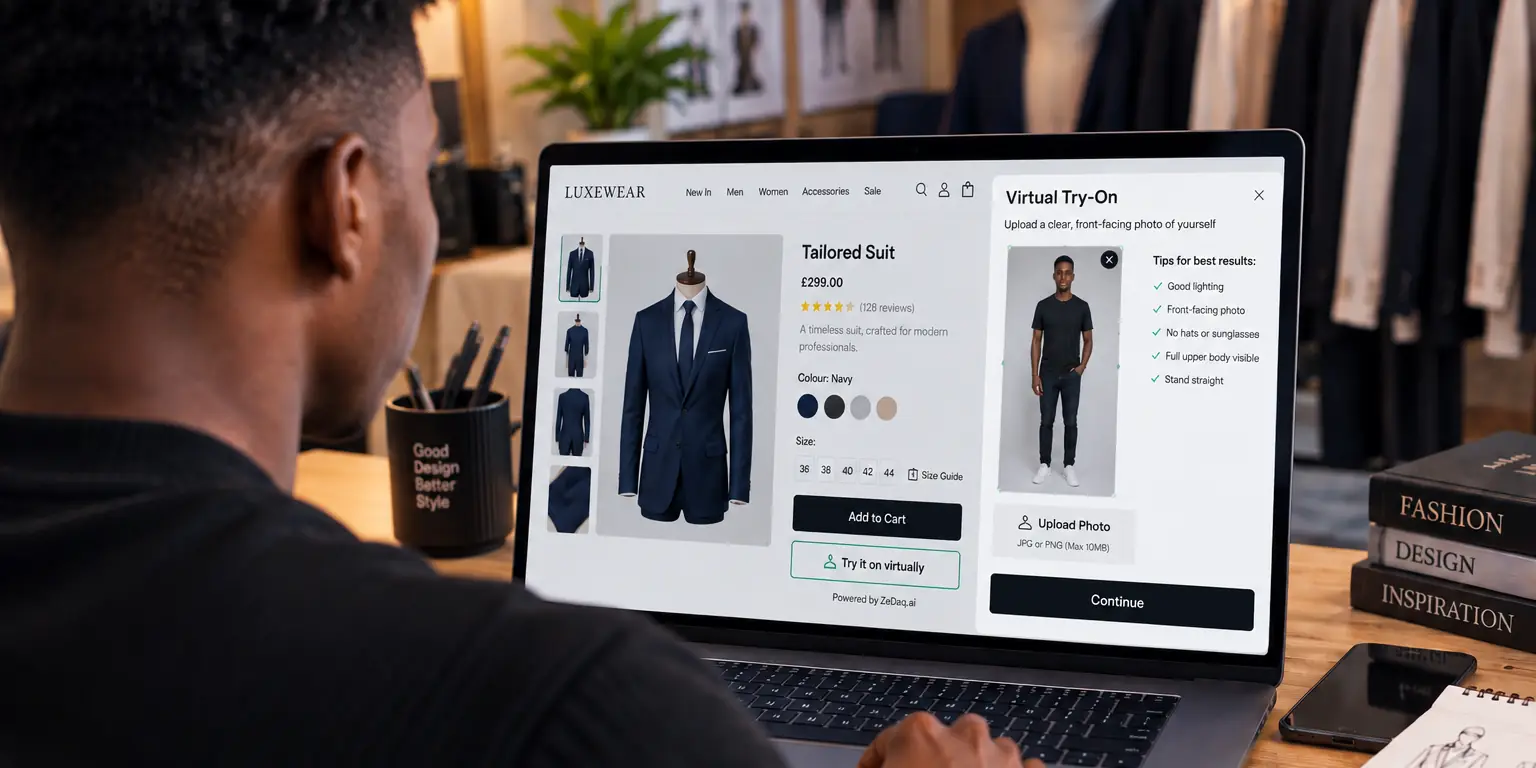
ZeDaq.ai's try-on lets the shopper upload one photo and see your real garment on their body. Its "Find my size" scan takes one photo plus height, about 30 seconds, and matches the measurements to the size chart you enter in your dashboard. On Shopify, the try-on setup guide for Shopify shows the steps. Other platforms use a script-tag widget.
Try-on tools have a short but busy history. If you are wondering what happened to earlier names in the space, read what happened to Zeekit and what stores use now.
ZeDaq.ai's Free plan includes 3 try-ons, 3 measurements and 5 invoices a month. Paid plans are Micro at $14/mo, Starter at $49/mo, Growth at $129/mo and Scale at $299/mo, each with a 3-day free trial and no card required.
Give overseas buyers a size before you ship
FAQs
Which courier is cheapest from Lagos?
It changes with weight, size, route and your account terms. Get same-day quotes from all three for your two standard parcels and compare.
Should I charge customers for international shipping?
You can show the shipping cost at checkout, or build it into the price. Either way, state clearly who pays import duties.
Can I ship aso ebi orders in bulk?
Yes. A single larger shipment to one address can cost less per piece than many small parcels. Quote both options.
Do couriers insure clothing parcels?
Each courier offers its own cover options. Ask about the limits and claim process before you ship high-value pieces.
Try ZeDaq.ai free
Virtual try-on and Find my size for your store, plus client, order and invoicing tools for tailors, in one subscription.