Zeekit: What Happened, and What Stores Use Now
By the ZeDaq.ai team · · 4 min read
On this page
Zeekit was a Tel Aviv startup that let shoppers virtually try on clothes. Here is what happened: Walmart announced it would acquire the company in May 2021, and the technology later appeared inside Walmart's own shopping app and website. Stores that wanted a try-on tool of their own had to look elsewhere.
This article sticks to what the original news reports say, then covers the options fashion stores have today. For a wider look, see our roundup of the best AI virtual try-on apps for Shopify. Facts about other companies were checked in November 2026.
What was Zeekit?
TechCrunch reported that Zeekit used image processing, computer vision and AI to let online shoppers see clothing on a body. It was founded in 2013 and had worked with retailers and brands including Macy's, Asos, Tommy Hilfiger and Adidas.
In other words, Zeekit sold try-on to other retailers before Walmart bought it.
What happened when Walmart bought Zeekit?
Walmart announced the deal on May 13, 2021, and did not disclose the price. Zeekit's three co-founders were to join Walmart.
TechCrunch also wrote that, as it understood it, Walmart would not continue to operate Zeekit's existing business, and that Zeekit would work with its current customers on a transition plan. That is TechCrunch's understanding, not a direct Walmart statement, so treat it as reported rather than confirmed.
Where did the technology end up?
On September 14, 2022, TechCrunch covered Walmart's "Be Your Own Model" feature. Shoppers take a photo in the Walmart iOS app and then try on supported items. The report says the technology comes from the Zeekit acquisition.
Both articles describe the feature inside Walmart's own app and website. Neither says it is offered to other retailers.
What do smaller fashion stores use now?
A store that wants try-on has three broad routes. Which one fits depends on your platform and your team.
| Route | How it works | Good fit for |
|---|---|---|
| A retailer's in-house tool | Built and run by one retailer for its own catalog | Very large retailers |
| An app on your platform | Installed from an app store, no code | Shopify stores |
| An API or script tag | You or a developer connect it to your product pages | Custom, WooCommerce, Wix and Squarespace stores |
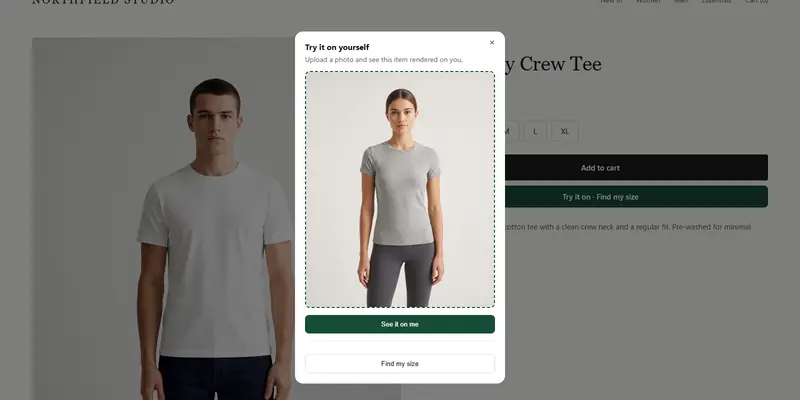
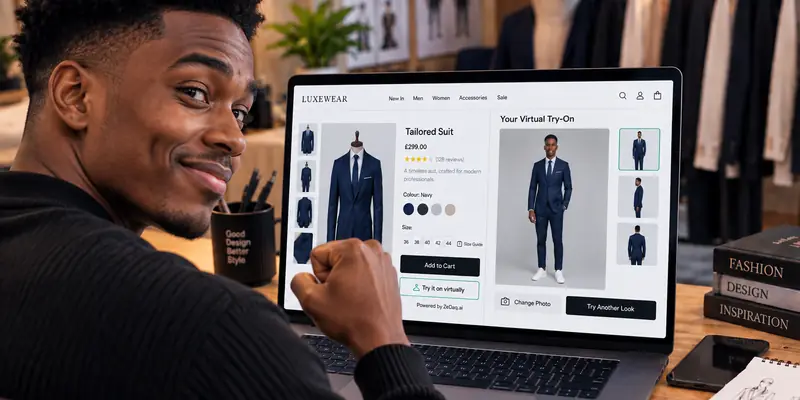
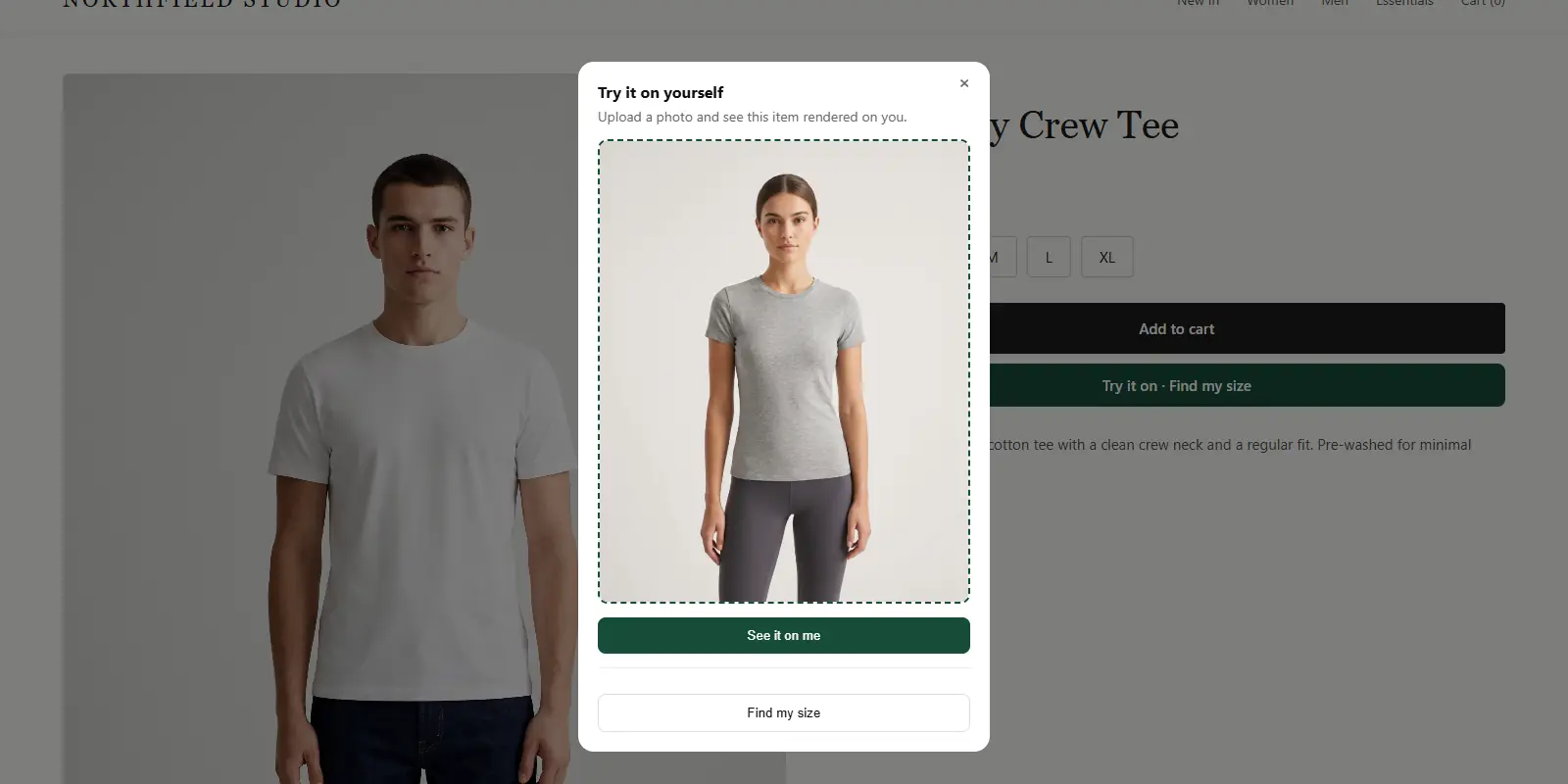
ZeDaq.ai covers the second and third routes. The shopper uploads one photo and sees your real garment on their body. It is available as a Shopify app, as a REST API, and as a script-tag widget for other platforms. The pricing page lists a Free plan at $0 and paid plans from Micro at $14 a month, with a 3-day free trial and no card required on paid plans.
Other vendors exist too. When you compare them, use a short checklist:
- Does it work on your platform, and how long does setup take?
- Does it use your own garment photos?
- Is the price listed publicly, and what counts toward your monthly limit?
- What happens to the shopper's photo?
Our guide to comparing try-on apps on the Shopify App Store goes through these questions in more detail.
Should you build your own instead?
Zeekit's story shows that a try-on tool can change hands, so some stores worry about relying on a vendor. Building your own is a large project, though, and most small stores do not have the engineering time. For a broader view of try-on, read our guide to virtual fitting rooms for clothing websites. The guide on building versus buying try-on lays out the trade-offs.
If you do buy, ask the vendor how you can export your size charts and settings. That keeps switching easy later.
What if you are a tailor rather than a retailer?
Zeekit was built for stores selling ready-made clothing. If you make clothes to measure, try-on is not the main tool you need. Client records, measurements, orders and invoices matter more.
ZeDaq.ai has tailor tools for that: a client CRM, measurements sent through a link the client opens on their phone, orders with a delivery calendar, and invoicing in several currencies. To see how a tailor tool differs from a general CRM, read ZeDaq.ai versus general CRMs for tailors. For a broader comparison, see tailor apps versus a full business suite.
Try virtual try-on on your own store
FAQs
Is Zeekit still available to other stores?
TechCrunch reported in 2021 that Walmart would not continue to operate Zeekit's existing business. Check with any vendor directly before relying on a service you read about in older articles.
Did Walmart use Zeekit technology?
Yes. TechCrunch reported in 2022 that Walmart's "Be Your Own Model" feature uses technology from the Zeekit acquisition.
Can a small store get the same kind of try-on?
Small stores can add photo-based try-on through an app, an API or a script tag. The features differ by vendor, so test with your own products first.
Does virtual try-on replace a size chart?
No. Try-on shows how a garment looks on a body, while a size chart tells the shopper which size to order. Many stores use both.
Try ZeDaq.ai free
Virtual try-on and Find my size for your store, plus client, order and invoicing tools for tailors, in one subscription.