WhatsApp Catalog vs Instagram Shop for Fashion Sellers
By the ZeDaq.ai team · · 7 min read
On this page
- What is a WhatsApp Business catalog?
- What is selling through Instagram?
- How do they compare for a fashion seller?
- When should you lean on WhatsApp?
- When should you lean on Instagram?
- How should you price and photograph pieces for each channel?
- Where do both fall short?
- How do you join social selling to a real store?
- What about handmade and small-batch sellers?
- What should you set up this week?
For fashion sellers, a WhatsApp catalog works best for closing sales with people who already know you, while an Instagram shop works best for getting discovered by people who don't. WhatsApp is a one-to-one sales counter; Instagram is a shop window on a busy street, and most growing brands need both, joined up with a proper online store.
This guide compares the two on the jobs a fashion seller actually has to do: being found, showing products, answering size questions, taking payment and keeping records. When you're ready to move beyond chat selling, our roundup of AI try-on apps for Shopify stores shows what a full product page can add.
What is a WhatsApp Business catalog?
The WhatsApp Business app is a separate app from regular WhatsApp, built for small businesses. Its catalog lets you list products inside your business profile so customers can browse them in the chat.
Meta's WhatsApp Business app page describes it as a way to "set prices and share items with customers in just a few taps" and to "show people all that your business has to offer". The same page says you can "respond to messages even when you're away". Checked November 2026.
In practice, a fashion seller uses the catalog to:
- Send a link to a specific dress when a customer asks "do you have this in green?"
- Share a whole collection with a returning buyer.
- Keep product photos and prices in one place instead of scrolling back through old chats.
What is selling through Instagram?
Instagram is a public, visual social network. Fashion sellers use posts, Reels and Stories to show their pieces to followers and to people who find them through hashtags, Explore or shares.
Meta also offers shopping tools for Instagram, and lists "Sell on Facebook and Instagram" among its business resources. Which shopping features you can use, including whether in-app checkout is available, depends on your country and account, so check Meta's Business Help Centre for your market before you plan around a feature.
Whatever features you have, most Instagram fashion sales follow one of two paths:
- The buyer taps through to your website and checks out there.
- The buyer sends a DM, and the sale is closed in chat, often moving to WhatsApp.
How do they compare for a fashion seller?
| Job | WhatsApp catalog | |
|---|---|---|
| Getting found by new buyers | Weak. People need your number first | Strong. Posts, Reels and hashtags reach new people |
| Showing a collection | Good for a short list of pieces | Strong for visual storytelling and styling |
| Answering size questions | Strong. Private, one-to-one chat | Possible in DMs, but slower for detail |
| Custom and made-to-measure orders | Strong. Easy to swap photos and measurements | Usually moves to DM or WhatsApp |
| Taking payment | Usually a separate payment link or bank transfer | Depends on available shopping features or your website |
| Keeping order records | Weak. Details get lost in chats | Weak. Same problem in DMs |
| Reaching repeat buyers | Strong. Direct and personal | Good, but depends on the algorithm showing your posts |
Neither one is a full store. Both are great at some jobs and weak at record-keeping and sizing at scale.
When should you lean on WhatsApp?
WhatsApp is the better tool when the sale needs conversation. That includes:
- Made-to-measure and bespoke pieces, where you need measurements and fabric choices.
- Aso ebi and group orders, where one coordinator collects sizes for many people.
- Repeat customers who already trust you and just want to know what's new.
- High-value pieces where buyers want to ask questions before paying.
A simple WhatsApp workflow
- Set up your catalog with your best-selling pieces, each with clear photos and a price.
- Keep a simple list of open chats by stage, such as "new inquiry", "awaiting payment" and "in production".
- Write standard answers for common questions, such as delivery times, how to measure and payment details, and paste them when asked.
- Send a catalog link instead of a photo when someone asks about an item.
- Move confirmed orders to a written record, not just the chat.
When should you lean on Instagram?
Instagram is the better tool when you need attention. Lean on it to:
- Launch a new collection with a series of posts and Reels.
- Show the garment moving, on different bodies and in different light.
- Build trust with styled photos, behind-the-scenes content and customer reposts with permission.
- Reach the diaspora and buyers in other cities who would never find your WhatsApp number.
Put a clear next step in your bio: a link to your website or a link to start a WhatsApp chat.
How should you price and photograph pieces for each channel?
The same product needs slightly different treatment on each platform.
On WhatsApp
Buyers look at catalog photos on a small screen inside a chat. Use one clear front photo on a plain background as the main image. Add a back view and a close-up of the fabric. Write the price, the available sizes and the delivery time in the description, so the buyer doesn't have to ask.
On Instagram
Buyers scroll fast, so the first image has to stop them. Use styled photos on a model, in natural light, and show movement in Reels. Put the price and sizes in the caption or the first comment, and say where to buy.
On both
Show the garment on more than one body type where you can. Buyers want to picture it on themselves, and one model in one size can't show that.
Where do both fall short?
Chat-based selling has the same three weak spots on both platforms.
Sizes
When a buyer asks "what size am I?", you answer by hand, one chat at a time. As orders grow, that takes hours, and mistakes lead to alterations or returns.
Records
Orders, measurements and payments sit in scrolling chats. Finding last year's measurements for a returning client is slow.
Payments and invoices
Bank transfers and screenshots make it hard to see who has paid a deposit and who owes a balance.
How do you join social selling to a real store?
A website doesn't replace WhatsApp or Instagram. It gives both a place to send people where size, payment and records are handled for you.
A good setup looks like this:
- Instagram finds the buyer. A post or Reel links to the product page on your site.
- The product page answers size. A size chart, plus a size recommendation tool, gives the buyer a size without a chat.
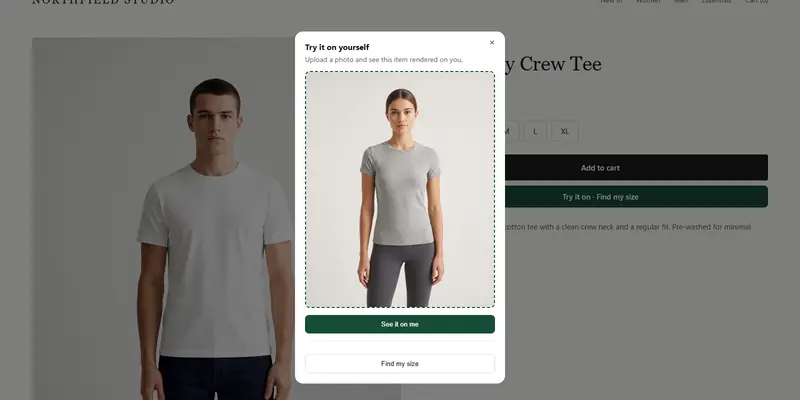
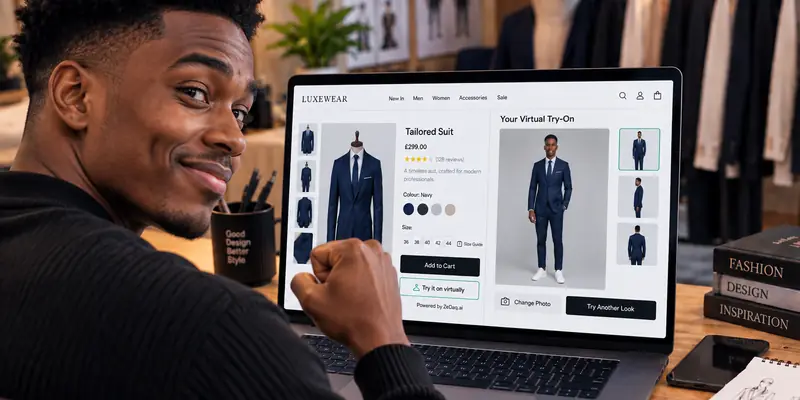
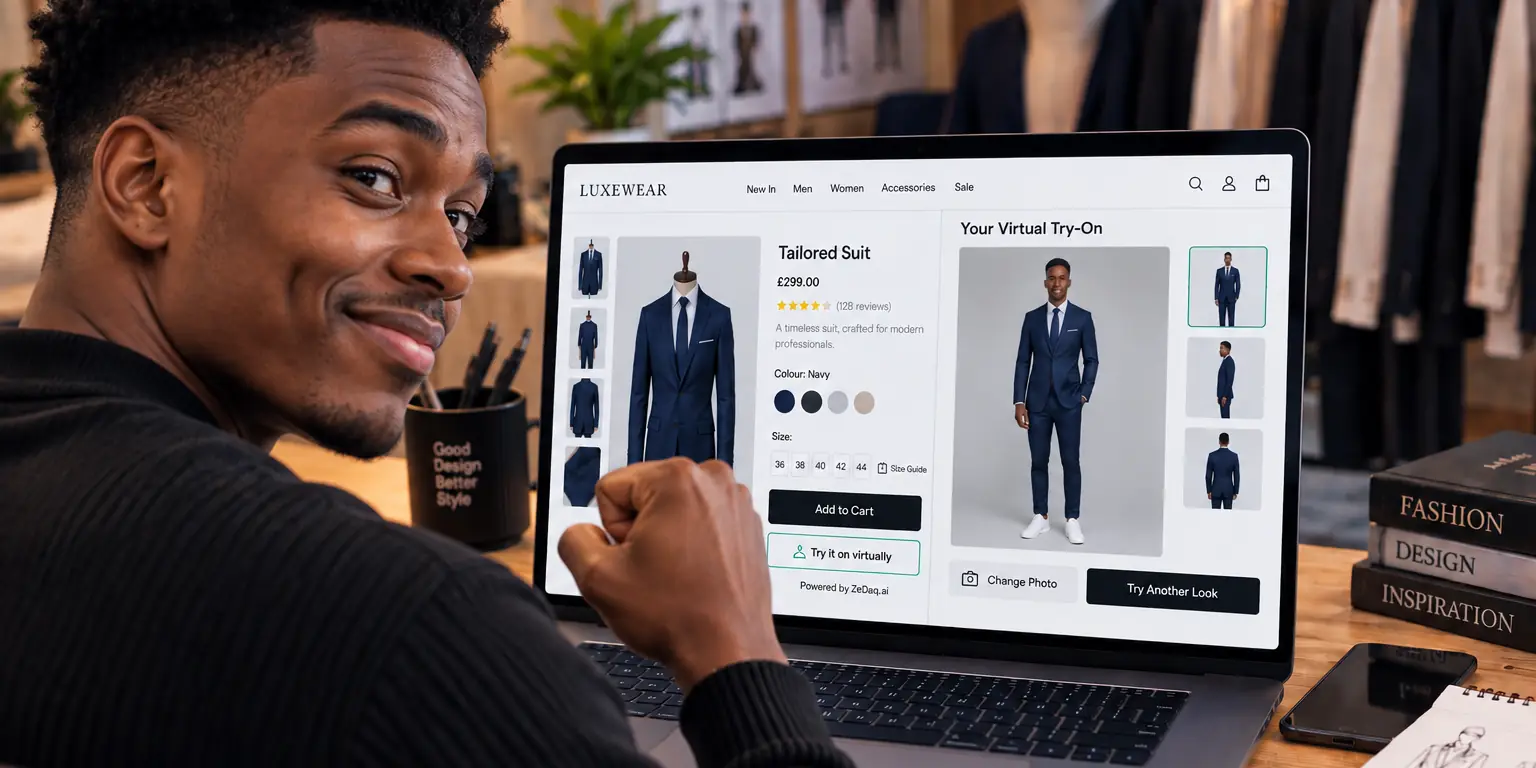
- The product page shows fit. Try-on lets the buyer see the garment on a photo of themselves.
- Checkout takes payment. No screenshots, no chasing.
- WhatsApp handles the exceptions. Custom requests and after-sales questions still go to chat.
A virtual fitting room on a clothing site covers steps 2 and 3. With ZeDaq.ai, the shopper uploads one photo and sees your real garment on their body, and "Find my size" matches a 30-second scan, one photo plus height, to your own size chart. It works on Shopify through an app, and on WooCommerce, Wix, Squarespace, BigCommerce and custom sites through a script-tag widget.
If you also sell on marketplaces, it's worth knowing what they offer shoppers. Our guide to Amazon virtual try-on for fashion sellers covers that side.
What about handmade and small-batch sellers?
If you make each piece by hand, your choice may be between Instagram and a marketplace rather than a full website at first. We compare those two routes in Etsy versus Instagram for handmade clothing.
For tailors who mainly sell custom work through WhatsApp, the biggest gain is usually record-keeping: client details, measurements and invoices in one place. ZeDaq.ai's tailor tools include a client CRM, measurements through a link the client opens on their phone, orders with a delivery calendar, and invoicing in multiple currencies, including NGN, GBP and USD.
ZeDaq.ai's Free plan includes 3 try-ons, 3 measurements and 5 invoices a month. Paid plans are Micro at $14/mo, Starter at $49/mo, Growth at $129/mo and Scale at $299/mo, each with a 3-day free trial and no card required.
What should you set up this week?
Here is a short checklist to get more from both channels right away:
- Add your top 10 pieces to your WhatsApp catalog with prices.
- Write standard answers for delivery, measuring and payment.
- Put one clear link in your Instagram bio.
- Post a size guide as a pinned post or Highlight.
- Start a simple record of every confirmed order, outside the chat.
- Decide when a buyer should move from chat to your website.
Answer size questions without a chat
FAQs
Is the WhatsApp Business app free?
Meta's WhatsApp Business app page links to the app stores but doesn't state a price. Check the app listing in your phone's app store for current terms.
Can I sell on Instagram without a website?
Yes. Many sellers close sales in DMs or WhatsApp. A website helps once you need sizing, payments and records to run without you in every chat.
Should I put prices in my WhatsApp catalog?
Yes, where you can. Clear prices save back-and-forth messages and help buyers decide faster.
Can my WhatsApp catalog recommend sizes?
No. A catalog shows products and prices. Size recommendation needs a size chart and a tool on your product page.
Try ZeDaq.ai free
Virtual try-on and Find my size for your store, plus client, order and invoicing tools for tailors, in one subscription.