Etsy vs Instagram for Selling Handmade Clothing
By the ZeDaq.ai team · · 7 min read
On this page
- What is the basic difference between Etsy and Instagram?
- How do the costs compare?
- Which is better for being found?
- How do you handle sizing on each platform?
- How do payments and checkout compare?
- What about owning your customer relationships?
- What do buyers expect from a handmade clothing listing?
- Which should you choose? A scorecard
- How do you run both without burning out?
- When is it time for your own store?
For selling handmade clothing, Etsy is better when you want buyers who are already searching for handmade pieces, and Instagram is better when you want to build your own audience and keep more control over the sale. Etsy gives you traffic and checkout in exchange for marketplace fees and rules; Instagram gives you reach and a personal brand, but you have to bring the buyers and handle the payment yourself.
This guide helps you choose by comparing the two on cost, discovery, sizing, payments and long-term ownership. If you later move to your own store, our guide to AI try-on apps for Shopify shows what a product page can do that neither platform offers.
What is the basic difference between Etsy and Instagram?
Etsy is an online marketplace. Buyers go there to search for and buy items, often handmade or vintage. You list a product, a buyer finds it in search, and they check out on Etsy.
Instagram is a social network. People go there to scroll, follow accounts and watch content. Buying is a side activity. You post, people discover you, and then the sale happens through a link, a DM or whatever shopping tools are available in your country.
So the core difference is intent. On Etsy, many visitors are shopping. On Instagram, most visitors are browsing, and your content has to turn them into buyers.
How do the costs compare?
Etsy charges sellers fees for listing and selling, and lists them on its fees and payments page. Read that page for the current amounts before you price your pieces, since we only quote fees we've confirmed on the live page.
Instagram doesn't charge you to post. Your costs there are different:
- Payment fees from whatever you use to take money, such as a payment link or bank transfer.
- Your time making photos, Reels and Stories, and answering DMs.
- Ads, if you choose to promote posts.
- A website, if you send buyers to one.
A per-sale cost worksheet
Fill this in for one typical piece, such as a hand-sewn wrap dress.
| Cost line | Etsy | |
|---|---|---|
| Sale price | Your price | Your price |
| Platform listing and selling fees | From Etsy's fees page | None for posting |
| Payment processing | From Etsy's fees page | From your payment provider |
| Ads (average per sale) | Optional | Optional |
| Time to make the sale (hours × your hourly rate) | Usually lower | Usually higher, because of DMs |
| What you keep | Your figure | Your figure |
The time line is the one most makers skip. If Instagram sales take an hour of messages each, that hour has a cost.
Which is better for being found?
| Etsy | ||
|---|---|---|
| How buyers find you | Search inside Etsy, plus categories | Feed, Reels, Explore, hashtags and shares |
| What helps you rank or reach | Listing titles, tags, photos, reviews | Engaging content, posting regularly, shares |
| Who your buyers are | People already searching for items | Followers and people shown your content |
| Who owns the relationship | The marketplace | You, more directly |
Etsy helps new makers with no audience. Instagram rewards makers who enjoy creating content and building a following over time.
How do you handle sizing on each platform?
Handmade clothing has a sizing problem that mass-market brands don't. Each maker cuts their own patterns, so your "medium" may not match anyone else's.
On Etsy
You describe sizes in the listing and add a size chart image. Buyers may message you through Etsy with questions. Some makers offer custom sizing as a listing option.
On Instagram
Sizing questions arrive in DMs, one at a time. That's personal, but slow. A pinned size-guide post or Story Highlight saves repeat answers.
What works on both
- Measure finished garments and a fit model. Publish body measurements for each size, not just S, M and L.
- Give measurements in centimeters and inches.
- Add a fit note such as "relaxed fit, size down for a closer fit".
- Show the piece on different bodies if you can.
Once you have your own store, size recommendation can take over the "what size am I?" question. AI size recommendation for fashion stores explains how a scan and your size chart work together.
How do payments and checkout compare?
Etsy runs the checkout. The buyer pays on Etsy, and you get paid according to Etsy's payment terms.
On Instagram, checkout depends on what's available to you. Often you'll send the buyer to a website, a payment link or a bank transfer. That gives you more control, but you also handle failed payments, refunds and records yourself.
What about owning your customer relationships?
This is the long-term difference. On a marketplace, the platform sets the rules for how you contact buyers, how your shop is shown and what you pay. If the rules change, you adapt.
On Instagram, your followers are more directly yours, but the algorithm still decides who sees each post. Many makers use Instagram to build an audience and then invite followers to an email list or their own website, which they fully control.
What do buyers expect from a handmade clothing listing?
Whether a buyer sees your piece on Etsy or Instagram, they need the same information before they'll pay. Missing details lead to messages, hesitation or returns.
Cover these in every listing or caption:
- Fabric and care. Name the fabric, the weight if you know it, and how to wash it.
- Size and fit. Body measurements per size, plus how the piece is meant to fit.
- Made-to-order time. If you sew after the order, say how many days it takes before shipping.
- What's included. For sets, list each piece, such as top, skirt and head wrap.
- Variations. Explain that hand-dyed or hand-printed fabric may vary slightly from the photo.
- Returns and alterations. Say whether custom pieces can be returned or adjusted.
A buyer who has all of this can decide without asking, and that saves you time on both platforms.
Which should you choose? A scorecard
Score each line from 1 (not true for me) to 3 (very true).
| Statement | Points to |
|---|---|
| I have no audience yet | Etsy |
| I enjoy making photos and videos | |
| I sell ready-made pieces in set sizes | Etsy |
| I sell mostly custom or made-to-measure work | Instagram, with chat |
| I want checkout handled for me | Etsy |
| I want full control over prices and branding | Instagram plus a website |
| I can answer messages daily | |
| I want buyers who are already searching | Etsy |
Add up the points for each side. A close score means you'll likely do best using both: Etsy for discovery and checkout, Instagram for brand and community.
How do you run both without burning out?
- Use the same photos on both, cropped to fit each.
- Keep one stock list so you don't sell the same one-off piece twice.
- Post on Instagram, then link to the listing or your site.
- Batch content once a week instead of posting daily on the fly.
- Track where each sale came from in a simple sheet.
If chat selling is a big part of your week, our comparison of WhatsApp catalogs and Instagram shops covers how to split the work between those two.
When is it time for your own store?
Consider your own store when:
- You have repeat buyers who ask how to order directly.
- You spend hours each week answering size questions.
- Platform fees take a share you could put into materials or ads.
- You want your own brand on the checkout and order emails.
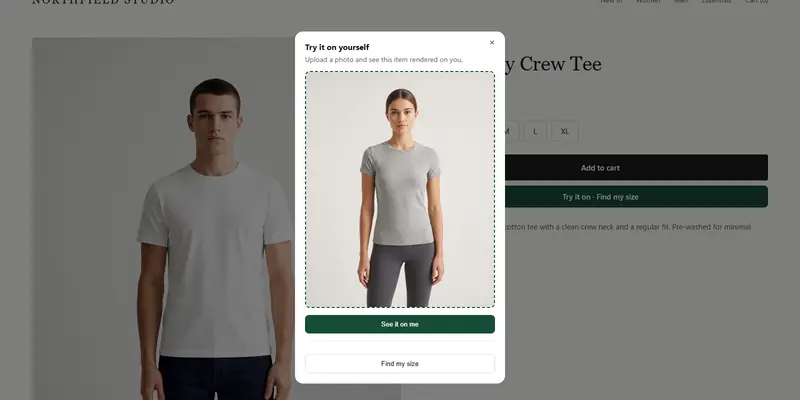
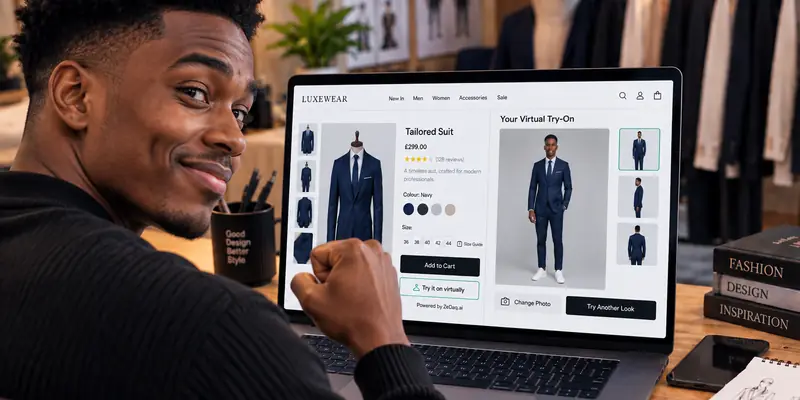
A store also lets you add tools neither platform offers. ZeDaq.ai, for example, adds try-on, where the shopper uploads one photo and sees your real garment on their body, and "Find my size", which matches a 30-second scan, one photo plus height, to the size chart you enter. It works on Shopify through an app and on other platforms through a script-tag widget.
Body scanning is a growing field with several vendors. If you want to see how two larger players compare, read 3DLOOK versus Bold Metrics.
ZeDaq.ai's Free plan includes 3 try-ons, 3 measurements and 5 invoices a month. Paid plans are Micro at $14/mo, Starter at $49/mo, Growth at $129/mo and Scale at $299/mo, each with a 3-day free trial and no card required.
Add size help when you open your own store
FAQs
Can I sell on Etsy and Instagram at the same time?
Yes. Many makers use Instagram to show their work and link followers to their Etsy listings or their own site. Keep one stock list so one-off pieces aren't sold twice.
Do I need a business account to sell on Instagram?
A business or creator account gives you more tools, such as insights. Check Meta's help pages for which shopping features apply in your country.
Is Etsy only for handmade items?
Etsy is known for handmade and vintage items. Read Etsy's seller policies for the current rules on what you can list.
How do I stop size questions taking over my DMs?
Publish a clear size chart with body measurements, pin it, and add fit notes to each piece. On your own store, a size recommendation tool can answer the question for you.
Try ZeDaq.ai free
Virtual try-on and Find my size for your store, plus client, order and invoicing tools for tailors, in one subscription.