Virtual Try-On and Sustainability: Fewer Samples, Fewer Shipments?
By the ZeDaq.ai team · · 5 min read
On this page
- Where do fashion returns create environmental cost?
- Can try-on reduce returns?
- Where might try-on reduce samples and shipments?
- What are the environmental costs of try-on itself?
- What size guidance helps more than any tool?
- How do you check whether it works in your store?
- How should you talk about sustainability without overclaiming?
Virtual try-on can support sustainability goals by helping shoppers choose with more confidence and by reducing the need for some physical samples. But it is not a proven fix, and it uses computing power of its own, so treat any environmental benefit as something to measure in your own store.
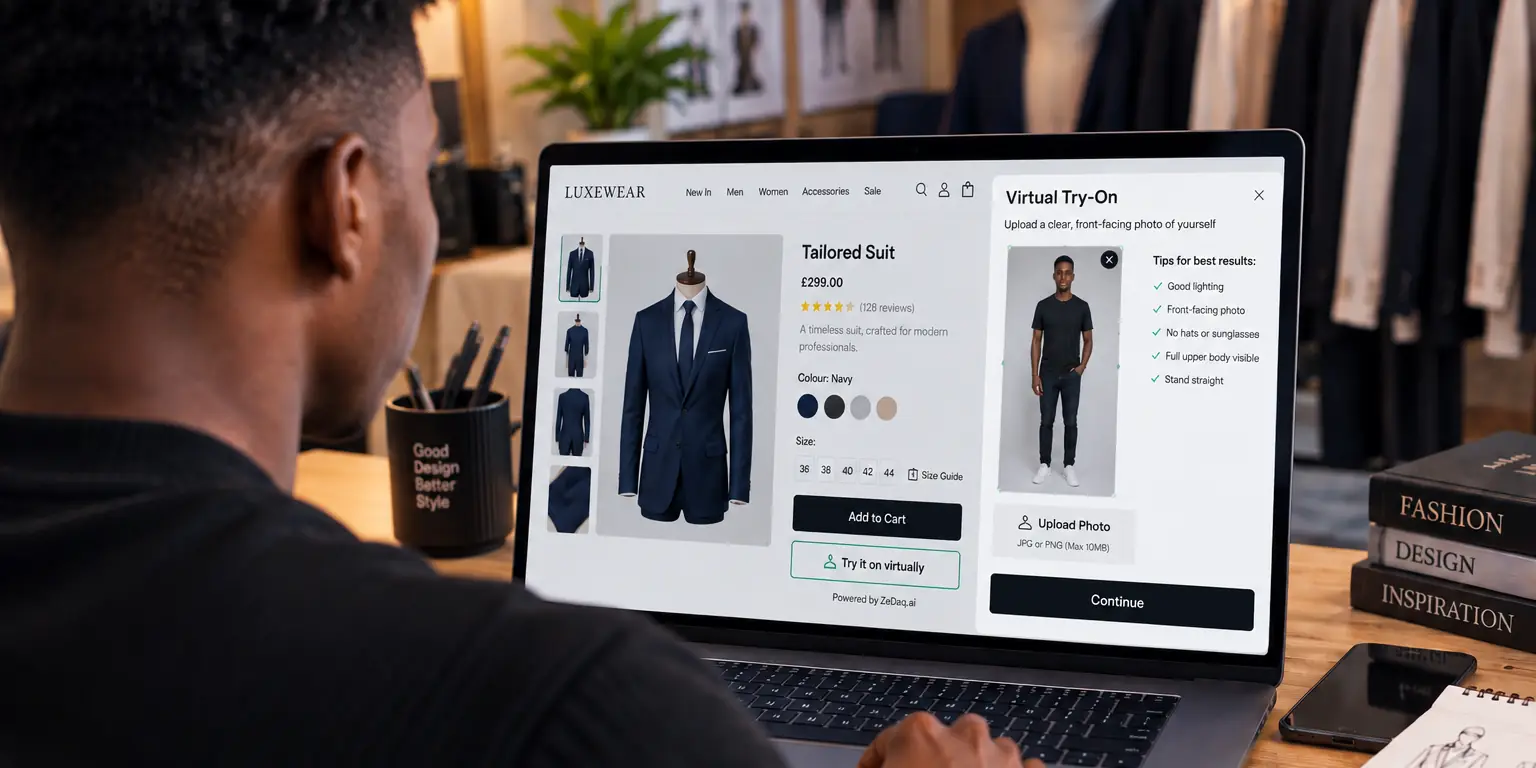
To see what the technology involves, start with how a virtual fitting room for clothing websites works. This article looks at where it might help, where it may not, and how to keep claims honest.
Where do fashion returns create environmental cost?
Every returned parcel is a second journey. It needs transport, packaging and handling, and some items cannot be resold.
Research has started to measure this. A 2026 study from Vrije Universiteit Brussel, reported by FashionUnited, found that a small group of frequent returners causes most of the emissions linked to returns across the shoppers surveyed. The original paper was not linked in that report, so read it as a news summary.
The point for stores is that returns are not evenly spread. A few behaviors drive much of the impact, and fit problems are one cause you can address.
Can try-on reduce returns?
It might, but this article makes no claim about a number. Any figure you read from a vendor describes that vendor's setting, not yours.
What we can say is how the mechanism would work. A shopper who sees the garment on themselves, and gets a size suggestion based on your own chart, may be less likely to order two sizes or to guess. Whether that happens in your store depends on your products, your customers and how well the size chart is set up.
If you want to measure it, see how to measure conversion gains from virtual try-on, and apply the same discipline to returns: compare periods and products before drawing conclusions.
Try the shopper experience yourself
Try it on yourself
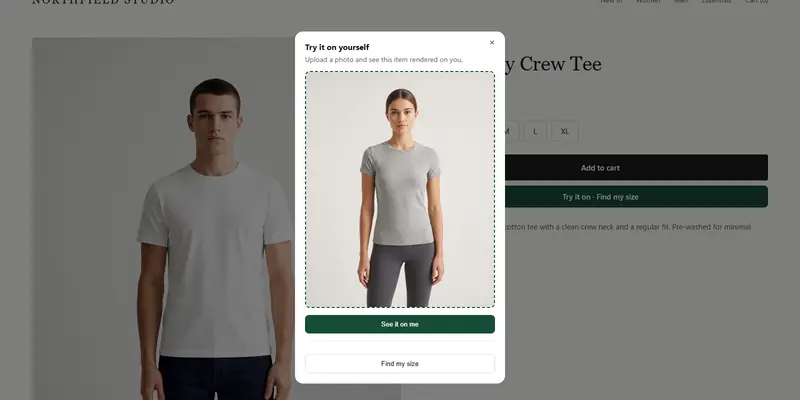
Live renderUpload a photo, pick a piece, see it rendered on you.
Pick something to try on
Where might try-on reduce samples and shipments?
There are three places to look. None is guaranteed.
- Wrong-size orders. Better size guidance can mean fewer garments sent back for fit.
- Bracketing. Some shoppers order two sizes and return one. Clearer guidance may reduce this habit.
- Samples and photo shoots. Using digital images in some places may cut the number of physical samples sent for shoots. The article on whether try-on can replace fashion models explains where that does and does not work.
For marketing, using try-on in email campaigns shows another way to show products without extra shipping.
What are the environmental costs of try-on itself?
Honest sustainability writing should say this clearly: AI image generation uses electricity, and so do the data centers behind it. Each try-on render has a cost, even if it is small compared with shipping a parcel.
We don't have a sourced figure for that cost, so we won't state one. If your goal is a verified footprint, ask any vendor how they measure and report energy use, and decide whether the answer is good enough for your reporting.
Try-on can also lead to extra usage, such as shoppers trying many items. If that doesn't lead to fewer returns, the net effect may be neutral or worse.
What size guidance helps more than any tool?
Technology comes after the basics. If your size chart is wrong, no tool will fix returns.
- Use body measurements, not garment sizes, in your chart.
- Add a fit note to every product.
- Show what size the model wears.
- Keep labels consistent, from the product page to the stockroom.
The guide to writing size guides that reduce returns covers each of these. Fixing them first costs little and has no computing footprint.
How do you check whether it works in your store?
Use a simple test, and avoid making claims you cannot support.
- Pick a baseline. Record return rates and reasons for the products you will test.
- Add try-on to a few products only. Keep similar products without it as a comparison.
- Run it long enough to see seasonal swings. A short test is easily distorted by a sale.
- Compare return reasons, not just totals. Look at "wrong size" and "didn't look right" separately.
- Write down what you find, good or bad. Share it plainly.
The Free plan from ZeDaq.ai includes 3 try-ons a month, which is enough to try the experience yourself, though not enough for a store-wide test. Paid plans start with Micro at $14 a month, and every paid plan has a 3-day free trial with no card required.
How should you talk about sustainability without overclaiming?
Be specific and modest.
- Say what you do. "We offer virtual try-on and size guidance to help shoppers choose the right size."
- Do not promise outcomes. Avoid saying it "cuts emissions" unless you have measured it.
- Share your own data. If your return rate on tested products changes, report it as your result.
- Include the full picture. Mention packaging, shipping and repair services as well.
Regulators in many countries scrutinize green claims, so check the rules where you sell before publishing environmental statements.
See try-on for yourself before you decide
FAQs
Does virtual try-on reduce carbon emissions?
It may reduce some wrong-size shipments, but there is no figure we can give you. Measure return reasons in your own store before claiming any benefit.
Does AI try-on have its own carbon footprint?
Yes. Generating images uses electricity. The size of that footprint depends on the provider, and you can ask the vendor how they measure it.
Is a better size chart more sustainable than try-on?
Often it is the first step, because it costs little and addresses fit directly. Try-on works best on top of a good chart.
Can try-on replace physical samples?
For some uses, such as seeing a garment on different bodies, it can reduce the need. For fabric feel and construction checks, real samples are still needed.
Try ZeDaq.ai free
Virtual try-on and Find my size for your store, plus client, order and invoicing tools for tailors, in one subscription.