
Tax for Tailors in South Africa: The Basics
By the ZeDaq.ai team · · 4 min read
On this page
- What is turnover tax for micro businesses?
- How much is turnover tax?
- Which tailors cannot use turnover tax?
- How do you register for turnover tax?
- When do you file and pay?
- What records should a tailor keep?
- What does a yearly routine look like?
- What if your turnover grows?
- How can software help?
- How does South Africa compare with other countries?
A small tailor in South Africa may be able to pay turnover tax to the South African Revenue Service (SARS) instead of the usual income tax rules. Turnover tax is built for micro businesses, and it is charged on your turnover, not your profit.
This is general information, not legal or tax advice. It is written for tailors and designers, and it sits alongside the business tools in ZeDaq.ai for tailors. Checked November 2026.
What is turnover tax for micro businesses?
SARS says in its guide to administration of turnover tax that turnover tax was established for micro businesses with an annual qualifying turnover not exceeding R1 million. A business that goes above that limit generally has to deregister.
Because it is based on turnover, you do not calculate profit. That keeps the paperwork small, but you cannot deduct costs such as cloth or rent the way you would under normal income tax.
How much is turnover tax?
SARS uses a table of rates on taxable turnover. The lowest band pays nothing, and the rate then rises in steps up to a top rate on turnover above the highest band. The table in SARS's guide is labeled for years of assessment ending 28 February 2025, so check the current table on the SARS site before working out your own tax.
Do the sum on your actual turnover only after you have the current table.
Which tailors cannot use turnover tax?
Some businesses are excluded. According to the SARS guide, these include natural persons who get a large share of their receipts from professional services (the guide refers to more than 20% of total receipts), and personal service providers or labour brokers without a SARS exemption certificate.
Check the full list with SARS or an adviser, especially if you also offer paid consulting or training.
How do you register for turnover tax?
SARS says registration uses the TT01 form, which can be submitted in three ways:
- At a SARS branch, after booking an appointment through eBooking
- By email, after printing and completing the form
- Online, through the SARS Online Query System
Follow SARS's current instructions, since forms and systems change. Have your ID, business details and bank details ready.
When do you file and pay?
SARS's guide describes a tax year that runs from 1 March to the end of February. You submit one annual return, called the TT03, for each year of assessment.
You also make two interim payments, by the last business day of August and February, which are applied to your final liability. Set a reminder for both dates.
What records should a tailor keep?
Even though turnover tax is simple, you still need clear records. Keep these:
- Every order, with date, client and price
- Deposits and final payments, and when each arrived
- Invoices or receipts you issued
- Bank and mobile payment statements
- Refunds and cancelled orders
Your annual turnover figure comes straight from these records, so a tidy list saves hours at filing time.
What does a yearly routine look like?
A simple calendar helps you avoid missed dates:
- At the end of February, close your books for the tax year.
- Total your qualifying receipts for the year from your order and payment records.
- Prepare your annual return and check the figures against bank statements.
- By the last business day of August and February, make the interim payments.
- Keep your records and filing confirmations together.
Ask SARS or a registered tax practitioner if you are unsure how to treat any receipt.
What if your turnover grows?
If your qualifying turnover goes above the limit, the SARS guide says a business generally has to deregister from turnover tax. A different tax regime then applies.
Review your numbers during the year, not only at year end, so the change does not catch you by surprise.
How can software help?
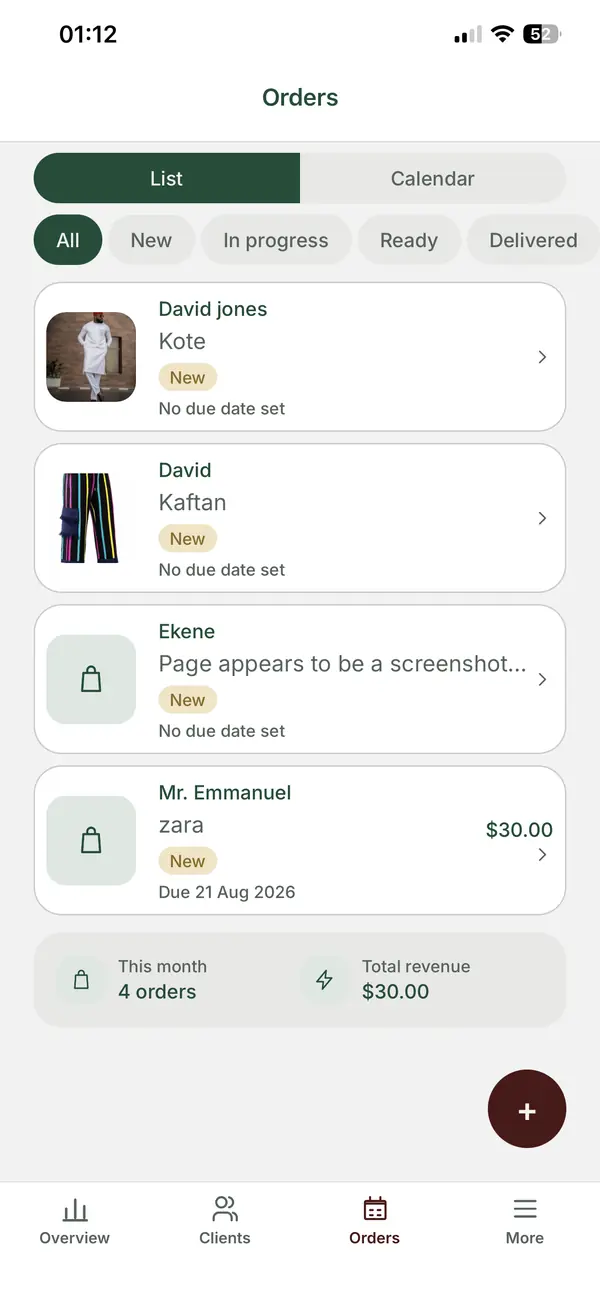
A client list with orders and invoices makes your turnover easy to find. ZeDaq.ai has tools for tailors: a client CRM, orders and a delivery calendar, and invoicing in multiple currencies, including NGN, GBP and USD. It does not file taxes for you.
For income side planning, see how much tailors charge in South Africa. If you plan to sell online, read about Shopify in South Africa.
How does South Africa compare with other countries?
Each country treats small business tax differently. If you work with clients abroad, read the basics for tailors in the US and tailors in Kenya.
Keep your orders and invoices in one place
FAQs
Is turnover tax charged on profit?
No. It is charged on turnover, which is your qualifying receipts for the year, not your profit.
Do I need to register if my turnover is small?
That depends on your situation. Ask SARS or a registered tax practitioner how the rules apply to you.
Can I choose turnover tax?
SARS describes registration on the TT01 form. Eligibility rules apply, so check the current guide.
Does ZeDaq.ai file my tax return?
No. It helps you keep orders, payments and invoices in order, which makes filing easier.
Try ZeDaq.ai free
Virtual try-on and Find my size for your store, plus client, order and invoicing tools for tailors, in one subscription.

