
Tax for Tailors in the US: The Basics
By the ZeDaq.ai team · · 4 min read
On this page
The basics of tax for tailors in the US: a self-employed tailor usually reports business income and expenses on Schedule C, pays self-employment tax on the profit and makes estimated tax payments during the year. Employees whose employer withholds tax work differently.
This guide explains the main pieces in plain words and links to the IRS for the details. If you run a tailoring business, good records make all of this easier, and ZeDaq.ai for tailors includes orders and invoicing tools for that.
This is general information, not legal or tax advice. Rules change and depend on your situation, so check the IRS pages linked below or speak to a qualified tax professional.
Do self-employed tailors have to file a tax return?
Generally, yes. The IRS says self-employed people generally must file an annual income tax return, and you have to file if your net earnings from self-employment were $400 or more, according to the IRS Self-Employed Individuals Tax Center.
Even below that amount you may need to file for other reasons, which the same page points to in the Form 1040 instructions. Net earnings means what is left after allowed business expenses, not total sales.
What is Schedule C and how does a tailor use it?
Schedule C is the form where a sole proprietor reports business income or loss. The IRS explains it on its About Schedule C page, and the Schedule C instructions walk through each line.
For a tailor, the income side includes:
- Payments for alterations and repairs.
- Payments for custom or made-to-measure garments.
- Deposits once they count as income under your accounting method.
The expense side may include fabric and notions, thread, equipment, rent for a studio and other costs of running the business. Ask a tax professional what applies to you. Keep receipts for everything you claim.
What is self-employment tax?
It is the Social Security and Medicare tax you pay on your own profit, because no employer pays half for you. The IRS states the rate and rules on its self-employment tax page: the rate is 15.3%, made up of 12.4% for Social Security and 2.9% for Medicare.
You use Schedule SE to work it out, based on your Schedule C profit. The Schedule SE instructions explain the steps. This tax is separate from your income tax.
What are quarterly estimated taxes?
Because no one withholds tax from your customer payments, you generally pay tax during the year in installments. The IRS says individuals, including sole proprietors, generally have to make estimated tax payments if they expect to owe $1,000 or more when their return is filed. See the IRS estimated taxes page.
The year is split into four payment periods, each with its own due date. The IRS does not list the dates on that page, so check IRS payments for current dates and ways to pay. Form 1040-ES includes a worksheet to help you work out how much to pay, and you can find it on the IRS Form 1040-ES PDF.
A simple habit helps: set aside a share of each payment into a separate account as you are paid. Ask a tax professional what share suits your situation.
What records should a tailor keep?
Records support every number you report. Aim to keep:
- Invoices and payment receipts for every job.
- Expense receipts for fabric, tools and supplies.
- Client and order records, so you can match income to jobs.
- Mileage and home-studio notes if you plan to claim them. Ask a professional about the rules.
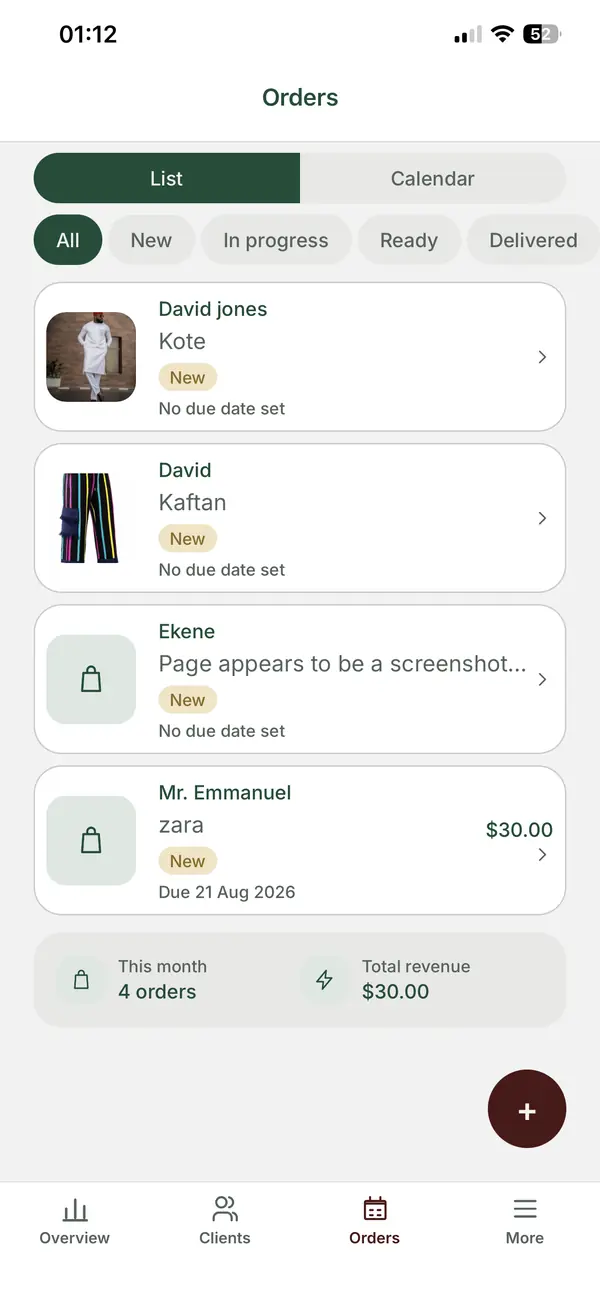
ZeDaq.ai's tailor tools include a client CRM, orders and a delivery calendar, and invoicing in multiple currencies, including NGN, GBP and USD. They help you keep a clear record of jobs and invoices. They do not calculate or file tax, so use your records with a tax professional or tax software.
Free plan limits include 5 invoices a month, and paid plans start with Micro at $14 a month. See pricing for current details.
How do you keep your records in one place?
Many tailors run orders through chat apps, and then struggle to rebuild their income at tax time. Moving orders, measurements and invoices into one system reduces that problem. Our comparison of ZeDaq.ai vs WhatsApp Business for running a tailoring business looks at how the two compare for record keeping.
Tailors in other countries face different rules. If you work elsewhere, read the guides to tax for tailors in Kenya and tax for tailors in Nigeria.
What should you check before you file?
Use this short checklist.
- Confirm whether you are self-employed or an employee for each job.
- Total your income from all clients.
- List and document your business expenses.
- Work out your Schedule C profit.
- Complete Schedule SE.
- Check whether you owe estimated payments and when.
- Check state and local rules separately. This guide covers federal basics only.
Keep orders, clients and invoices in one place
FAQs
Do I need to register as a business to file Schedule C?
Schedule C is for sole proprietors reporting business income or loss. Registration rules vary by state and city, so check with your state and local authorities.
Does ZeDaq.ai calculate my taxes?
No. It helps you keep records of clients, orders and invoices. Use those records with a tax professional or tax software.
Are estimated payments optional?
Not if you expect to owe the threshold amount the IRS describes. Check the IRS estimated taxes page for current rules.
Does this cover state taxes?
No. This guide covers federal basics only, and state and local taxes vary.
Try ZeDaq.ai free
Virtual try-on and Find my size for your store, plus client, order and invoicing tools for tailors, in one subscription.

