
Cash Flow for Tailors in Slow Months
By the ZeDaq.ai team · · 4 min read
On this page
- Why does tailoring income swing so much?
- How do you see your slow months coming?
- What should you do in busy months?
- How big should your buffer be?
- What can you do to earn in slow months?
- How do invoices help cash flow?
- How do you keep costs down when work is quiet?
- What does a simple monthly cash plan look like?
- What should you do when a client pays late?
To keep your tailor cash flow steady in slow months, save a share of every busy-season payment, take deposits on every order and use quiet weeks to bring in work early. Cash flow means the timing of money coming in and going out, and tailors' income is lumpy.
This guide is for tailors and designers whose orders peak around weddings, festivals and holidays and drop afterward. It fits with the wider set of ZeDaq.ai tools for tailors.
Why does tailoring income swing so much?
Demand follows events. Many clients order for weddings, graduations and holiday seasons, so work bunches into a few months. Your costs, such as rent and apprentices' pay, continue all year.
The trouble is the gap. You can have plenty of orders but no cash, because clients pay when they collect.
How do you see your slow months coming?
Look at the last year of orders. Mark the weeks that were busy and the weeks that were quiet. Even a rough list helps.
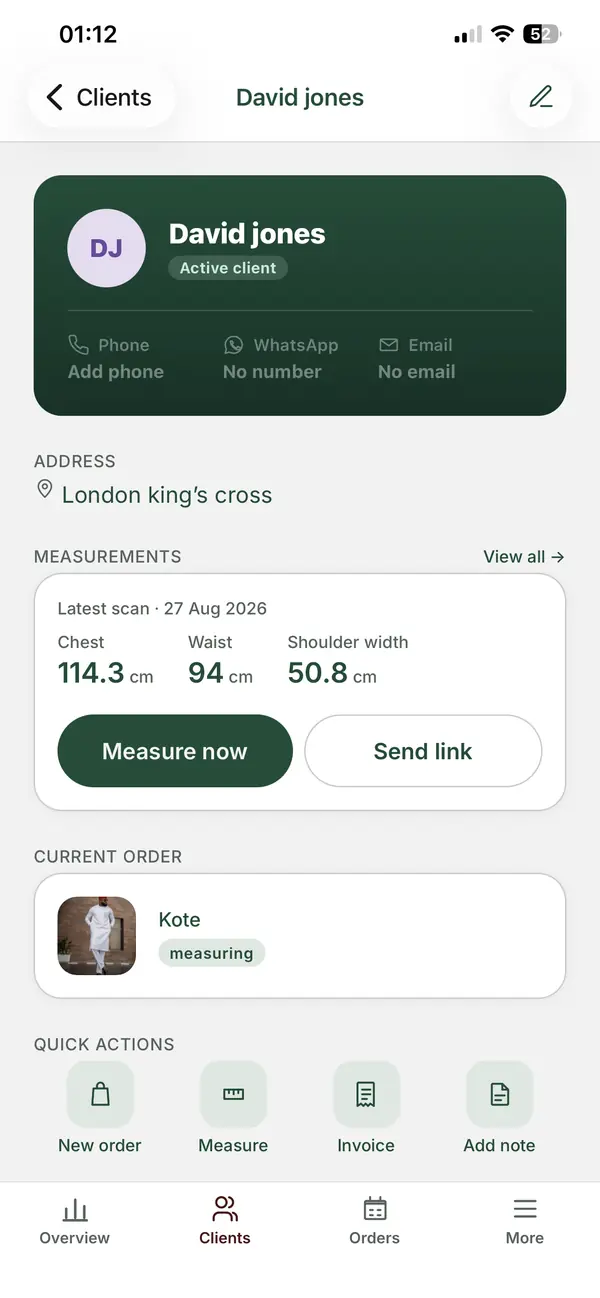
A delivery calendar makes this easier. ZeDaq.ai's tailor tools include orders and a delivery calendar, so you can see how many orders are due each week and where the gaps are.
What should you do in busy months?
- Take deposits. Collect part of the price when you accept the order.
- Set aside a buffer. Move a fixed share of each payment into a separate savings pot.
- Pay yourself a steady amount. The guide on separating business and personal money shows how.
- Pay suppliers on time. Good relationships help in tight months.
- Book work ahead. Fill the quiet weeks with orders that have later delivery dates.
How big should your buffer be?
Work it out from your own costs. Add up what you must pay in a typical month, such as rent, fabric restocking, transport and wages, then multiply by the number of slow months you expect.
Start with one month of costs and build from there. Avoid copying a figure from someone else's shop, since your costs and seasons are your own.
What can you do to earn in slow months?
- Alterations and repairs. These are steady, small and quick.
- Uniform and workwear. Orders from schools or businesses can come outside event seasons.
- Early bookings. Offer clients an early-order slot for the next big season.
- Reminders to past clients. Message people who ordered last year. A client list makes this simple, and the ZeDaq.ai client CRM keeps one.
- Preparing your records. Use the quiet time to set up measurement sheets.
Measurements are a good quiet-time task. The template in a measurement sheet for tailors and the guide to measurements for trousers are good places to start. With ZeDaq.ai, clients can also send measurements through a link they open on their phone, as in capturing measurements from clients at home.
How do invoices help cash flow?
Sending an invoice for each deposit and balance makes the amounts and due dates clear. ZeDaq.ai supports invoicing in multiple currencies, including NGN, GBP and USD, which helps if you serve clients abroad. The Free plan includes 5 invoices a month.
How do you keep costs down when work is quiet?
Cutting costs is the other half of cash flow. Look at what you can delay or reduce without hurting the work:
- Buy fabric for confirmed orders, not for orders you hope to get
- Share bulk purchases of thread and lining with other tailors
- Postpone big equipment purchases until a busy season
- Check subscriptions and drop what you don't use
Avoid cutting what makes the work good, such as repairs to your machines. A broken machine in a busy month costs more than the repair.
What does a simple monthly cash plan look like?
- Write down what money you expect to receive, and when.
- Write down what you must pay, and when.
- Subtract to find the gap for each month.
- Fill any gap with a booked order, a smaller cost or a draw from your buffer.
See orders, deadlines and invoices in one place
What should you do when a client pays late?
Send a polite reminder with the invoice attached, and name the amount and the date. Most late payments are forgotten, not refused. Agree the terms at the start so you have something clear to point to, and don't release the garment until the balance is settled, if that is your agreed rule.
FAQs
How much should I save from each order?
There is no single right share. Compare your slow-month costs with your busy-month income and choose a percentage you can sustain.
Should I lower my prices in slow months?
Discounting can bring in work but may train clients to wait. Early-booking offers or small add-ons are often safer than price cuts.
Is it fine to ask for a full payment up front?
Many tailors ask for a deposit and take the balance at collection. Choose what suits your clients and tell them the terms when you agree the order.
What if a client doesn't collect their garment?
Put your collection and storage terms in writing when you take the order. A clear invoice and a reminder message make the conversation easier.
Try ZeDaq.ai free
Virtual try-on and Find my size for your store, plus client, order and invoicing tools for tailors, in one subscription.

