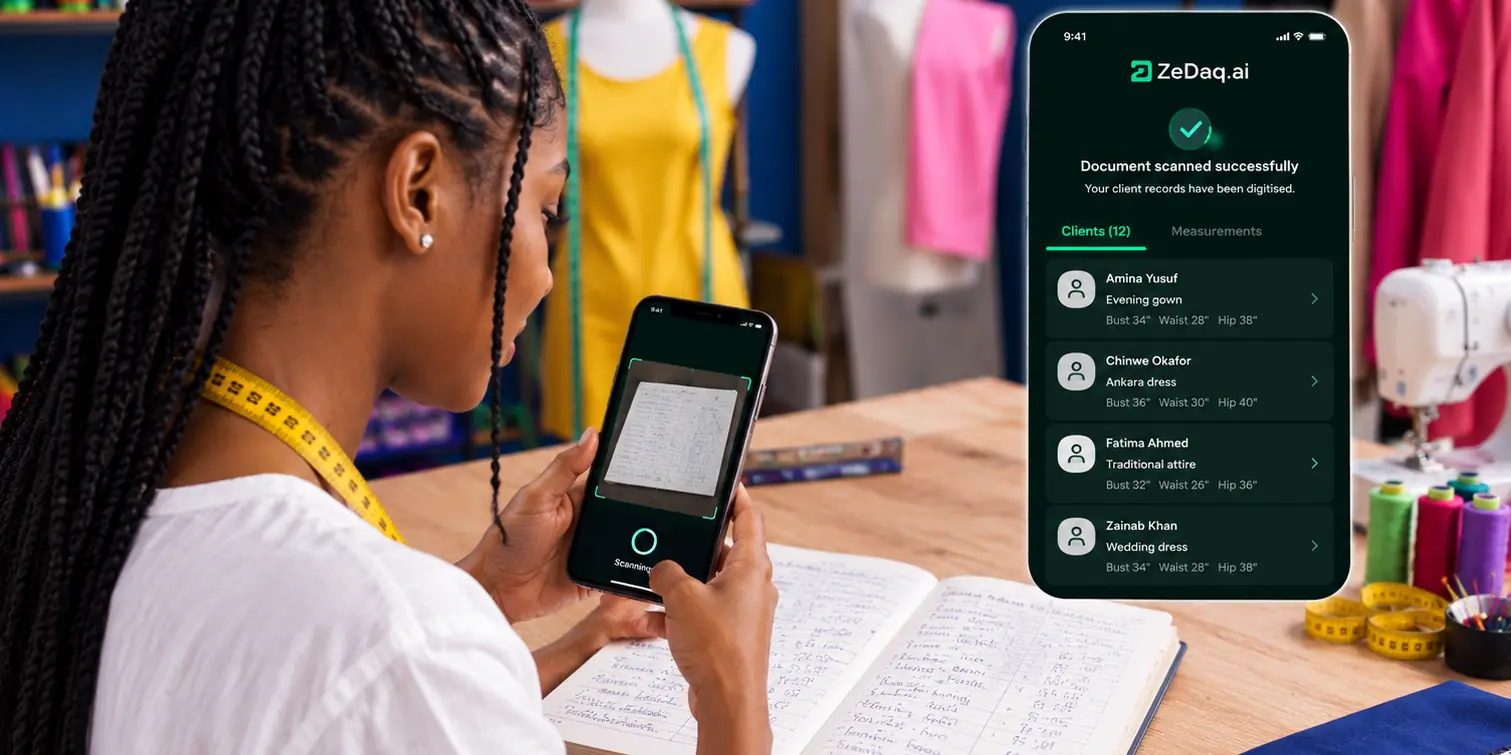
Bookkeeping for Tailors
By the ZeDaq.ai team · · 4 min read
On this page
- Why does a tailor need bookkeeping at all?
- What should you record?
- How do you keep business and personal money apart?
- How do you handle deposits and balances?
- What does one order look like in the books?
- Can you use a notebook or spreadsheet?
- What about fabric you hold in stock?
- What habits keep the books from piling up?
- What should a monthly review look like?
- Do you need software?
Bookkeeping for tailors means recording every payment you receive and every cost you pay, in one place, as it happens. Keep business money apart from personal money, log deposits and balances against each order, and review the totals once a month.
This guide is for tailors and designers who run orders from a workshop or phone. If you want orders, clients and invoices in one app, the ZeDaq tailor tools cover that side. This article is general guidance, not tax advice. Rules differ by country, so check with your local tax authority or an accountant.
Why does a tailor need bookkeeping at all?
Without records, you can't tell which orders made money. Fabric, thread, helpers and rent come out of the same pocket, so a busy month can still lose money.
Records also help in practical ways: they show what a client owes, support your prices, and make tax time less stressful.
What should you record?
Keep two lists:
Income
- Deposits and balances, with the client and order
- Alteration and repair fees
- Any fabric you resold to the client
Expenses
- Fabric, lining, zippers and trims
- Helpers and apprentices
- Rent, power and internet
- Equipment, repairs and needles
- Delivery and transport
Write the date, amount and a short note for each line. A receipt photo kept with the entry is enough.
How do you keep business and personal money apart?
Use a separate account, or at least a separate mobile wallet, for the business. Pay yourself a set amount on a set day, rather than taking money whenever you need it.
This single habit makes everything else easier, because every payment in that account is business income and every payment out is a business cost.
How do you handle deposits and balances?
Tailoring is paid in stages, which confuses simple records. Treat each order as its own record:
- Record the agreed price.
- Record the deposit when it arrives.
- Record the fabric you buy for that order.
- Record the balance when the client collects.
- Mark the order closed only when the balance is zero.
A deposit isn't profit yet. It's money you've received for work you still owe. Keep track of how much is waiting on unfinished orders so you don't spend it by accident. Matching costs to orders also shows whether your prices work, which our guide to pricing so you make a profit explains.
What does one order look like in the books?
Take a made-to-measure dress as an example. You agree a price and take a deposit. You buy fabric and lining for that dress. The helper is paid for the sewing. When the client collects, you take the balance.
In your records, that order has one income entry for the deposit, one for the balance, and expense lines for fabric, lining and the helper. Subtract the costs from the total price and you see what the dress really earned. Do that for every order and you'll know which types of work pay best.
Can you use a notebook or spreadsheet?
Yes, to start. A notebook with columns for date, description, money in and money out works. A spreadsheet adds totals. The problem comes later: spreadsheets don't remind you of unpaid balances, and they get messy with many clients. See when a spreadsheet stops working.
What about fabric you hold in stock?
Fabric you buy and haven't used is stock, not an expense for this month's profit. Keep a running list of what you hold, and note what goes into each order. The guide to fabric inventory for tailors shows a simple method.
What habits keep the books from piling up?
Pick one fixed time each day, such as closing time, to write down the day's payments and costs. Keep receipts in one envelope or one phone folder. When a client pays by transfer, record it the same day while you still remember which order it belongs to.
If a month ends with a pile of unrecorded notes, start with the largest items first and fill in the small ones after.
What should a monthly review look like?
Once a month, set aside an hour:
- Total income and total expenses
- What remains after paying all costs
- Unpaid balances and who owes them
- Fabric stock and what you need to reorder
- Money to set aside for tax
Compare it with last month. If costs rise faster than income, change prices or cut waste.
Do you need software?
Not at first. Software helps when you have enough clients that a notebook is slow. Some tailors use general accounting tools, while others use a tailoring app with clients and invoices built in. For a comparison of measurement tools, see the best measurement apps for tailors. On the tax side, the guide to VAT for tailors in the UK explains one common rule.
Keep clients, orders and invoices in one place
FAQs
How often should I update my records?
Daily is best, and weekly at the very least. Waiting a month means forgetting small costs.
Do I need an accountant?
Not for basic records, but one is worth consulting for tax rules in your country. Bring your organized records and the visit is shorter.
What is the difference between bookkeeping and accounting?
Bookkeeping is recording transactions. Accounting uses those records to prepare reports and tax filings.
How long should I keep my records?
Rules differ by country, so check your tax authority. Keep receipts and records at least as long as it requires.
Try ZeDaq.ai free
Virtual try-on and Find my size for your store, plus client, order and invoicing tools for tailors, in one subscription.

