
How Much Do Tailors Charge in South Africa?
By the ZeDaq.ai team · · 5 min read
On this page
Tailors in South Africa price each job separately, so there is no single rate. The quote depends on the type of work, the fabric, the number of fittings and the tailor's skill.
We could not find a published, independent price survey for South African tailors or dressmakers, so this guide gives no rand figures. Instead it shows what moves a price and how to compare quotes. If you run a shop, the tailor and designer tools from ZeDaq.ai help you keep quotes consistent.
What jobs do South African tailors price differently?
Most shops sort work into three groups, and each is priced in its own way.
- Alterations: hems, tapering, zips and resizing. These are usually a fixed price per item.
- Repairs and restyling: lining replacement, remaking a collar, turning a dress into a skirt. These are priced by the time needed.
- Made-to-measure and bespoke: a garment cut for one person. These are priced as a whole project, often with a deposit.
A simple hem is quick. A wedding dress or suit involves pattern work, several fittings and many hours.
Some South African tailors also specialize. Traditional and cultural wear, school uniforms, matric dance dresses and wedding parties each have their own style of work and pricing. A tailor who makes a lot of one type of garment usually works faster on it, so ask who has experience with what you need.
Group jobs are often quoted differently. A bridal party or a set of matching outfits may be priced as a package, with a deposit up front and the balance due before collection.
Why do quotes for the same garment differ so much?
Two tailors can quote very different amounts for the same dress, and both can be fair. The gap usually comes from five things.
- Experience and reputation. A tailor with a long waiting list can charge more.
- Location and rent. A studio in a city center carries higher overheads than a home workshop.
- Fabric. Silk, lace and heavy wool take longer to cut and sew than cotton.
- Detail. Hand finishing, beading, lining and structured seams add hours.
- Deadline. Rush jobs often cost extra because they push other clients back.
How do tailors work out a price?
Most tailors add up four parts. You can ask any tailor which of these a quote includes.
| Part | What it covers |
|---|---|
| Labor | Hours at the tailor's hourly rate, including pattern work and fittings |
| Materials | Fabric, lining, zips, buttons and thread |
| Overheads | Rent, power, machine upkeep and software |
| Margin | The profit that keeps the business running |
For a deeper walk-through of this method, see how to price tailoring work.
How can you compare quotes fairly?
Price alone is a poor guide. Ask each tailor the same questions so the quotes line up.
- Does the price include fabric, or do you supply it?
- How many fittings are included, and what does an extra one cost?
- What deposit do you ask for, and when is the balance due?
- What is the delivery date, and what happens if it slips?
- Do you offer free adjustments after delivery?
Write the answers down next to each quote. A cheaper quote that excludes fittings may cost more in the end.
Visit the shop if you can. Look at finished garments, check the seams inside, and ask to see work similar to yours. A tidy finish tells you more about value than the number on the quote.
Get at least three quotes for larger jobs such as a wedding outfit or a suit. If one quote is far lower than the others, ask what has been left out. If one is far higher, ask what extra you are paying for, such as hand finishing or a tighter deadline.
Be clear about your own needs too. Bring photos of the style you want, your event date and your budget. A tailor can then suggest ways to keep costs down, such as a simpler lining or a less detailed neckline.
How does the U.S. or Kenya compare?
Prices depend on local wages, rent and fabric costs, so you cannot carry a number from one country to another. For other markets, read what tailors charge in the US and what tailors charge in Kenya. Use them for the method, not for South African prices.
What should tailors do to quote with confidence?
If you are a tailor, keep a record of how long each job takes. After a few months you can quote from your own data instead of guessing.
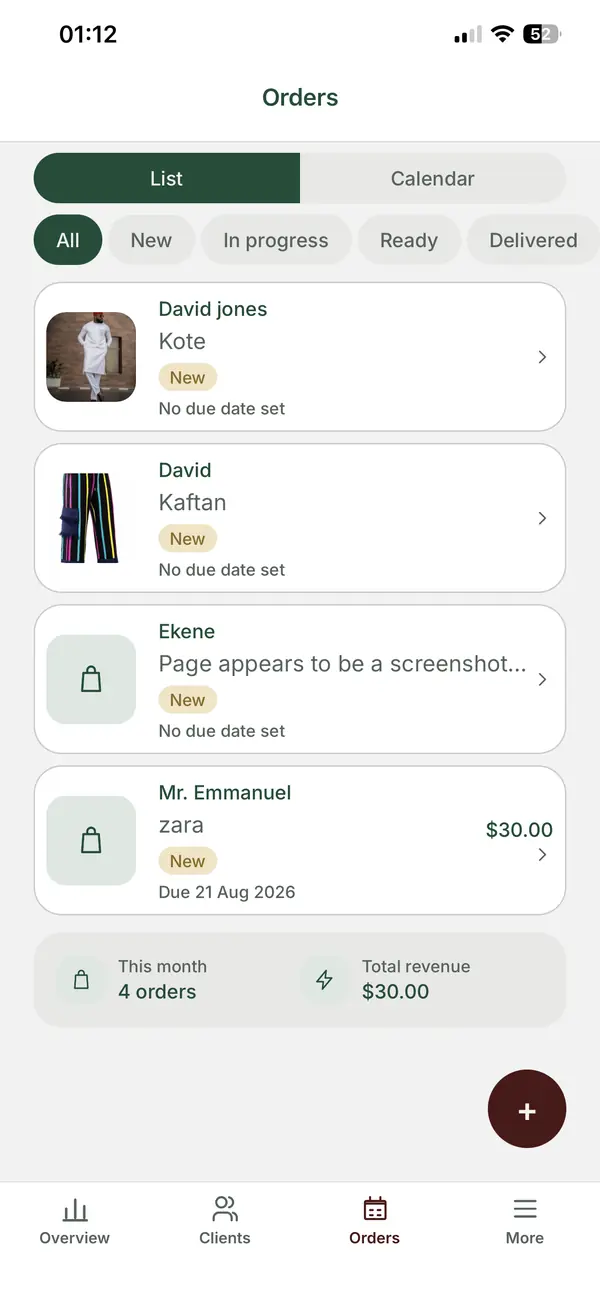
A client record with measurements, orders, deposits and delivery dates makes this easier. The ZeDaq.ai tailor tools include a client CRM, measurements through a link the client opens on their phone, orders with a delivery calendar, and invoicing in multiple currencies.
If you now run orders in chat threads, see how ZeDaq.ai compares with WhatsApp Business for running a tailoring business.
A simple way to build your own rate card
Time ten ordinary jobs, such as hems, zip replacements and a basic dress. Write down the minutes, the materials and any rework.
Then set a fixed price for each common job and a per-hour rate for anything unusual. Review the card every few months, because fabric and running costs change. Keep the card where clients can see it, so they know your prices before they ask.
Quote, track and invoice from one place
FAQs
Do South African tailors ask for a deposit?
Many do, especially for made-to-measure work, because they buy fabric and reserve time. Ask what the deposit is and when the balance is due before you agree.
Is it cheaper to bring my own fabric?
It can be, since the tailor does not buy materials. Some tailors still charge the same labor, and they may not cover mistakes caused by fabric they did not choose.
Why does a rush job cost more?
The tailor has to move other clients back or work extra hours. Ask about the deadline early to avoid a surcharge.
How many fittings should I expect?
It depends on the garment. Simple alterations may need one, while a suit or wedding dress usually needs several. Ask what your quote includes.
Try ZeDaq.ai free
Virtual try-on and Find my size for your store, plus client, order and invoicing tools for tailors, in one subscription.

