Should Vintage and Secondhand Stores Offer Virtual Try-On?
By the ZeDaq.ai team · · 6 min read
On this page
- What makes vintage different from regular retail?
- Where does virtual try-on help a vintage store?
- Where does it fall short?
- How should a vintage store write its measurements?
- Does it make sense for sustainable stores?
- Which vintage pieces suit try-on best?
- What does it cost a small shop to run?
- How should you think about the shopper's expectations?
- How should you photograph one-off items?
- What do secondhand shoppers worry about most?
- What should you decide before you switch it on?
- How can you test it cheaply?
Vintage and secondhand stores can offer virtual try-on, and it helps most with how a piece looks on a body. It helps less with exact fit, because every item is one of a kind and the label rarely tells the truth. The honest answer is "yes for the look, with your own measurements for the fit".
Here is how to decide. For the general picture, start with virtual fitting rooms for clothing sites, then come back to the one-off problem below.
What makes vintage different from regular retail?
A normal store sells many units of one style, so one size chart serves hundreds of orders. A vintage store sells one unit, then it is gone.
That has three effects:
- Sizes are unreliable. Old labels and size systems don't match today's.
- Photos are the product. Shoppers can't read a fabric or drape from a label.
- Returns are costly. The item is unique, and a return may mean relisting it.
Where does virtual try-on help a vintage store?
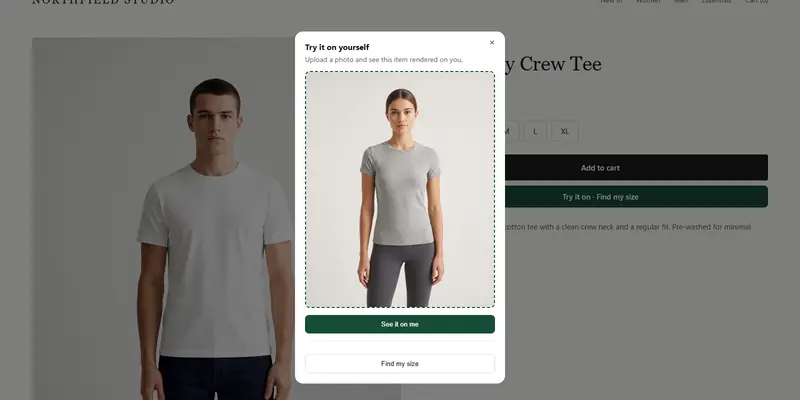
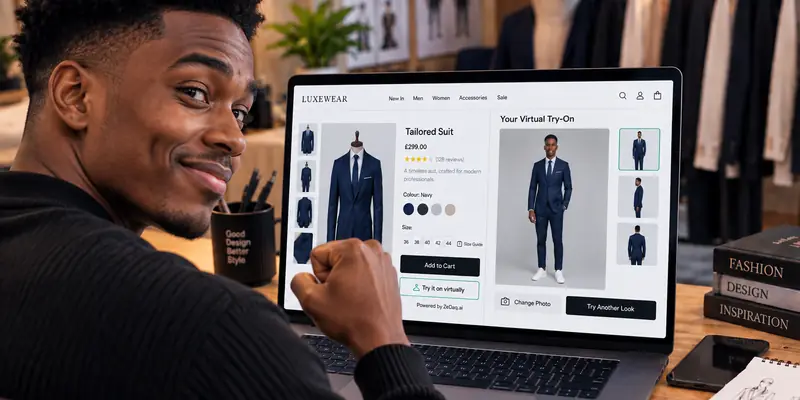
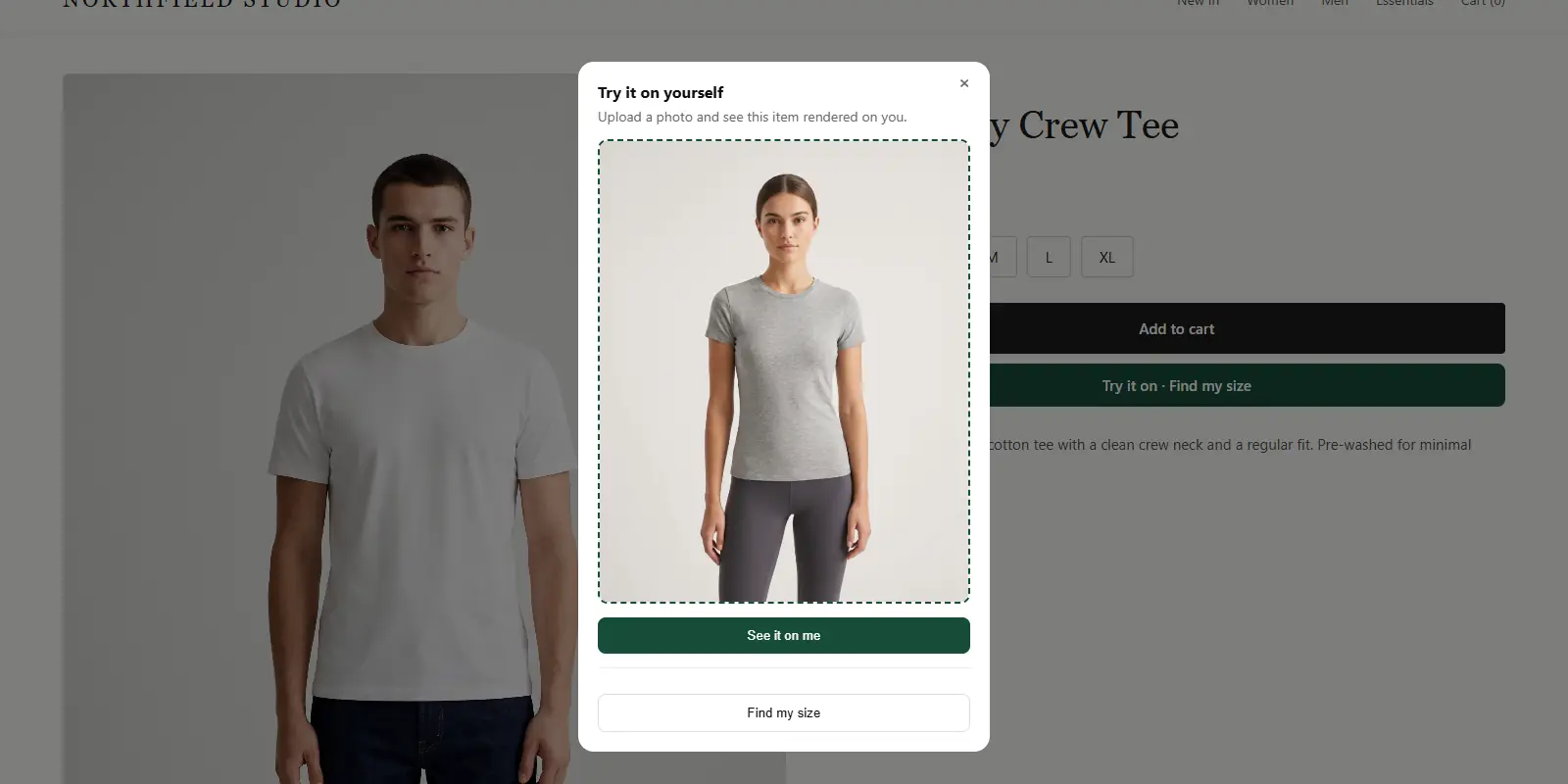
It helps shoppers see the garment on a body like theirs. With ZeDaq.ai, the shopper uploads one photo and sees your real garment rendered on their body.
That is useful when shoppers are unsure about shape, length or color on them. It does not replace honest measurements, but it adds a second check.
See how it looks on you
Try it on yourself
Live renderUpload a photo, pick a piece, see it rendered on you.
Pick something to try on
Where does it fall short?
Be realistic about the limits so you don't set the wrong expectation.
- Fit data is per garment type. ZeDaq.ai size charts are entered once per garment type, such as tops or dresses. One-off pieces with unique measurements don't map neatly to a chart.
- Photo quality matters. A clear, flat or hung product photo gives the best input.
- Condition isn't shown. Wear, stains and repairs still need photos and notes.
For fit, list real measurements on each listing: bust, waist, hips and length, taken flat or on a mannequin, with the unit stated.
How should a vintage store write its measurements?
Use a repeatable format on every listing. Shoppers learn it and trust it.
- Measure the garment flat, and say whether the number is a single layer or doubled.
- List the same points every time, for example chest, waist, hip and length.
- Note any stretch in the fabric.
- Say how the piece fits, such as "runs small" or "roomy".
This pairs well with try-on. The image shows the look, and the numbers prove the fit.
Does it make sense for sustainable stores?
Resale shoppers often care about reducing waste, and fewer returns means less shipping. We don't promise any number here, but it is a fair reason to test it. Our guide on sustainable fashion brands and try-on covers that angle. High-end resale is closer to the case in luxury brands and try-on.
Which vintage pieces suit try-on best?
Not every item gains the same from try-on. Think about what the shopper is unsure about.
| Piece | Why try-on helps |
|---|---|
| Dresses and skirts | Length and drape on the shopper's frame |
| Jackets and coats | Shoulder line and overall shape |
| Printed or bold pieces | How a color or pattern looks against the shopper |
| Tailored trousers | Less helpful, since fit depends on exact measurements |
For fitted items, lead with measurements. For loose or statement pieces, lead with the image.
What does it cost a small shop to run?
Costs depend on your plan and how many shoppers use it. Paid plans start with Micro at $14 a month, which is $1 for the first month, then $14 a month. That first-month price applies to monthly plans only, once per store, on its first paid plan. Every paid plan has a 3-day free trial with no card required. See the current pricing page before you decide.
How should you think about the shopper's expectations?
A shopper who tries a vintage piece on screen expects it to look like the preview. Be clear that the preview shows the garment, and the listing shows its condition and measurements. A short line near the button helps, such as "Preview only. See measurements and condition below."
Also say that each item is unique. If a shopper likes it, they should buy it quickly, since nobody can restock it.
How should you photograph one-off items?
Photos matter twice in a vintage store, once for the listing and once as the input for try-on. A little care goes a long way.
- Use natural light and a plain background.
- Show the whole garment from the front, flat or hung, with nothing covering it.
- Add detail shots of labels, buttons, seams and any flaws.
- Keep the same setup for every item, so your store looks consistent.
Honest flaw photos reduce disputes. A shopper who saw the mark before buying is less likely to complain about it later.
What do secondhand shoppers worry about most?
Shoppers buying used clothing tend to ask the same few questions: will it fit, what condition is it in, and can I return it. Try-on speaks to the first only in part. You still need clear measurements, a condition grade and a plain return policy.
Write the policy in a few short lines, and place it near the buy button. If all sales are final because each piece is unique, say so before checkout.
What should you decide before you switch it on?
Answer these questions first, so the feature fits how you sell.
- Which categories get the button? Start with dresses, skirts and jackets.
- Who answers shopper questions? Try-on will prompt new ones about fit and condition.
- How will you judge success? Pick one thing to watch, such as the number of fit questions you get by message.
- What is your fallback? Keep your measurement format on every listing, so shoppers who skip try-on still have what they need.
A small, honest test teaches you more than a store-wide launch.
How can you test it cheaply?
Start small and measure for yourself. The Free plan includes 3 try-ons a month, which is enough to try it on a few listings.
- Install the Shopify app or add the widget to your product page.
- Test it with your own photos.
- Compare questions and returns about look and fit over a few weeks.
If you build stores for clients, see how web agencies offer virtual try-on.
Try it on a few of your pieces
FAQs
Does virtual try-on work for one-of-a-kind items?
It shows how a garment looks on the shopper, so it can work for single items. Use real measurements for fit.
Do I need a size chart for vintage?
Not a chart for each piece. List measurements on each listing, since sizes vary between eras.
Will it reduce my returns?
We can't promise that. Test it on a few listings and compare your own results.
What photo works best?
A clear, well-lit product photo of the garment on its own. Avoid heavy shadows and cluttered backgrounds.
Try ZeDaq.ai free
Virtual try-on and Find my size for your store, plus client, order and invoicing tools for tailors, in one subscription.