Should Sustainable Fashion Brands Offer Virtual Try-On?
By the ZeDaq.ai team · · 5 min read
On this page
- Why do sustainable brands care about fit?
- How can try-on help a sustainable brand?
- Does try-on show fabric and texture?
- What should you say about sustainability claims?
- Who is it a good fit for?
- How do you test it without a big commitment?
- How should you talk about it with customers?
- What do similar brands consider?
Often yes, if your brand sells small batches with limited sizes and you want shoppers to choose well the first time. Virtual try-on will not make a garment more sustainable, but it can help a shopper pick the right item and size, which avoids a wasted shipment.
This guide looks at the fit between sustainability values and try-on, what to say publicly, and how to test it. For the basics of the technology, see our overview of a virtual fitting room for clothing websites.
Why do sustainable brands care about fit?
Slow-fashion and eco-minded brands usually make fewer pieces, often in small runs. A wrong-size order is costly in a few ways:
- The item makes a round trip, using packaging and transport.
- A returned piece may need cleaning or repair before resale.
- Limited stock means one return can leave a size unavailable for another buyer.
None of this is unique to sustainable brands, but it matters more when each piece counts. Your values also give you a reason to care about the avoidable part.
How can try-on help a sustainable brand?
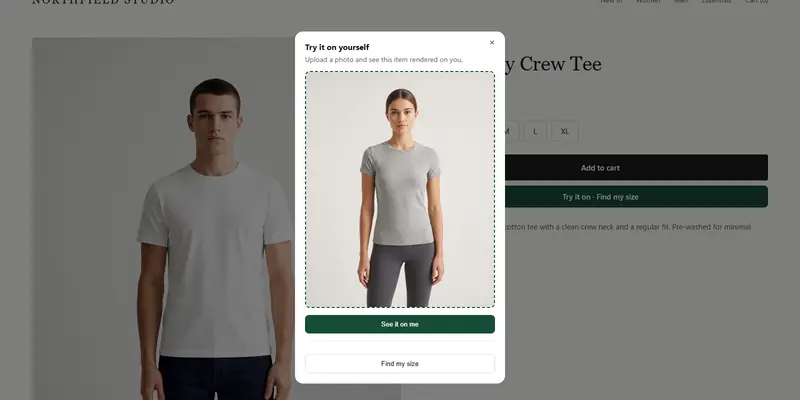
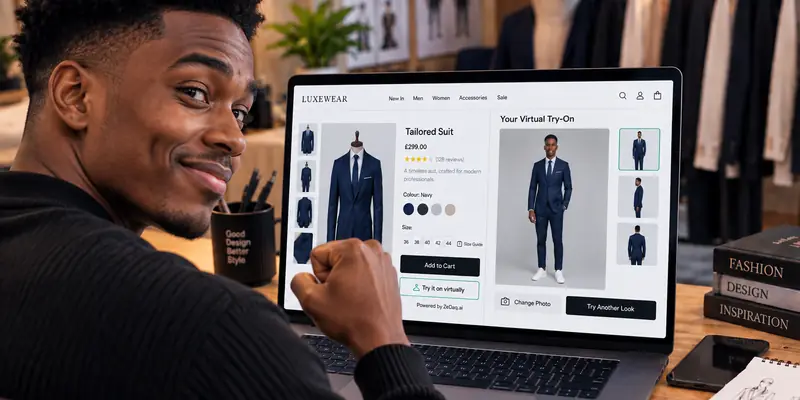
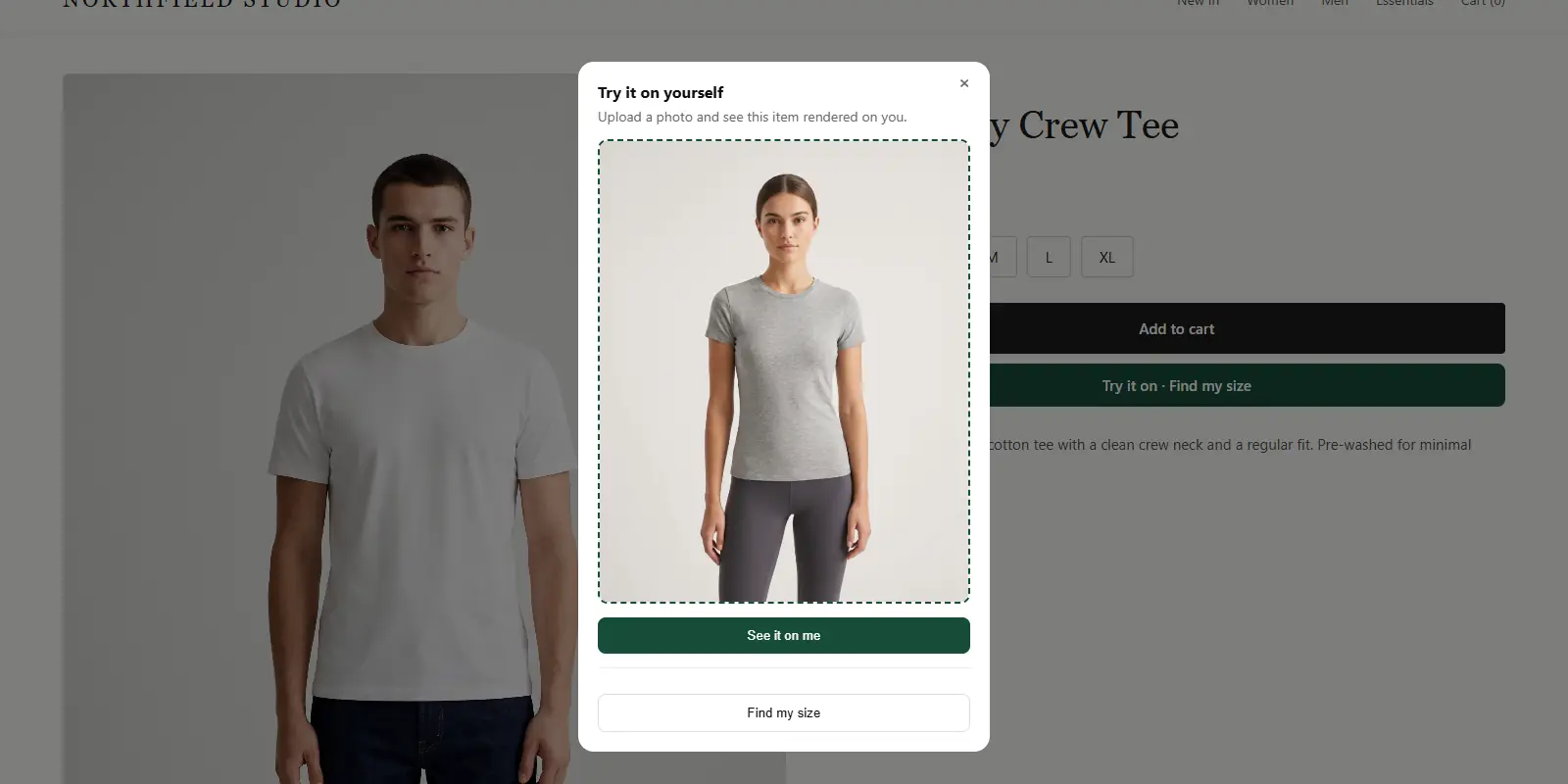
ZeDaq.ai is AI virtual try-on for fashion stores. The shopper uploads one photo and sees the store's real garment on their body. A 30-second body scan (one photo plus height) can also recommend a size from the store's own size chart.
Those two pieces serve different needs:
- Try-on helps with "will I like how this looks on me?"
- Size recommendation helps with "which size should I order?"
Our article on whether you need both explains how they differ.
See a garment on your own photo
Try it on yourself
Live renderUpload a photo, pick a piece, see it rendered on you.
Pick something to try on
Does try-on show fabric and texture?
Not fully. Try-on shows the garment's shape, color and how it sits on a body. It does not tell the shopper how the fabric feels, which matters for natural fibers such as linen, wool and organic cotton.
Keep your product page doing the rest:
- Name the fiber and any certifications you hold.
- Describe weight, drape and stretch.
- Add care notes and what to expect as the fabric ages.
Honest descriptions are part of the sustainable story, and they prevent "not as described" returns.
What should you say about sustainability claims?
Do not present try-on as an environmental benefit with numbers you cannot back up. Environmental claims in many markets are regulated, and vague green claims draw scrutiny. Check the rules that apply where you sell, for example guidance from your national consumer authority, before you publish any claim.
A safe approach is to describe what the tool does in plain terms: it helps shoppers pick a size and see a garment before ordering. Leave out any claim about emissions or return reductions unless you have your own measured data and can show your method.
Who is it a good fit for?
Try-on is a reasonable test if:
- You sell fitted pieces, not only loose or one-size items.
- Your size range is wide or inclusive.
- You sell in markets where shipping a return is expensive or slow.
- You can provide accurate size charts and clear product photos.
What should you ask yourself first?
- Do shoppers tell you a garment "looked different" or "did not fit like I expected"?
- Do you already track why items come back? If not, start by tagging each return with a reason.
- Is your size chart written in body measurements, or only in garment dimensions?
- Would you be comfortable explaining the tool honestly on your website?
Your answers show whether try-on solves a real problem for your shoppers. If it does not, spend your effort on photos, fit notes and chart quality first.
When is it a weaker fit?
It is a weaker fit if you sell mainly accessories, or if your pieces are made to measure per order. For made-to-order brands, a measurement flow may suit better. The article on size recommendation for made-to-measure brands covers that.
How do you test it without a big commitment?
- Choose a few core products with clear, well-lit photos.
- Enter your own size chart for each garment type, using body measurements.
- Test it yourself, and with a few people of different body shapes.
- Fix any chart gaps or photo problems you find.
- Run it live for a set period and review what shoppers use.
The Free plan includes 3 try-ons, 3 measurements and 5 invoices a month, enough for step three. Every paid plan has a 3-day free trial with no card required. Compare options in our guide to free vs paid try-on apps.
What does a careful rollout look like?
Sustainable brands often prefer a slow, considered launch, which suits this tool well.
- Start with bestsellers. Fit questions are most common on your most-viewed pieces.
- Gather feedback. Ask a handful of loyal customers to try it and tell you what felt off.
- Fix the basics. Update photos and charts where the results are weak.
- Expand gradually. Add products as you learn what works.
- Review honestly. If the tool does not help your shoppers, remove it and say nothing more about it.
This approach matches the way many sustainable brands run their own business: small steps, checked as they go.
How should you talk about it with customers?
Be plain and modest. Tell shoppers what the tool does, that it is optional, and what happens to the photo they upload. Do not suggest that using it is a green choice.
A short note near the button works well:
- What it does: shows the garment on the shopper's photo and suggests a size.
- What it does not do: show how the fabric feels.
- Where to go for help: a contact link for fit questions.
This keeps your messaging consistent with the transparency that sustainable brands usually promise elsewhere. It also sets expectations, which prevents disappointment when a result is not perfect.
What do similar brands consider?
Other niches weigh the same trade-offs differently. Costume shops have unusual sizing and one-off wear, covered in try-on for costume shops. Luxury brands care about presentation, covered in try-on for luxury fashion brands.
If your store runs on Wix, see virtual try-on on Wix for what is available.
Try a garment on your own photo
FAQs
Does virtual try-on make a brand more sustainable?
Not by itself. It can help shoppers choose a size and style before ordering, but you should not claim a specific environmental result without your own data.
Does try-on replace honest product descriptions?
No. Shoppers still need fabric, care and fit details. Try-on adds a visual check on top.
Will it work for small-batch collections?
It can, if you have clear product images and an accurate size chart. Test a few products first.
Does it work on Shopify?
Yes. ZeDaq.ai is available as a Shopify app, a REST API, and a script-tag widget for other platforms.
Try ZeDaq.ai free
Virtual try-on and Find my size for your store, plus client, order and invoicing tools for tailors, in one subscription.