Referral Programs for Fashion Brands
By the ZeDaq.ai team · · 4 min read
On this page
- Why do referrals suit fashion?
- How does a referral program work?
- What should the reward be?
- What rules should you set?
- Which rules apply to advertising and rewards?
- What does a simple worked example look like?
- How do you promote the program?
- What mistakes should you avoid?
- How do you know it works?
- How does fit help referred friends?
- How do you keep the program fair and honest?
A fashion referral program rewards customers when they send a friend to your store, usually with a discount for the friend and a credit for the referrer. It works best when the offer is simple and the reward feels fair to both people.
This guide is for Shopify store owners who want word of mouth to work on purpose. If your store is not yet set up for fit tools, the virtual try-on setup for Shopify is a good companion.
Why do referrals suit fashion?
People share what they wear. A friend's opinion about a brand's quality and fit carries weight that an ad doesn't.
Fit makes it harder, though. A referred friend may not know their size, so give them tools to choose well. A bad first order can end the relationship quickly.
How does a referral program work?
- An existing customer receives a personal link or code.
- They share it with a friend.
- The friend uses it on a first order and gets a reward.
- The referrer gets a reward once that order is placed or kept.
Shopify apps can run this for you, and many loyalty apps include referrals. See how to run a loyalty program for a clothing store for the wider picture.
What should the reward be?
Choose a reward that costs you less than winning a customer another way. Common structures include:
- Two-sided discount. Both people get a discount or credit.
- Store credit for the referrer. They can spend it only with you.
- Free gift or shipping. Useful if discounts weaken your brand.
- Tiered rewards. Better rewards after several successful referrals.
Work out your margin before choosing. A discount that you can't afford will hurt you the more successful the program becomes.
What rules should you set?
Write plain rules and show them on a page:
- Who counts as a new customer
- When the referrer's reward is released, for example after the return window closes
- Whether rewards can be combined with other offers
- Any limit per person
- How you handle suspected abuse, such as people referring themselves
Releasing the reward after the return window protects you from paying for orders that come back. If you run an exchange process, the piece on handling out-of-stock sizes helps with the next problem: a friend who arrives to find their size gone.
Which rules apply to advertising and rewards?
Rewards for sharing can count as endorsements in some places. Rules differ by country, so check your local advertising regulator before launching, and ask referrers to be open that they get a reward.
What does a simple worked example look like?
Here is a made-up example, not a result from any store. A shop offers a friend a discount on a first order and gives the referrer store credit once the return window has passed.
A customer shares a link with a friend. The friend orders, keeps the item and the referrer gets credit. The store pays for a new customer only when an order is kept, which keeps the cost tied to a real sale. Replace the amounts with ones that fit your own margins.
How do you promote the program?
- Put the invitation on the order confirmation page.
- Add it to the shipping email, when the customer is happiest.
- Place a link in the account area.
- Mention it on social posts.
- Send a reminder after the customer's first delivery.
What mistakes should you avoid?
- Making the reward so large it eats your margin
- Hiding the referral link where customers can't find it
- Making the rules too long to read
- Paying out before the return window has closed
- Forgetting to tell referred friends how to find their size
How do you know it works?
Track a few simple things in your own store data:
- How many customers share their link
- How many friends place an order
- How many of those orders come back
- Whether referred customers buy again
Compare referred customers with others by the same measures. Judge success by what you see in your own numbers.
How does fit help referred friends?
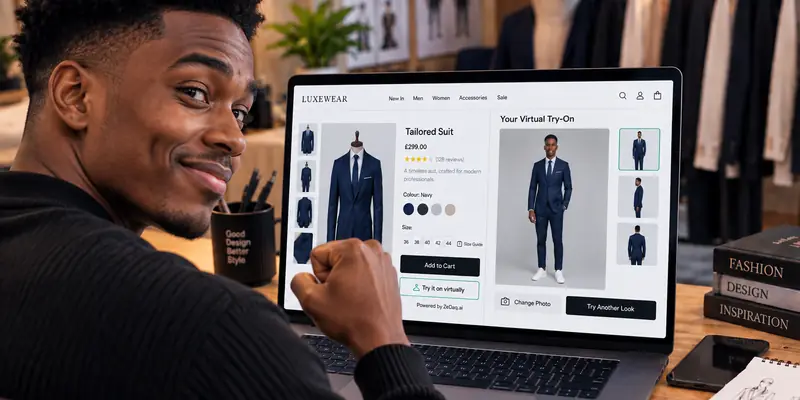
A new customer is more cautious. Fit tools reduce that worry. ZeDaq.ai lets a shopper upload one photo and see the store's real garment on their body, and its 30-second body scan recommends a size from your own chart. Read more in how AI size recommendation works and compare it with home try-on programs.
Help every new customer pick the right size
How do you keep the program fair and honest?
Describe the reward in plain words and avoid fine print that surprises people. If a referrer must wait for the return window to close, say so up front. Tell referred friends that the person who shared the link gets a reward too. Honest rules protect trust, which is what makes recommendations valuable in the first place.
FAQs
What is a good referral reward?
One that costs less than the other ways you get new customers and still feels worthwhile to both people. Test it with a small group first.
Should I reward the referrer immediately?
Many brands wait until the return window has passed. That avoids paying for orders that are sent back.
Do I need an app?
Not always, but an app saves effort by creating links, tracking orders and issuing credit. Compare a few before choosing.
Can referral discounts stack with sale prices?
That is your decision. Say clearly in your rules whether they can, and set your system to match.
Try ZeDaq.ai free
Virtual try-on and Find my size for your store, plus client, order and invoicing tools for tailors, in one subscription.