Home Try-On Programs vs Virtual Try-On
By the ZeDaq.ai team · · 7 min read
On this page
Home try-on programs ship real garments to shoppers, who keep what they like and send back the rest. Virtual try-on lets shoppers see a garment on their own body, and get a size suggestion, before anything ships. The first moves physical stock around. The second moves the decision earlier.
Most small fashion stores can't absorb the cost of shipping many items out and back, so the choice often comes down to cash flow and risk. This comparison walks through both, and it builds on how AI size recommendation for fashion stores cuts guesswork at the product page.
What is a home try-on program?
A home try-on program, sometimes called "ship to try" or a home trial, sends the shopper several items at once. They try them at home for a set period, keep the ones they want and return the rest.
Shoppers like it because it removes the guesswork. They get to see the real fabric, feel the fit and compare options side by side.
Stores run it in different ways:
- Pay first, refund later. The shopper is charged up front and refunded for returns.
- Pay after the trial. The shopper is charged only for items they keep.
- Paid trial. A small fee covers the shipping and handling, sometimes credited against a purchase.
Each version moves more inventory and cash risk onto the store than a normal order does.
What is virtual try-on?
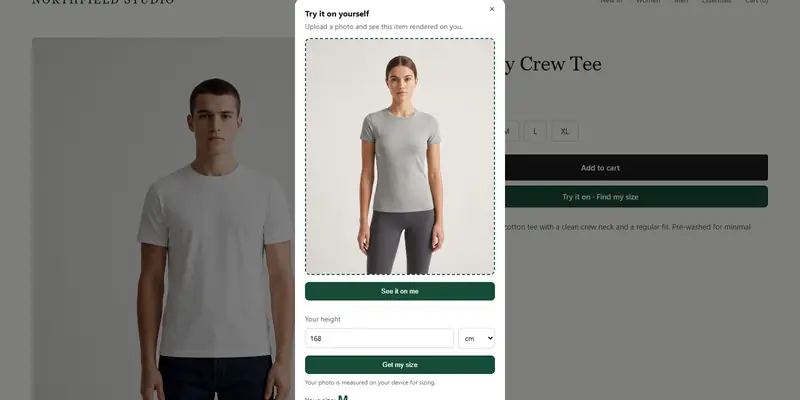
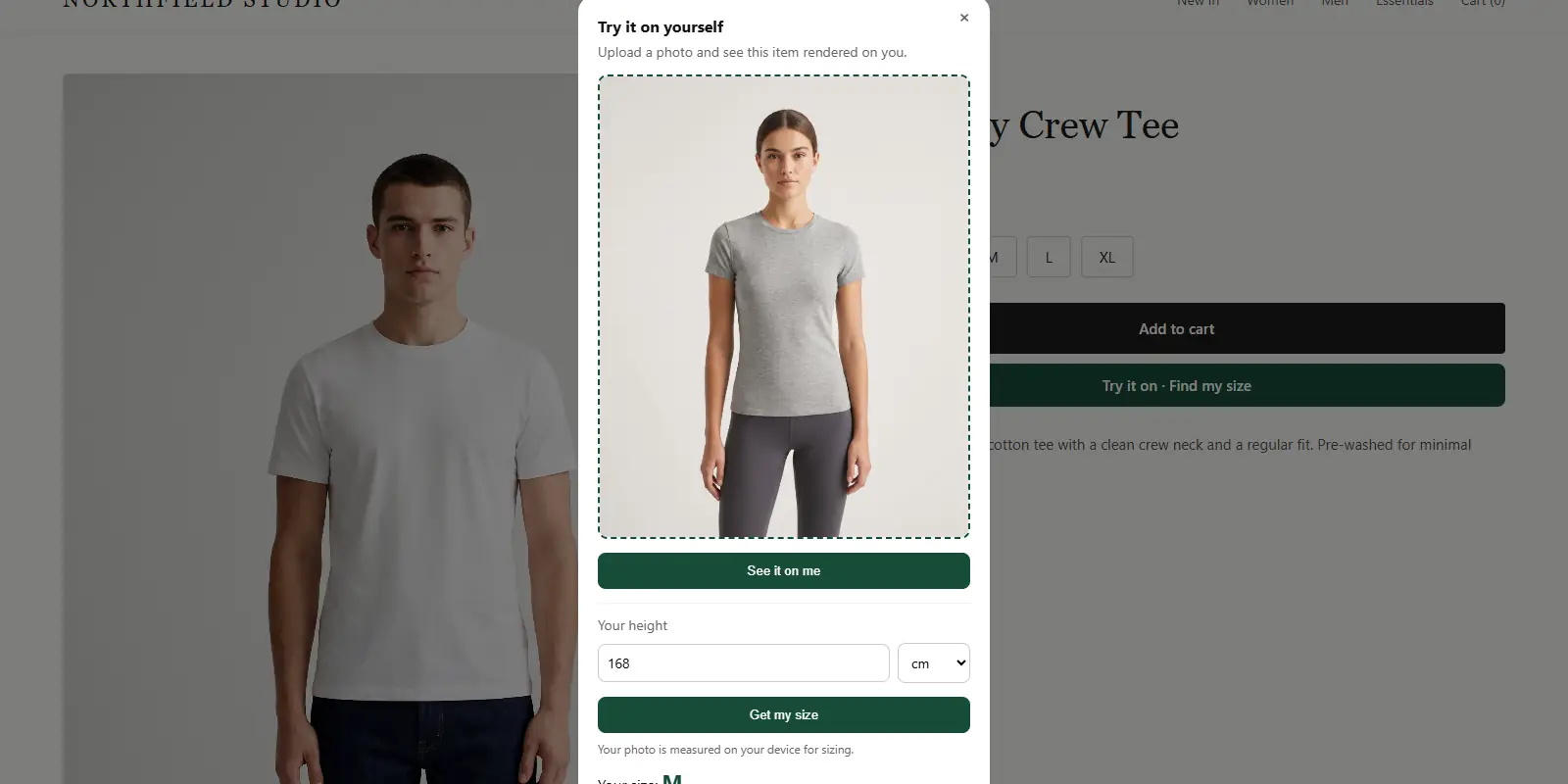
Virtual try-on lets the shopper see a garment on a photo of themselves on the store's own site. ZeDaq.ai works this way: the shopper uploads one photo and sees the store's real garment on their body.
Alongside it sits size recommendation. A 30-second body scan uses one photo plus height. The measurements are matched to the store's own size chart, with a generic UK, US, EU or AU chart as a fallback.
ZeDaq.ai is available as a Shopify app, as a REST API, and as a script-tag widget for WooCommerce, Wix, Squarespace, BigCommerce and custom sites.
See the shopper side of virtual try-on
Try it on yourself
Live renderUpload a photo, pick a piece, see it rendered on you.
Pick something to try on
How do the costs compare?
The two options cost money in different places. This worksheet lists the cost lines to fill in with your own numbers.
| Cost line | Home try-on | Virtual try-on |
|---|---|---|
| Outbound shipping | Every item in every trial box | Only for the items ordered |
| Return shipping | Every item the shopper doesn't keep | Only for normal returns |
| Packaging | Larger or reusable boxes | Standard |
| Inspection and restocking | Every returned item | Only normal returns |
| Stock tied up in transit | Several items per shopper | One order per shopper |
| Software or fees | Return or trial tooling | Monthly plan |
| Staff time | Packing, checking, refunds | Setting up size charts once |
Fill in your own shipping rates and handling time for each line. The line to watch is stock in transit, because a garment in a trial box can't be sold to anyone else.
For virtual try-on pricing, ZeDaq.ai lists a Free plan at $0 with 3 try-ons, 3 measurements and 5 invoices a month. Paid plans are Micro at $14 a month, Starter at $49, Growth at $129 and Scale at $299, each with a 3-day free trial and no card required. See the current pricing before you decide, and read our breakdown of what virtual try-on costs a small fashion store.
What are the risks of each?
Home try-on risks
- Cash and stock exposure. Items leave your warehouse and may not come back in sellable condition.
- Wear and tear. Garments return worn, marked or missing tags.
- Slower sales of new stock. Items out on trial can't be sold.
- Operational load. Someone must pack, track, inspect and refund every box.
- Abuse. Some shoppers treat trials as free rentals for events.
Virtual try-on risks
- It isn't the real fabric. The shopper sees an image, not the cloth in their hands, so product photos and fit notes still matter.
- Photo quality. A poor photo gives a poorer result, so guide shoppers on what to upload.
- Your size chart must be right. Recommendations are only as good as the chart behind them.
- Not every shopper will use it. Some will still order two sizes and return one.
Neither option removes every return. They address different causes of them.
Which problem does each one solve?
Think about why shoppers return clothes. Two common causes are "it didn't fit" and "it didn't look the way I imagined."
Home try-on solves both by letting the shopper hold the real garment. It is a strong remedy, and an expensive one.
Virtual try-on works earlier. It helps with the size question through a recommendation based on the store's own chart, and with the look question by showing the garment on the shopper's body. It can't replace touching the fabric.
If you're not sure where returns come from in your store, start by reading fit-related returns: where they come from before you spend on either approach.
When does home try-on make sense?
It fits some situations well:
- High-value items where a wrong size is costly and the margin can absorb shipping.
- Stores with strong repeat buyers who return items in good condition.
- Brands with their own fulfilment and returns process that can inspect and restock quickly.
- Complex fits such as tailored suits or bridal pieces, where physical fitting adds real value.
Even then, it works best when it is limited, for example offered only on certain products or to customers with an order history.
When does virtual try-on make sense?
It fits better when:
- You are a small store that can't carry many items in transit.
- Your margins are thin, so every extra parcel hurts.
- Your customers shop on their phones and expect an answer in the product page.
- You sell across borders, where shipping an item back and forth is slow or costly.
- You want to test before you commit. A free tier or trial lets you try it on real products.
A virtual tool also works as a filter. Shoppers who have seen the garment on themselves and have a suggested size are better prepared before ordering.
Can you use both?
Yes. A hybrid is often the most sensible setup:
- Put size recommendation and virtual try-on on every product page.
- Offer a limited "try at home" option, or a free exchange, for orders where fit is still uncertain.
- Track which shoppers still ask for trials, then review whether the product page gave them enough information.
This ordering saves home trials for the cases that need them. Our guide to try before you buy for fashion stores goes through how to set limits.
Alterations are another low-cost option. If a garment is close but not perfect, a small fix can save a return, as covered in alterations instead of returns.
How do you decide?
Answer these questions in order:
- What is your average order value and margin? If shipping several items would eat the margin, home try-on is risky.
- Where do your returns come from? Fit, look, quality or something else.
- Can you handle returns operations? Home try-on needs a dependable process.
- How quickly can you test? A home trial program needs packaging, rules and a returns process, so it takes planning. A free plan lets you test virtual try-on first.
Run a small test of whichever option you choose and compare it against your baseline over a few weeks. Keep the test fair by changing only one thing at a time.
Test virtual try-on on your own products
What should you track in a test?
Pick a few measures before you launch either option, and write down your starting point. Useful ones include the share of orders returned, the reasons customers give for returns, the cost to handle each return, and how many shoppers use the size tool.
Compare like with like. Seasons, sales and ad campaigns all change returns, so avoid judging a test during an unusual month.
FAQs
Are home try-on programs worth it for small stores?
Often not at full scale, because shipping and handling add up and stock sits in transit. A limited version for selected products can work.
Does virtual try-on replace trying clothes on at home?
It can't replace touching the fabric. It does let shoppers see the garment on themselves and get a size suggestion before they order.
Can virtual try-on reduce returns?
It can help shoppers choose better before they buy. Treat any results as something to measure in your own store rather than a promise.
What do shoppers need for virtual try-on?
One full-length photo, and their height for the size scan. They use it on the store's own website, with no separate app to download.
Which should I try first?
Start with the cheaper, faster test. For most small stores that is virtual try-on and a clean size chart, with a limited home trial added later if needed.
Try ZeDaq.ai free
Virtual try-on and Find my size for your store, plus client, order and invoicing tools for tailors, in one subscription.