
How to Price Kente Outfits
By the ZeDaq.ai team · · 5 min read
On this page
To price kente outfits, add up the fabric (or the cost of working with the client's fabric), your trims and lining, your labor time at a fixed hourly rate, a share of overhead, and a profit margin. Then adjust for how hard the fabric is to sew and how complex the design is.
Kente is expensive, hard to replace and unforgiving to cut. That makes a clear method more important than usual. This guide gives you that method with a worked example using placeholder letters, so you can put in your own numbers. If you also want one place for quotes and orders, see our business tools for tailors.
Why does kente need its own pricing approach?
Kente is not an ordinary fabric. Genuine hand-woven kente is made in narrow strips that are sewn together, and the cloth can carry cultural meaning for patterns and colors. That affects how you handle and price it.
Three things set kente apart from everyday sewing:
- Fabric value. The cloth can cost more than your labor, and a cutting mistake is costly.
- Matching strips. Patterns need to line up across seams, which takes planning and time.
- Client expectations. Kente often goes into weddings, graduations and naming ceremonies, where the outfit has to be right on the day.
Printed kente-style fabrics are a different product with different handling. Ask the client which one they have, and price each accordingly.
What goes into the price of a kente outfit?
Use the same building blocks every time, so your quotes stay consistent.
| Cost block | What it covers |
|---|---|
| Fabric | Your purchase cost, or nothing if the client supplies it |
| Trims and lining | Lining, interfacing, zips, buttons, thread |
| Labor | Hours at your hourly rate, including fittings |
| Overhead | A share of rent, power, tools, transport and software |
| Risk allowance | Extra cost for the chance of a cutting error on expensive cloth |
| Profit | The margin that keeps the business growing |
This table is a framework for your own costs, not a set of market prices. For the broader pattern, how to price tailoring work so you actually make a profit goes into hourly rates.
How do you calculate it step by step?
- Estimate labor hours. Break the job into measuring, pattern, cutting, sewing, finishing and fittings. Add them up.
- Multiply by your hourly rate. Call this L.
- Add materials. Call the total of fabric you buy plus trims M.
- Add overhead. Take your overhead per hour from your monthly costs, and multiply by the hours. Call this O.
- Add a risk allowance for costly cloth, R.
- Add profit as a share of the subtotal, P.
Price = (L + M + O + R) plus P.
Because the numbers are yours, keep the formula in a note and re-run it at each quote. A worked example in letters: if a client supplies the cloth, M excludes fabric, and R stays because you still carry the risk of cutting it.
Should the client supply the fabric?
Often they do, especially for kente. Then you price your service, not the cloth.
- State clearly who is responsible for fabric. Put it in writing before you cut.
- Ask for extra fabric. A client should confirm how much cloth there is and whether the pattern needs matching.
- Keep a risk allowance. You still carry the risk of damaging expensive cloth, so charge for that skill.
If you supply the fabric, add your purchase cost plus a handling margin, and show it as a separate line on the quote.
How do you price different kente garments?
Complexity changes hours, so list the style before you quote.
- Kaba and slit. The kaba is the blouse and the slit is the skirt, and they are often made together. Price each piece, then confirm the set price with the client.
- Wrapped cloth or stole. Mostly finishing and edging, so it is lower labor than a fitted piece.
- Men's wear. Lining and structure change the hours.
- Wedding outfits. Add time for fittings and a deadline premium if the date is fixed.
Customers are more likely to accept a price when they see where the hours go. A short itemized quote helps.
What deposit and timeline should you set?
A deposit protects you when you buy trims or reserve time. Many tailors take a deposit before cutting and the balance on collection. Write down the delivery date, the number of fittings and what happens if the client changes the design.
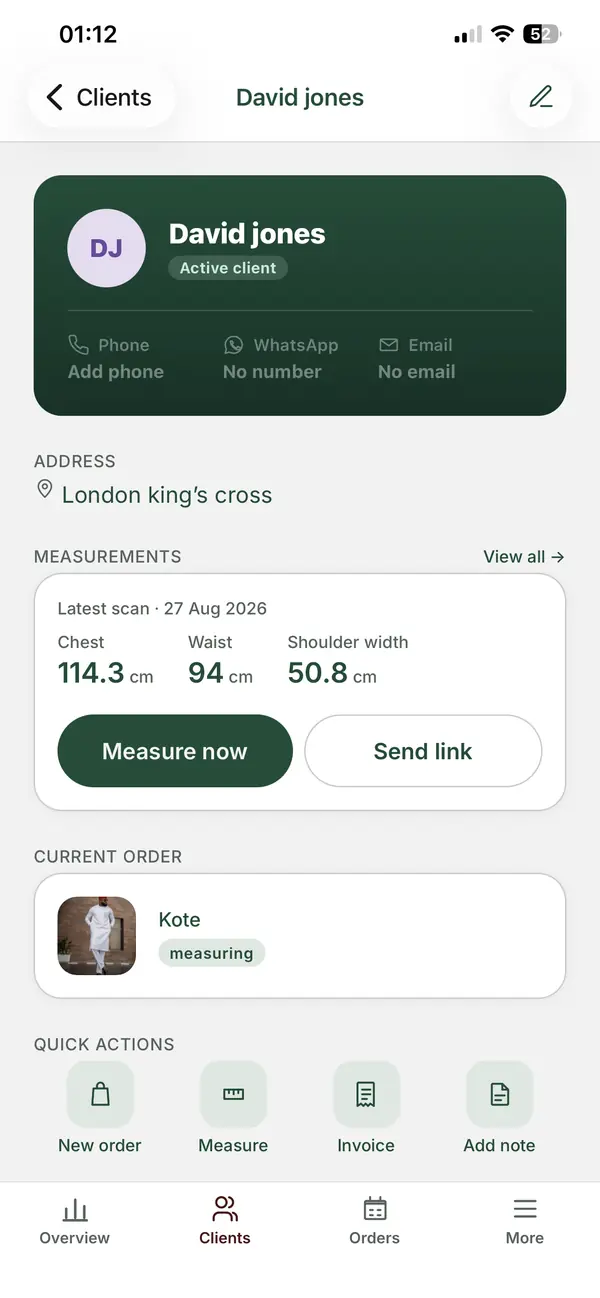
Order tracking helps: the ZeDaq Business app includes orders, a delivery calendar and invoicing in multiple currencies, including NGN, GBP and USD. That helps when a client abroad asks for a quote in a different currency.
How should you compare your price with others?
Use local reference points rather than copying a figure you heard. For repair work, how to price alterations shows a similar approach for small jobs, and how to price a bespoke suit shows how to handle structured garments.
If you sell kente to shoppers online, the retail side has its own considerations; see Ghanaian wedding kente outfits online.
Keep quotes, deposits and deadlines in one place
FAQs
How much should I charge for a kente outfit?
There is no single figure. Use the cost blocks above with your own hourly rate and materials, then adjust for complexity.
Should I charge more if the client brings genuine kente?
Often yes, through a risk allowance. You carry the risk of cutting costly cloth, even though you did not buy it.
What deposit should I ask for?
That is your choice, but take one before cutting. Many tailors set a deposit that at least covers materials and reserved time.
How do I price a kaba and slit set?
Price each piece by its hours, then confirm a set price. Itemizing helps clients understand it.
Try ZeDaq.ai free
Virtual try-on and Find my size for your store, plus client, order and invoicing tools for tailors, in one subscription.

