Ghanaian Wedding Kente Outfits Online
By the ZeDaq.ai team · · 4 min read
On this page
- What should you know about kente before you sell it?
- How do you describe a kente outfit honestly?
- How do you size wedding outfits that buyers cannot try on?
- How can virtual try-on help a wedding buyer?
- What should a product page include?
- How should you plan the timeline for a wedding order?
- How do you handle buyers abroad?
To sell Ghanaian wedding kente outfits online, describe the cloth and the cut precisely, collect real body measurements instead of letter sizes, and give couples a clear timeline. Kente is a cloth with a specific origin, so honest labeling builds trust as much as photos do.
This guide is for store owners and designers selling kente wedding and engagement outfits to buyers who cannot visit in person. Fit is the hardest part, so it helps to read how virtual try-on works for African fashion brands before you plan your product pages.
What should you know about kente before you sell it?
Kente is hand-woven strip cloth. According to Wikipedia's article on kente, it is made of strips of silk and cotton woven on a wooden loom, and the strips are sewn together to make larger pieces. The Asante and Ewe peoples are both associated with kente, and well-known weaving towns include Bonwire and Ntonso.
The same source says kente is worn in modern Ghana to mark special occasions, and that UNESCO recognized it as Intangible Cultural Heritage in December 2024. For more on authenticity and value, see our guide to selling kente online.
See a garment on your own photo
Try it on yourself
Live renderUpload a photo, pick a piece, see it rendered on you.
Pick something to try on
How do you describe a kente outfit honestly?
Say what the buyer is actually getting. Many outfits sold as "kente" use printed fabric or machine-made imitations, and buyers notice the difference.
State clearly:
- Woven or printed. Do not call a print "hand-woven."
- Fiber. Cotton, silk, rayon or a blend, if you know it.
- Where it was made. Name the weaver or town only if you can confirm it.
- What is in the set. For example a cloth, a sash, a top, a skirt or a shirt.
If you are unsure of the details, ask your supplier. Leave out any claim you cannot confirm.
How do you size wedding outfits that buyers cannot try on?
Wedding outfits are tight on time and unforgiving on fit, so rely on measurements.
- Ask for body measurements, not a size letter. Bust, waist, hips and height at least. For a man's top, add chest and shoulder.
- Say how to measure. A short illustrated guide stops common mistakes. Our article on measurement capture tips helps.
- Match to your own size chart. If you sell ready-made pieces, use a chart built from body measurements.
- Offer an adjustment window. Say how and when a buyer can report a fit problem.
Wedding days do not move, so build a buffer into your timeline for fittings or fixes.
How can virtual try-on help a wedding buyer?
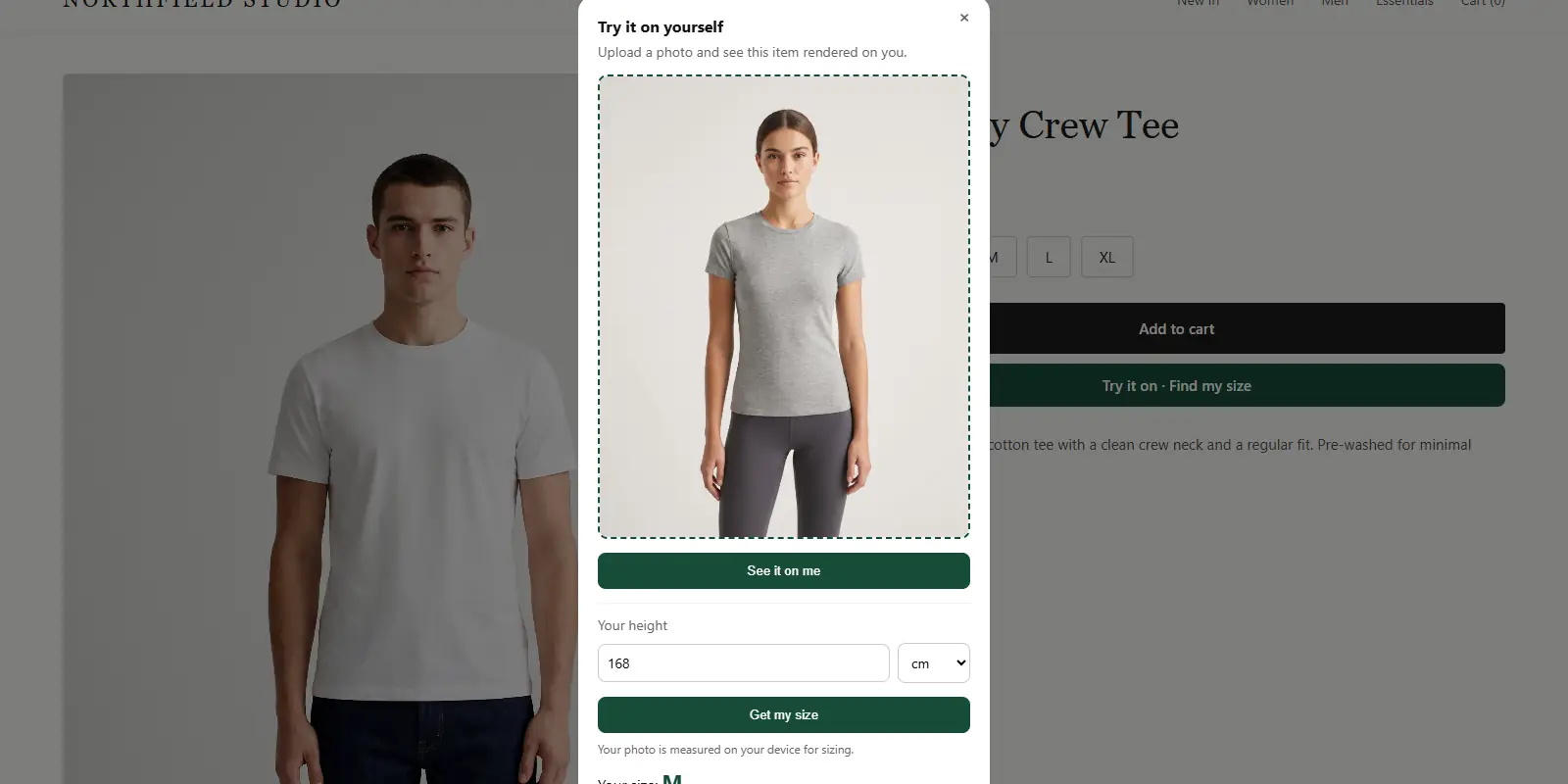
A buyer choosing an outfit for a ceremony wants to see how it sits on their body, not on a model. ZeDaq.ai is AI virtual try-on for fashion stores. The shopper uploads one photo and sees the store's real garment on their body, and the 30-second body scan recommends a size from your own chart.
Patterned cloth like kente can be hard to judge from a flat photo. Try your own products in the demo to see how a pattern reads. Our article on try-on and African prints covers what to expect from patterned fabric.
What should a product page include?
A wedding outfit page needs more than a gallery. Include:
- Clear photos of the cloth up close, in daylight.
- The fabric details described above.
- A size chart or measurement form.
- Production and delivery time, stated plainly.
- Care instructions.
- Your policy on changes after the order is placed.
Price follows the cloth and the labor, which our guide on how to price kente outfits walks through.
For coordinated couple looks, our guide on matching outfits for couples explains how to present the pair.
How should you plan the timeline for a wedding order?
Work backward from the wedding date. A realistic timeline has clear checkpoints:
- Order and deposit. Confirm the outfit, the cloth and the price in writing.
- Measurements. Collect them early and ask the buyer to confirm them.
- Production. Tell the buyer when you will start cutting and when to expect updates.
- Fitting or photo check. If the buyer is nearby, schedule a fitting. If not, ask for a photo in a similar garment to check the fit.
- Delivery. Add time for shipping and a spare window in case something goes wrong.
State what you will do if the outfit does not fit and the date is close. Buyers relax when they know there is a plan.
How do you handle buyers abroad?
Many wedding buyers live outside Ghana. Ask about the wedding date first, then work back through production, shipping and customs. Quote delivery windows as ranges, and add a margin for delays.
Our guide to Nigerian traditional wedding attire for online sellers covers the same planning problems for a neighboring market, and much of it carries over.
Collect measurements and recommend sizes online
FAQs
Is kente only worn at weddings?
No. According to the Wikipedia article on kente cited above, it is worn to mark special occasions in modern Ghana, including graduations.
Should I call a printed fabric kente?
Be careful. Say plainly whether the cloth is woven or printed, so buyers know what they are paying for.
Do I need a size chart for custom outfits?
Yes, or a measurement form. Buyers need to know how to measure, and you need numbers to cut from.
Can buyers see the pattern on their body before ordering?
Virtual try-on can show a garment on the shopper's photo. Test your own product images first to see how well the pattern reads.
Try ZeDaq.ai free
Virtual try-on and Find my size for your store, plus client, order and invoicing tools for tailors, in one subscription.

