
How to Price Alterations
By the ZeDaq.ai team · · 4 min read
On this page
- What should an alteration price cover?
- How do you set a price for each job?
- Which jobs belong on a price list?
- Should you set a minimum charge?
- When should you charge a rush fee?
- How do you handle tricky or unclear jobs?
- How do you keep track of jobs and pickups?
- How do you explain your prices to customers?
- How can ZeDaq.ai help you run an alteration business?
Price alterations by the time the job takes, how hard it is and how much risk it carries, then turn that into a fixed price list with a minimum charge. A fixed list saves you from quoting every hem from scratch and keeps customers from haggling.
This guide shows how to build that list step by step. If you are choosing software to run an alteration business, the comparison of software for tailors and designers is a good next read, and the tailor tools overview shows what ZeDaq.ai offers.
What should an alteration price cover?
Your price must cover more than the minutes at the machine. Count each of these:
- Sewing time: unpicking, re-sewing, pressing and finishing.
- Handling time: looking at the garment, pinning, fitting and talking to the customer.
- Materials: thread, zips, hooks, lining or patching fabric.
- Risk: delicate fabric, expensive garments or tricky structure, where a mistake costs you.
Handling time is often forgotten. A five-minute hem can take twenty minutes once you count the fitting and the chat.
How do you set a price for each job?
Use one formula for every job on your list.
- Estimate the time, including handling, for a typical job.
- Multiply by your hourly rate.
- Add materials.
- Add a risk allowance for difficult fabrics or garments.
- Round to a clean number.
Here is a worked example with made-up numbers in your own currency. It shows the steps, not real prices.
| Line | Example |
|---|---|
| Time: 1 hour at 12 per hour | 12 |
| Materials | 2 |
| Risk allowance | 2 |
| Price for the job | 16 |
Replace these with your own rate and costs. Do this once per job type, then post the results.
Which jobs belong on a price list?
List the jobs you do every week. A short, clear list beats a long one.
| Job type | What makes it cost more |
|---|---|
| Hems | Lining, vents, cuffs and curved edges |
| Taking in or letting out | Number of seams, and whether it is lined |
| Zips | Length, type and hidden or invisible zips |
| Sleeves and shoulders | Structure, such as jackets and coats |
| Repairs | Visible mending, patches and fabric match |
For anything not on the list, say "quote on request" and look at the garment first.
Should you set a minimum charge?
Yes. A minimum charge covers the handling time that every job needs, even a tiny one. Without it, small jobs lose money.
Choose a minimum that equals your cost of one short job, and state it on the list. Customers accept it when they see it written down.
When should you charge a rush fee?
Charge a rush fee when a customer asks you to jump the queue. It pays for pushing other work back and for working extra hours.
State the fee up front, as a flat amount or as an added share of the job price. Don't promise a same-day turnaround unless you know you can deliver it.
How do you handle tricky or unclear jobs?
Some jobs don't fit a list. Treat them with a short process:
- Ask the customer to bring the garment, or send clear photos.
- Look at the fabric, lining and seams before you give a price.
- Say what you can and can't do. If a change risks damaging the garment, tell the customer first.
- Write the quote and the pickup date, and get a yes before you start.
Saying no to a risky job is part of pricing. A refused job costs less than a ruined garment.
How do you keep track of jobs and pickups?
A simple system matters more as volume grows. Note the customer's name, the job, the price, the deposit and the pickup date. Tag each garment so it can't be mixed up. Ask customers to collect within a set period, and say what happens to items left behind.
How do you explain your prices to customers?
Show the list, say what the price includes and say how long the job takes. Customers push back less when they understand the work.
Offering alterations can also help retailers keep sales that would otherwise turn into returns. Our guide on what common fixes cost customers looks at that angle. For clothing types that need special pricing, see how to price kaftans and boubous and price kente outfits.
How can ZeDaq.ai help you run an alteration business?
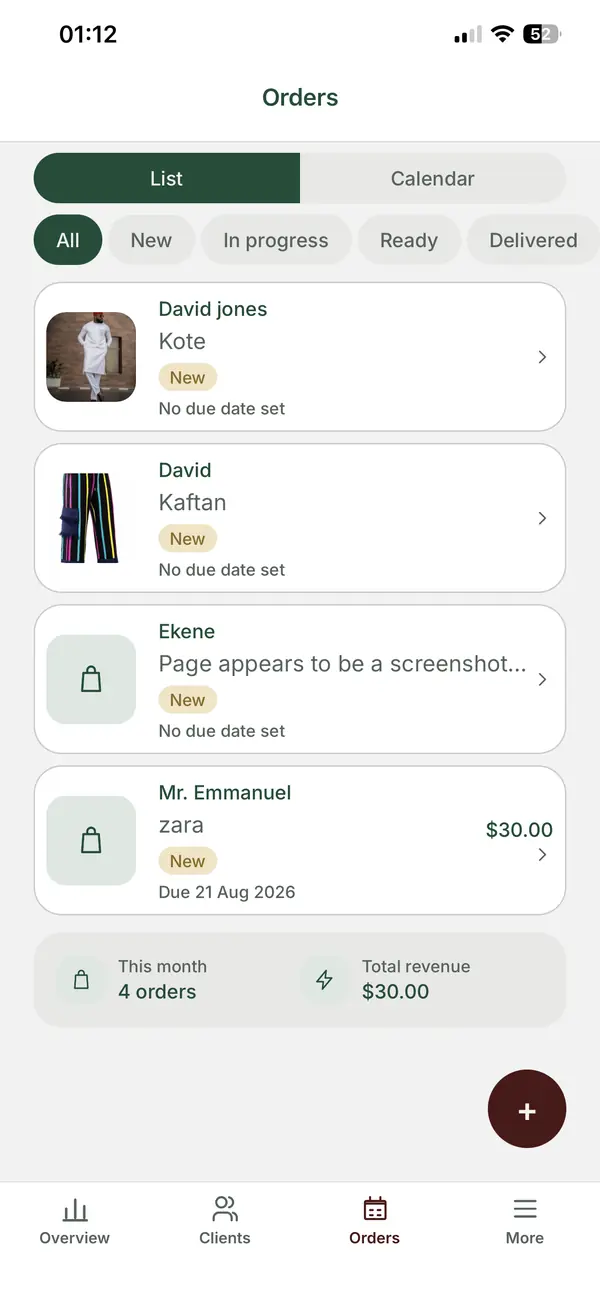
ZeDaq.ai includes a client CRM, orders with a delivery calendar, measurements through a link clients open on their phone, and invoicing in multiple currencies. The Free plan includes 5 invoices a month, so you can try the invoicing before you pay for anything.
Track alteration jobs and send invoices
FAQs
How much should I charge for a hem?
There is no universal figure. Work out your time, materials and risk allowance, then set a fixed price for each type of hem.
Do I need a minimum charge for alterations?
Yes, it is a good idea. It covers the fixed handling time that every job needs, however small.
Should I charge differently for expensive garments?
You can add a risk allowance, because a mistake on a costly garment is expensive for you. Say so on the list so the extra is not a surprise.
Should I quote before or after seeing the garment?
After, whenever you can. Pricing from a description often leads to underquoting.
Try ZeDaq.ai free
Virtual try-on and Find my size for your store, plus client, order and invoicing tools for tailors, in one subscription.

