How to Price Bridesmaid Dresses for a Group
By the ZeDaq.ai team · · 4 min read
On this page
- Why is a group order harder to price than one dress?
- How do you build the per-dress price?
- Should the group get a discount?
- How do you collect money and measurements?
- What rules should you set for changes?
- What goes into a clear group quote?
- How do you keep the timeline realistic?
- How do you stay fair when the group disagrees?
To price bridesmaid dresses for a group, cost one dress fully, add extra time for fittings and sizes, then quote a per-dress price with a deposit and clear rules for changes. A group order feels like one job, but every dress has its own measurements and fitting.
This guide is for tailors and designers. A tailor system for clients and orders helps you track many people's measurements, payments and fittings under one wedding.
Why is a group order harder to price than one dress?
You work with one bride but many bodies. Each bridesmaid may live in a different city, pay on a different date and change her mind at a different time.
The extra costs are easy to miss:
- More fittings. Each person may need a fitting or a remote check.
- More messages. Sorting out who has paid and who has measured takes time.
- Size spread. Extra fabric is needed for larger sizes.
- Matching risk. All dresses must match in cloth and dye lot.
How do you build the per-dress price?
- Cost the dress. Add fabric, lining, zips, trims and labor.
- Add fitting time. Include the time for measurement checks and adjustments.
- Add coordination time. Group admin is real work, so charge for it.
- Add a margin. Cover waste, mistakes and profit.
- Decide on size tiers. Charge more only if larger sizes use more cloth or time, and explain it up front.
For an individual gown, see pricing a wedding dress as a dressmaker.
Worked example
These numbers are invented to show the method. Use your own costs.
| Line | Amount per dress |
|---|---|
| Fabric, lining and trims | $30.00 |
| Sewing labor (5 hours at $10 an hour) | $50.00 |
| Fitting and coordination time | $10.00 |
| Overheads share | $5.00 |
| Subtotal | $95.00 |
| Margin of 25 percent | $23.75 |
| Quoted price per dress | $118.75 |
Example numbers only. Your costs and local rates will differ.
Should the group get a discount?
Possibly, but only where you save time or cost. If all dresses use one pattern and one cloth, cutting is faster. Share some of that saving.
Do not discount fitting time. It grows with the number of people. Instead of a percentage off, offer a small saving when the bride confirms all sizes by a set date.
How do you collect money and measurements?
Agree one contact, usually the bride or maid of honor, but take payment from each bridesmaid when possible. This avoids the contact covering a missing payment.
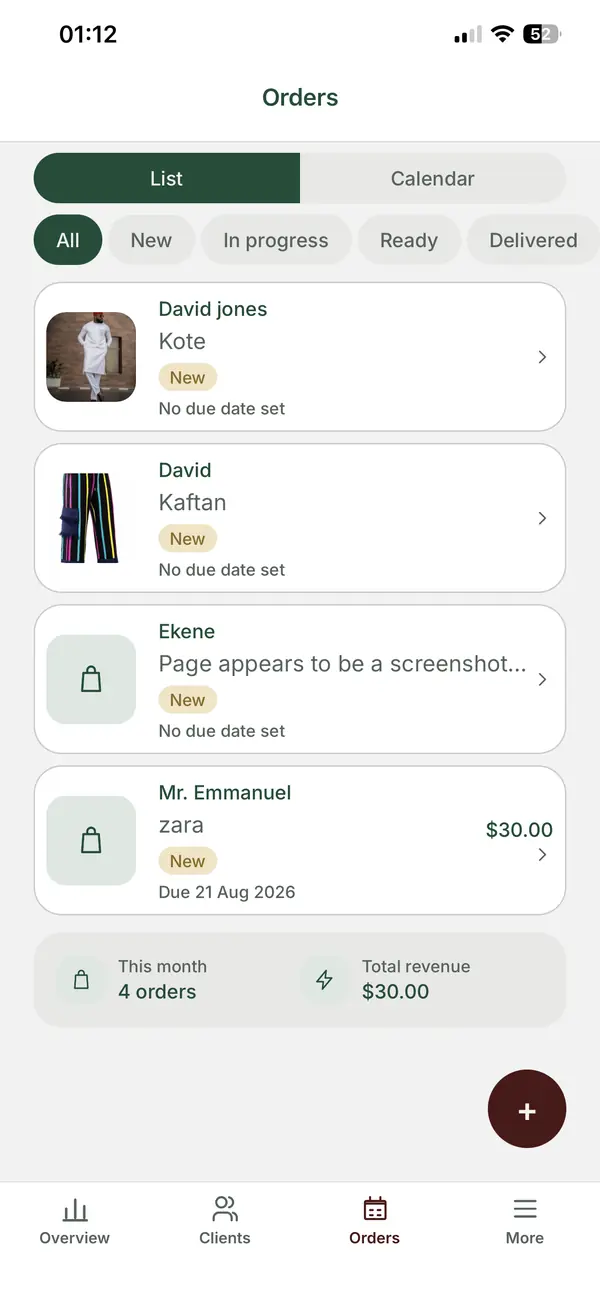
Ask for a deposit from each person before you buy fabric. Send measurement requests early. With ZeDaq.ai tailor tools you can send a link that the client opens on their phone to enter measurements, which helps when bridesmaids are in different places. Orders and a delivery calendar help you plan around the wedding date, and invoicing supports several currencies, including NGN, GBP and USD. For wider group work, read managing wedding and aso ebi group orders.
What rules should you set for changes?
Write these into the quote:
- Size lock date. After this date, changes cost extra.
- Weight or body changes. Say what alterations you include.
- Late additions. A new bridesmaid may need different cloth.
- Rush fees. Charge for work inside your normal turnaround.
- Cancellations. Say what happens to the deposit.
After the event, hem or fit changes can be priced as alteration jobs, and a similar traditional garment is covered in pricing kaftans and boubous.
What goes into a clear group quote?
Send one quote document for the whole party, with a separate line for each dress. It should list:
- The dress style, cloth and color.
- Price per dress and the total for the party.
- Deposit amount and due date for each person.
- The date measurements must be in.
- Fitting dates, and whether remote fittings are accepted.
- The delivery date and collection or shipping method.
Ask the bride to confirm the quote in writing. That confirmation protects both of you if memories differ later.
How do you keep the timeline realistic?
Work backward from the wedding date. Leave time for cloth buying, sewing, one fitting round and a buffer for fixes. Cloth shortages and late measurements are the most common delays.
If the date is too tight, say so early. You can offer a simpler style, fewer details or a rush fee rather than risk a late delivery.
How do you stay fair when the group disagrees?
Disagreements are normal in a bridal party. One person wants a different neckline, another wants to pay later. Decide your rules before the first message and apply them equally.
Tell the group that style changes after sign-off are billed, and that deposits hold their place. Being consistent keeps your time under control and keeps the mood friendly.
Track every bridesmaid's sizes and payments
FAQs
Should I charge each bridesmaid separately?
Where possible, yes. Separate invoices reduce chasing and protect you if one person pulls out.
How early should I start?
Start as early as the bride allows. More lead time means less rush work and fewer errors.
What if the bride wants a different style per person?
Price each style on its own, since patterns, fabric and time differ.
Can I ask for the full payment up front?
You can ask for a deposit before buying materials, with the balance before delivery. Choose terms that match your costs and local practice.
Try ZeDaq.ai free
Virtual try-on and Find my size for your store, plus client, order and invoicing tools for tailors, in one subscription.

