How to Make the Business Case for Virtual Try-On to Your Boss or Investors
By the ZeDaq.ai team · · 5 min read
On this page
- What should the first slide or paragraph say?
- What data should you gather first?
- What does the solution look like?
- How much does it cost?
- How do you present the benefit honestly?
- How do you propose a low-risk pilot?
- How do you answer the questions you will be asked?
- How do you structure the pitch itself?
- What risks should you name?
- How should you report results after the pilot?
- What should you ask for in the end?
To make the business case for virtual try-on, show the fit problem with your own data, state the cost, propose a small time-boxed test and agree the success measures in advance. A low-risk pilot is easier to approve than a promise of large returns.
Decision makers want to know what it costs, what could go wrong and how you will judge the result. This guide gives you a six-step structure. For background on the tool itself, see the overview of a virtual fitting room for clothing websites.
What should the first slide or paragraph say?
State the problem in one sentence with your own data. For example: "Fit-related returns are our largest avoidable cost, and customers cannot tell how our sizes will fit them."
Keep it to your store. Use your return reasons, your support messages and your product pages as evidence, not general headlines.
What data should you gather first?
Collect these before you pitch:
- Monthly orders and revenue.
- Return count, split by reason (fit, quality, other).
- Average cost of one return, including shipping, handling and markdown.
- The products with the most fit returns.
- The number of sizing questions your support team answers.
If you do not track return reasons yet, set that up first. The guide to return reason codes shows how.
What does the solution look like?
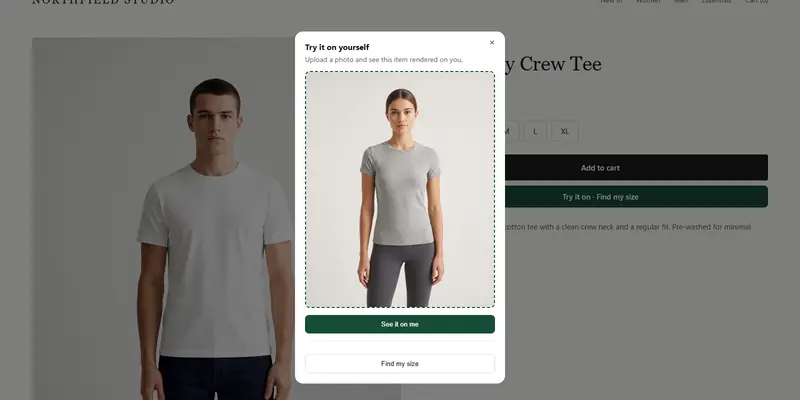
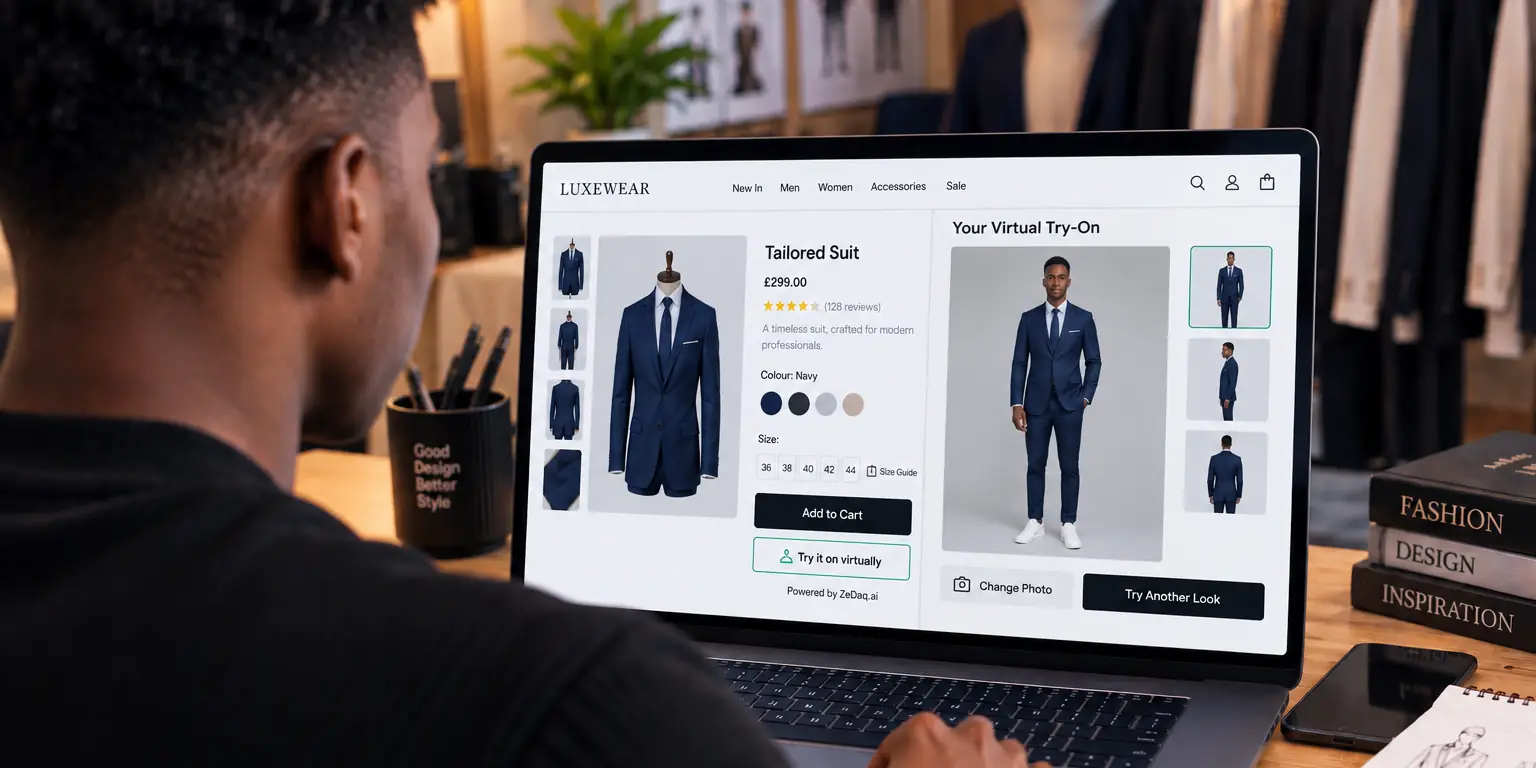
Explain it in plain terms. The shopper uploads one photo and sees the store's real garment on their body. A 30-second body scan (one photo plus height) can also recommend a size from the store's own size chart.
ZeDaq.ai is available as a Shopify app, a REST API and a script-tag widget for WooCommerce, Wix, Squarespace, BigCommerce and custom sites. Say which one fits your platform, so nobody has to ask about developer time.
How much does it cost?
Give the regular price, not just the introductory one. ZeDaq.ai's pricing lists a Free plan at $0 with 3 try-ons, 3 measurements and 5 invoices a month, and paid plans from Micro at $14 a month to Scale at $299 a month.
Every paid plan has a 3-day free trial with no card required. The first month is discounted on monthly plans once per store, then renews at the regular price.
Put the full-year regular cost in your slide. It shows you have not understated the spend.
How do you present the benefit honestly?
Do not quote another company's results as your forecast. Industry research on virtual try-on exists, but it describes other stores and methods.
Instead, show a scenario table with your own inputs.
| Scenario | Returns avoided a month | Meaning |
|---|---|---|
| Cautious | Low | Payback is slow or negative |
| Expected | Middle | Your best estimate |
| Strong | High | Upside, not the plan |
Walk through the arithmetic in the virtual try-on ROI model, and use the cautious case for approval.
How do you propose a low-risk pilot?
A pilot answers the question "will it work here?" without a large commitment.
- Pick products. Choose the few with the most fit returns.
- Set the period. Use a fixed test window.
- Pick the measures. Fit-related returns on those products, try-on use and sizing questions.
- Set the decision rule. For example: keep it if the measured benefit exceeds the plan cost.
- Name an owner. One person reports the result.
The Free plan and the 3-day trial let you start with no card. For help picking, see which products should get try-on first.
How do you answer the questions you will be asked?
Prepare short answers to the usual challenges.
- "What if it does nothing?" The downside is the plan cost for the test period, and you can start on the Free plan.
- "Will it slow our site?" Test page speed on mobile before and after, and report the result.
- "Is this right for our products?" Some categories suit try-on more than others. A store selling uniforms, for example, should read whether workwear and uniform suppliers should offer virtual try-on first.
- "What do competitors do?" Name only what you can verify from their own sites.
Short, honest answers build more trust than confident promises.
How do you structure the pitch itself?
A one-page memo or five slides is enough.
- Problem: your fit-return data in one line.
- Solution: what the shopper sees, in plain words.
- Cost: regular plan prices and the trial terms.
- Pilot: products, period, measures and owner.
- Decision: what you want approved and the review date.
Put numbers in a table, and mark every assumption as an assumption.
What risks should you name?
Naming risks earns trust. Include these:
- The result may be small. That is why you pilot.
- Photo and privacy questions. Prepare an answer; the guide on shopper privacy and try-on helps.
- Bad inputs. A weak size chart weakens recommendations.
- Common mistakes. Read common virtual try-on mistakes retailers make and plan around them.
How should you report results after the pilot?
Report on the same measures you agreed at the start. Do not add new ones after the fact to make the result look better.
A one-page summary works well:
- What you tested, on which products and for how long.
- The measured change in fit-related returns and sizing questions.
- How many shoppers used try-on or the size scan.
- The cost, at the regular monthly price.
- Your recommendation: keep, expand, change plan or stop.
If the result is weak, say so and explain what you learned. A clear "no" with evidence protects your credibility for the next proposal.
What should you ask for in the end?
Ask for a small, specific decision: approval to run a time-boxed pilot on named products, with a review date. This is easier to say yes to than a permanent budget line.
For investors, add how try-on supports your plan to grow and what you will report. For platforms outside Shopify, see virtual try-on for WooCommerce to show the setup is realistic.
Start the pilot your team can approve
FAQs
Should I promise a specific uplift to investors?
No. State the cost and the test, and show the measures you will report. Promises you cannot back up damage trust.
How long should the pilot run?
Long enough to cover a normal sales cycle for your store. Agree the end date before you start.
What if my boss asks for case studies?
Say that you will produce your own results from the pilot. Your own data is the most relevant evidence.
Do I need a developer?
It depends on the platform. The Shopify app and the script-tag widget are designed for store setup, while the REST API suits developers.
Try ZeDaq.ai free
Virtual try-on and Find my size for your store, plus client, order and invoicing tools for tailors, in one subscription.