
How to Handle a Client Who Says the Outfit Doesn't Fit
By the ZeDaq.ai team · · 4 min read
On this page
When a client says the outfit doesn't fit, stay calm, ask them to try it on in front of you, and compare what you see with the measurements and notes you recorded. Then choose one of three outcomes: a small adjustment, a remake, or a polite explanation that the garment matches the agreed brief.
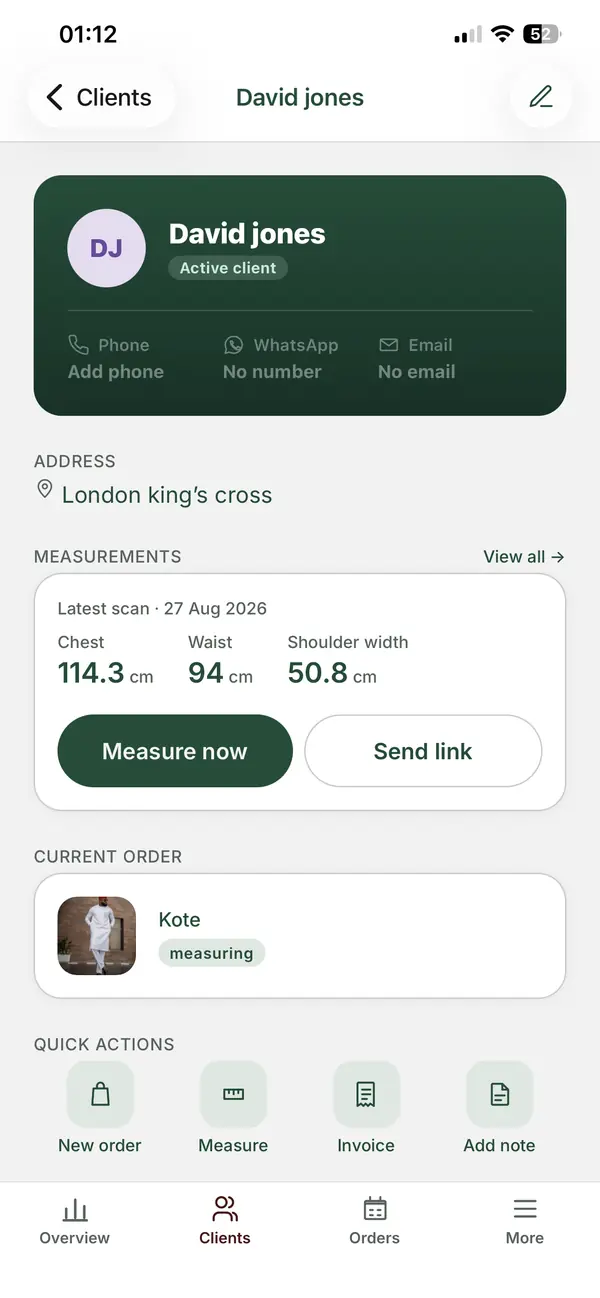
Clear records make this much easier. If you keep client details and measurements in one place, as the tailor tools at ZeDaq.ai are built to do, you can answer a fit complaint with facts instead of memory.
What should you do first when a client complains about fit?
Listen without defending the work. Ask the client to put the outfit on and show you exactly where it feels wrong.
Then ask three questions:
- Where does it pull, gape, sag or feel loose?
- Is this how it feels standing, sitting or moving?
- Is the problem the size, or the style you agreed on?
Write the answers down. A complaint such as "it feels tight" can mean the chest is too small, or the client wanted a looser cut than the one in the design.
How do you find out whether the fault is yours?
Check the garment against three things, in this order.
- The recorded measurements. Measure the finished garment and compare it with the numbers you took at the fitting.
- The agreed design. Look at the sketch, reference photo or notes. Did the client approve a fitted cut and now want ease?
- The client's body today. Weight, posture and even footwear can change how a garment sits between the measuring day and the delivery day.
If the garment is off from your own measurements, the fault is yours. If it matches the numbers and the design, the cause is a change or a misunderstanding.
When should you adjust and when should you remake?
Most fit complaints can be fixed with an adjustment. A remake is for problems that alterations cannot solve.
| Situation | Usual response |
|---|---|
| Hem, sleeve length or strap length is off | Adjust |
| Waist or side seams need a small take-in | Adjust, if there is seam allowance |
| Too tight and no fabric left to let out | Remake, or add panels if the design allows |
| Wrong style or neckline from the brief | Remake, and agree who pays |
| Client's body changed after measuring | Adjust as a paid alteration, or remeasure |
This table is a rule of thumb, not a standard. Your fabric, lining and seam allowance decide what is possible.
Who pays for the fix?
Decide this before the complaint, not during it. Put your fit policy in writing when the order is accepted: how many free adjustments are included, what counts as a paid alteration, and when a remake is offered.
A simple pattern many tailors use:
- Your error: you fix it at no charge.
- Agreed design, client unhappy with the look: you offer a paid change.
- Body change after measuring: you remeasure and charge for the alteration.
For disputes that go further, see how to handle difficult tailoring clients. If the client stops responding after a fit dispute, read what to do when a client doesn't collect their order.
How can you prevent fit disputes next time?
Prevention happens at measuring and at sign-off.
- Record measurements the client can see. Send them to the client to confirm before you cut.
- Photograph the finished design brief. A sketch or reference photo with notes avoids "that is not what I asked for".
- Hold a fitting before the final seams. A mid-way fitting catches most problems while they are cheap to fix.
- Agree on ease. State whether the outfit is snug, regular or relaxed.
Group orders add pressure because many fittings land at once. The guide on how wedding and aso ebi tailors manage group orders shows how to keep each person's measurements and deadline separate.
ZeDaq.ai lets clients submit measurements through a link they open on their phone, so the numbers come from the client and are stored against their record. The Free plan covers 3 measurements a month, and every paid plan has a 3-day free trial with no card required.
Keep every client's measurements in one place
What should you say to the client?
Tone matters as much as the fix. Acknowledge the problem before you explain anything, for example: "I can see it is pulling at the shoulder. Let me check it against your measurements."
Then offer a clear next step with a date. Clients accept a fix more easily when they know what happens next and when they will have the outfit back.
FAQs
Should I always offer a free adjustment?
Offer a free fix when the garment does not match your recorded measurements or the agreed design. For changes caused by the client's body or a new request, a paid alteration is reasonable if your policy says so.
What if the client wants a refund?
Check your written terms first. Refund rules differ by country and by order type, so read the rules that apply to you. The article on refunds in tailoring covers the UK position.
How do I stay professional when a client is rude?
Keep to the facts: the measurements, the brief and the options you can offer. Move the conversation to writing if it becomes heated, so both sides have a record.
Can I prove the garment matches the measurements?
Yes, if you recorded them and the client confirmed them. Measure the finished garment and show the comparison side by side.
Try ZeDaq.ai free
Virtual try-on and Find my size for your store, plus client, order and invoicing tools for tailors, in one subscription.

