
How to Handle Difficult Tailoring Clients
By the ZeDaq.ai team · · 5 min read
On this page
- Why do some tailoring clients become difficult?
- What should you agree on before you start?
- How do you respond to rude or demanding clients?
- How do you say no to endless changes?
- How do you handle payment disputes and late payers?
- When should you walk away from a client?
- How do you keep a record that protects you?
The best way to handle difficult tailoring clients is to set clear terms before you cut any cloth, keep every change request in writing, and stay calm and specific when problems start. Most conflicts come from unclear expectations, not from bad people.
This guide gives you scripts and habits you can use today. A system that records orders, measurements and payments, such as the ZeDaq.ai tools for tailors, makes the written record much easier to keep.
Why do some tailoring clients become difficult?
Most "difficult" behavior has an ordinary cause. Knowing the cause tells you which fix to use.
- Unclear price or timeline. The client expected something different from what you quoted.
- Fear of wasting money. A custom garment cannot be returned like a shop-bought one, so clients feel anxious.
- A deadline they cannot move. Weddings, graduations and funerals make people tense.
- Changing taste. They approve a design, then see something new online.
- Boundary testing. A few clients simply push to see how much you will give.
Anxious clients need reassurance and clear steps. Boundary testers need firm, polite limits.
What should you agree on before you start?
Prevention beats repair. Before any work begins, agree on these points and put them in writing:
- The design. A sketch, photo or description both of you approve.
- The price and what it covers. Say how many fittings are included.
- The deposit. Take it before you buy fabric or cut.
- The delivery date. Include what happens if the client is late to a fitting.
- Changes after approval. Say that new requests may change the price and the date.
A signed order note or a message the client replies "agreed" to is enough for many small shops. For larger jobs, use a proper contract. The guide to what to include in a tailoring contract lists the clauses worth having.
How do you respond to rude or demanding clients?
Stay polite, short and specific. You do not need to win the argument.
Use a three-step reply
- Acknowledge. "I understand you are worried about the date."
- State the facts. "The dress was approved on the sketch you sent, and the fitting is booked for Friday."
- Offer the next step. "I can adjust the hem at Friday's fitting at no charge."
Move heated chats to a calm channel
If a message thread turns angry, stop replying for a few hours. Then answer once, in writing, with the facts. A calm reply that you can later show to anyone protects you.
Do not argue about taste
If a client says "I do not like it", ask what exactly is wrong: the length, the fit, the color or the shape. A precise complaint is fixable. A vague one needs a question, not a defense.
How do you say no to endless changes?
Endless changes cost you time and fabric. Handle them with a fixed rule that you apply to everyone.
- Allow a set number of fittings. Extra fittings are charged or booked at a later date.
- Quote change requests. "Adding sleeves changes the price and moves delivery to the following week. Shall I go ahead?"
- Freeze the design. After the deposit and the first cut, only fit changes are free. Design changes are new work.
When you apply the rule the same way every time, it feels like policy, not a personal attack.
How do you handle payment disputes and late payers?
Money problems are the most common sign of a difficult client. Reduce them with structure:
- Take a deposit before work starts, and the balance before the garment leaves your shop.
- Send a clear invoice with the amount, the due date and how to pay. The guide to invoicing tailoring clients professionally shows how to do this by email and WhatsApp.
- Send a polite reminder on the due date, then a firmer one a few days later.
- Do not hand over the garment until you have been paid in full.
If you work with clients abroad, invoicing in multiple currencies, including NGN, GBP and USD, avoids confusion about what they owe.
When should you walk away from a client?
You can refuse or end a job. Consider it when a client:
- Abuses or threatens you or your staff.
- Refuses to pay the agreed deposit.
- Keeps changing the brief after you have explained your terms.
- Asks you to break your own written policy again and again.
Do it calmly and in writing. Say what you have done so far, what is owed, and what you will return. Keep your tone neutral. If large sums or legal questions are involved, speak to a local adviser, because rules differ by place. This is general information, not legal advice.
How do you keep a record that protects you?
A simple record settles most disputes before they grow. Keep these in one place for each client:
- Contact details and notes from each conversation.
- Measurements and the date you took them.
- The approved design and any change requests.
- Deposit and payment history.
- Fitting dates and delivery date.
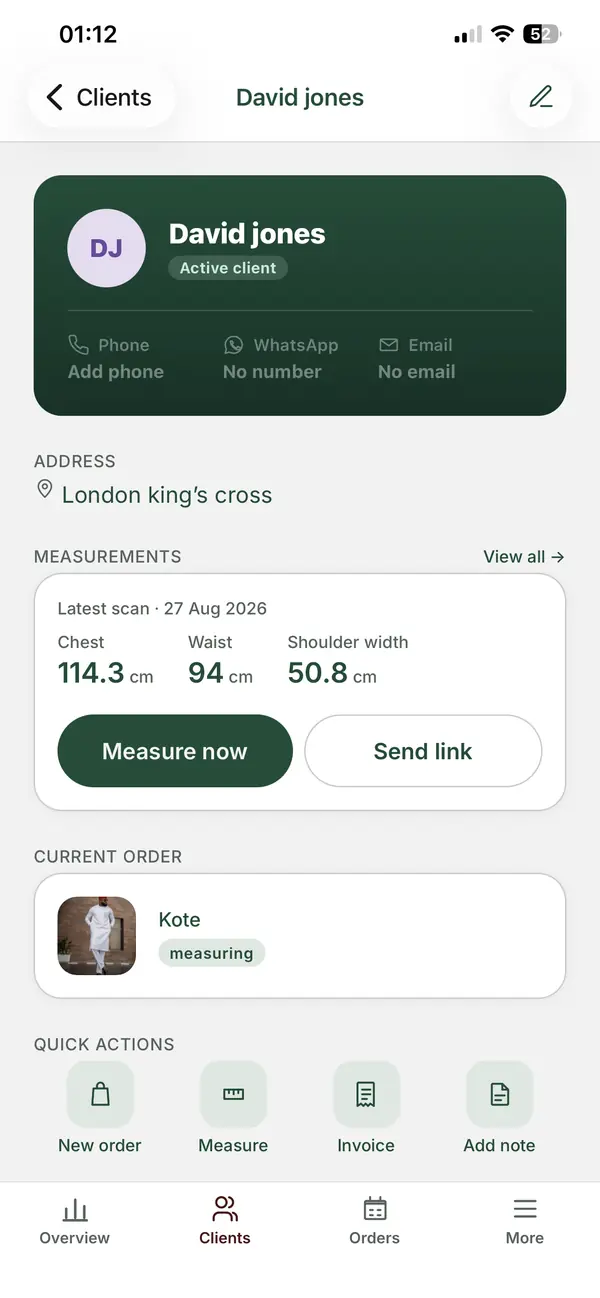
With ZeDaq.ai, you can keep a client list, collect measurements through a link the client opens on their phone, track orders on a delivery calendar and send invoices. Group jobs need even more care, and the guide to managing wedding and aso ebi group orders shows how.
Keep clients, measurements and payments in one place
FAQs
Should I ever refund a difficult client?
It depends on the cause. If the garment does not match the approved design, fix it or refund part of the price. If the client simply changed their mind, your written terms decide.
How do I stop clients messaging me at all hours?
Say when you reply, for example weekdays during shop hours. Put it in your first message and your WhatsApp business profile, then stick to it.
What if a client posts a bad review about me?
Reply once, politely, with facts and an offer to fix the problem. Do not argue in public.
Is it worth keeping a client who always complains?
Count the extra time and stress against the money you earn. If the job costs more than it pays, decline the next order.
Try ZeDaq.ai free
Virtual try-on and Find my size for your store, plus client, order and invoicing tools for tailors, in one subscription.

