
What to Do When a Client Doesn't Collect Their Order
By the ZeDaq.ai team · · 4 min read
On this page
- Why do clients not collect finished garments?
- What should you do in the first week?
- How do you set a clear collection deadline?
- Should you charge a storage fee?
- How do you write the final notice?
- What can you do with an uncollected garment?
- What should you record in the client file?
- How can you stop it happening again?
When a client doesn't collect their order, contact them in writing, give a clear collection deadline, and apply the storage terms you agreed at the start. If they still do not respond, follow a documented final-notice step before you decide what to do with the garment.
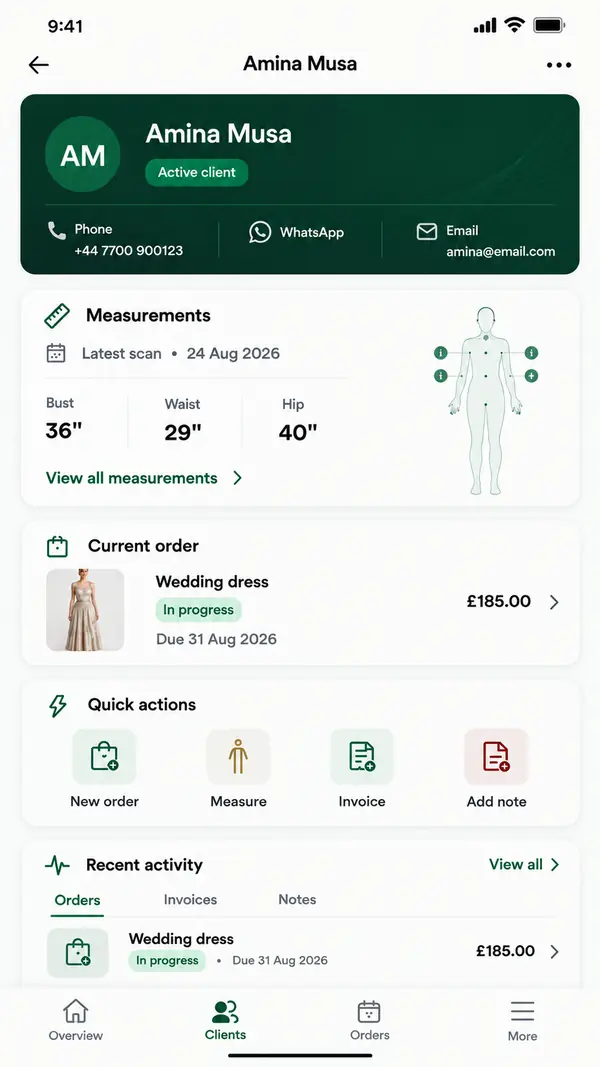
Uncollected garments tie up space and money. A tracked order process, such as the one in the ZeDaq.ai tailor tools, helps you spot late pickups early and keep proof of every message.
Why do clients not collect finished garments?
Knowing why helps you choose the right message. Common reasons include:
- They forgot or lost track of the date.
- They cannot afford the balance right now.
- The event passed, or plans changed.
- They are unhappy with the fit and avoiding the conversation.
- Their contact details changed.
Start by assuming the reason is simple. Many clients collect after one friendly reminder.
What should you do in the first week?
Act quickly and keep a record.
- Send a friendly reminder by message or call. Say the garment is ready and give your opening hours.
- Mention the balance and the payment methods you accept.
- Offer options. Delivery, a new pickup time, or a short payment plan if that suits you.
- Log the message with the date in the client's record.
If the reason might be fit, ask. The guide to handling a client who says the outfit doesn't fit gives a calm way to fix it.
How do you set a clear collection deadline?
After the first reminder, send a second message that includes a date. Be firm and polite:
"Your order is ready for collection. Please collect it and pay the balance by [date]. After that date, storage fees in our order terms will apply."
Only mention fees you agreed in advance. If you did not, say the deadline and that you will contact them again.
Should you charge a storage fee?
You can, if you agreed to it before starting. Put it in your order note or contract.
Good storage terms state:
- How many days you hold a finished garment for free.
- The fee after that, per day or per week.
- What happens after a final date.
Laws on holding and selling unclaimed goods differ by country and region. Check your local rules or ask an adviser before you sell or dispose of anything. This is general information, not legal advice.
How do you write the final notice?
The final notice is your last step before you act. Send it in writing and keep a copy.
- State the order, the date it was ready and the amount owed.
- Give a last collection date.
- Say what will happen if they do not collect, in line with your terms and local rules.
- Send it to every contact you have: phone, email and messaging apps.
Keep the tone neutral. You are explaining a process, not accusing anyone.
What can you do with an uncollected garment?
Your options depend on your terms and local rules.
| Option | When it makes sense |
|---|---|
| Keep holding it | The client is in contact and has a plan |
| Offer it for sale | Your terms allow it and local rules permit it |
| Alter it for a new client | The design can be changed and you keep the deposit as agreed |
| Donate or recycle | After all notices, if your terms allow it |
Do not sell a garment made to someone's measurements if your terms do not allow it. Keep any deposit as your terms say, and record what you did.
What should you record in the client file?
Keep a short log for each late pickup. If a dispute arises, it shows you acted fairly.
- The date the garment was ready.
- Each reminder: date, channel and what you said.
- Any reply from the client.
- The deposit and balance amounts.
- The final notice and the date of your decision.
How can you stop it happening again?
Prevention is simpler than collection.
- Take a deposit before you cut. A client who has paid something is more likely to return.
- Agree the pickup date and storage terms in writing.
- Send a reminder two days before the date.
- Keep contact details up to date, with a second contact if possible.
- Record orders and dates in one place. The guide to order management for fashion designers shows how to track them.
ZeDaq.ai includes a client CRM, orders with a delivery calendar and invoicing in multiple currencies, including NGN, GBP and USD. For a wider comparison of tools, see the guide to the best software for tailors and designers.
Track orders, pickups and payments in one place
FAQs
How long should I wait before acting on an uncollected order?
Set the period in your terms, such as a number of days after the ready date. Whatever you choose, tell clients at the start.
Can I keep the deposit if the client never returns?
That depends on what you agreed in writing and on local rules. Put the deposit terms in your order note.
Should I deliver the garment to the client?
If they ask and you can charge for delivery, it solves the problem. Take payment before it leaves your shop.
What if the client has disappeared?
Follow your final-notice steps, keep records and then use the option your terms allow.
Try ZeDaq.ai free
Virtual try-on and Find my size for your store, plus client, order and invoicing tools for tailors, in one subscription.