
Refunds in Tailoring: When and How Much
By the ZeDaq.ai team · · 4 min read
On this page
Refunds in tailoring come down to three questions: when a client gets money back, how much, and what happens to the deposit. In general, tailors refund in full for faults and for work that doesn't match the agreement, and may keep a fair amount for cancelled custom work already started.
This is general information, not legal or tax advice. Rules differ by country, so check the law where you sell. Writing your policy into the order process is part of running a steady tailor and designer business.
Does the law treat custom clothing differently?
Often yes, but it depends on the country. In the UK, the government's guidance on accepting returns and giving refunds lists "personalised or custom-made items" among items you only have to refund if they are faulty, per the GOV.UK page on returns and refunds.
The same page says customers who buy online, by mail or by phone generally have the right to cancel within 14 days of receiving the item, even if it isn't faulty. Custom items are treated differently, so read the page for the exact wording.
If you sell outside the UK, look for your own consumer authority. Don't assume the UK rules apply.
When should you refund in full?
Refund in full when the fault is yours. For example:
- The garment is faulty, damaged or poorly made
- It doesn't match the agreed design or fabric
- You can't deliver at all
- It was not made to the measurements you recorded
On the same GOV.UK page, the rule for faulty goods is a full refund if an item is faulty, not as described, or does not do what it should. Check your own legal position before relying on this.
When can you keep part of the deposit?
You may keep part when a client cancels after you have started. The deposit exists to cover materials and time already spent.
A fair approach is to base the amount on what you have actually done:
- Before any work or purchase: refund the deposit in full, or keep a small admin fee if your terms say so.
- After fabric is bought: keep the fabric cost, and refund the rest.
- After cutting or sewing: keep the cost of materials and time, and refund the rest.
- After the final fitting: keep what is reasonable. Consider offering the finished garment to the client.
Put these stages in writing before the order starts, so there are no surprises.
What if the client simply doesn't like it?
Dislike is different from a fault. If the garment matches the design the client approved and the measurements you recorded, you have no duty to refund in most cases, though you can choose to offer a fix or credit.
First try an adjustment. The article on handling a client who says it doesn't fit shows how to compare the garment against your records.
How do you write a refund policy?
Keep it short and put it where the client sees it before paying: on your order form, quote and invoice.
A simple checklist:
- State the deposit amount and what it covers.
- Describe the stages where the refund amount changes.
- Say how faults and alterations are handled.
- Say how long a refund takes to reach the client.
- Include how to contact you.
On the GOV.UK page, businesses must refund customers within 14 days of receiving a returned item, where a refund applies. Use the law that applies to you.
Clear pricing prevents most disputes. If you are repricing, see how to raise your prices as a tailor. Happy clients also leave good feedback, so read how to ask tailoring clients for reviews.
Can you show an example of a refund calculation?
This example uses made-up amounts to show the method only. It is not a rule.
A client pays a deposit for a suit. You buy the fabric, then the client cancels before cutting. Your refund is the deposit minus the fabric cost, and minus any time spent that your terms cover.
If the fabric can be used for another order, you may choose to refund more. Write down the calculation and send it to the client with the refund.
What tools help you keep records?
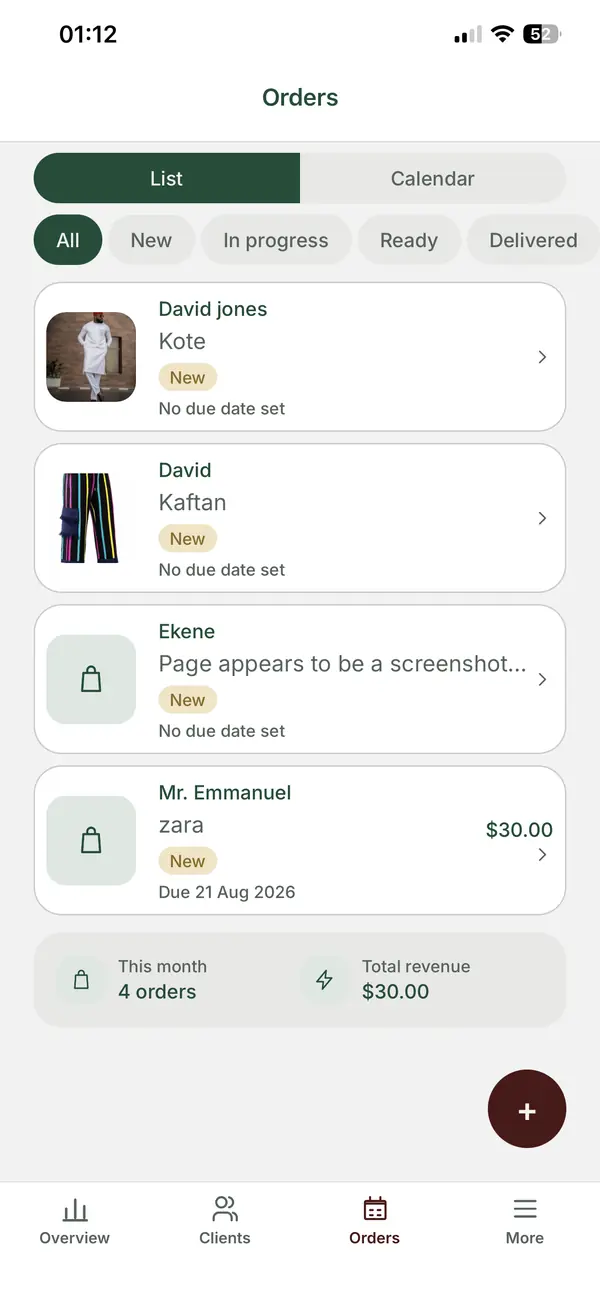
Records settle most arguments. ZeDaq.ai includes a client CRM, measurements collected through a link the client opens on their phone, orders with a delivery calendar, and invoicing in multiple currencies, including NGN, GBP and USD. The ZeDaq Business app is available for iOS and Android.
To see how software choices compare, read the best software for tailors and designers.
This is general information, not legal or tax advice.
Keep orders, measurements and invoices together
FAQs
Is a deposit refundable?
It depends on your terms and local law. State clearly what the deposit covers and when it can be refunded.
Can I refuse a refund on custom-made clothing?
In the UK, custom-made items are treated differently from standard goods, but faulty items must still be refunded. Read the GOV.UK guidance and check your own country's rules.
Should I offer store credit instead of a refund?
You can offer it as a goodwill option when there is no fault. It can't replace a refund that the law requires.
How should I record a refund?
Note the order, the reason, the amount and the date, and issue a credit note or updated invoice. Keep the message thread with the client.
Try ZeDaq.ai free
Virtual try-on and Find my size for your store, plus client, order and invoicing tools for tailors, in one subscription.

