
Cost Breakdown of a Bespoke Garment
By the ZeDaq.ai team · · 5 min read
On this page
- What costs go into a bespoke garment?
- How do you work out the fabric cost?
- How do you price your labor?
- What overhead should you add?
- What does a worked example look like?
- What costs do tailors often forget?
- How do you check your quote against reality?
- How do you turn costs into packages?
- How can you keep costs per order accurate?
A bespoke garment cost breaks into five parts: fabric, trims, labor, overhead and profit. Add the first four to get your break-even cost, then add profit on top to reach your price. Most tailors who feel underpaid have left out labor for fittings or overhead.
This guide shows each part with a worked example, using made-up numbers that you should replace with your own. It supports the pricing methods in how to price a bespoke suit, and it fits into software built for tailors and designers once you want to track costs per order.
What costs go into a bespoke garment?
Think in five buckets:
- Fabric. The cloth, including extra for pattern matching and mistakes.
- Trims. Lining, interfacing, buttons, zips, thread and labels.
- Labor. Measuring, pattern cutting, sewing, fittings and finishing.
- Overhead. Rent, power, machine repair, software, packaging and delivery.
- Profit. What remains for the business after every cost is covered.
How do you work out the fabric cost?
Fabric is the easiest line to measure. Take the yardage the pattern needs, add a margin for matching a print or stripe and for errors, and multiply by the price per yard or meter.
When a client supplies their own cloth, say so on the quote. You then charge for labor and trims only, and you should note that you cannot guarantee the cloth.
Costing an Ankara dress follows the same logic. Our article on costing an Ankara dress shows it for printed fabric.
How do you price your labor?
Count hours, not just sewing time. Include the consultation, taking measurements, cutting the pattern, each fitting, final pressing and any adjustments.
Then decide your hourly rate. To set it fairly, work out how much you need to earn per month, then divide by the hours you can realistically bill. Billable hours are fewer than hours worked, because admin, replying to clients and cleaning take time.
What overhead should you add?
Overhead is cost that exists even when you sew nothing. Divide your monthly overhead by the number of garments you usually finish, and add that share to each one.
Common items:
- Studio rent or a share of home costs
- Electricity and internet
- Machine servicing and needles
- Software and phone plan
- Packaging and courier fees
What does a worked example look like?
Below is a fictional tailored jacket, in a currency of your choice. The numbers are illustrations only, not market prices.
| Line | Example amount | Notes |
|---|---|---|
| Fabric | 100 | Cloth plus matching allowance |
| Trims | 30 | Lining, buttons, interfacing |
| Labor | 150 | Hours across all stages at your rate |
| Overhead share | 20 | Monthly overhead divided by jobs |
| Break-even cost | 300 | Sum of the lines above |
| Profit (your target) | 90 | Choose a margin that grows the business |
| Quote | 390 | What you tell the client |
Swap in your own amounts. If the quote feels too high for your market, change the design, fabric or finish. Do not cut labor first.
What costs do tailors often forget?
Several costs slip through because they do not feel like part of the garment:
- Remakes and mistakes. Some jobs go wrong. Build a small allowance into your overhead so one remake does not erase a month of profit.
- Unpaid time. Replying to messages, sourcing cloth and explaining a design take real hours. Count a share of them.
- Payment fees. Bank transfers, card fees and currency conversion cost money when you serve clients in other countries.
- Tools and spares. Scissors, chalk, pins, patterns paper and replacement machine parts add up.
- Storage. Cloth waiting for a client takes space, and unfinished garments tie up money.
Add these to your overhead list once, then review them every few months.
How do you check your quote against reality?
After each job, compare your estimate with what happened. Did the fittings take longer than planned? Was there more waste than you allowed? Write the difference on the order and adjust your next quote.
Over a few jobs, you will see patterns. Some garments always take longer, and some clients always need extra fittings. Use that to set better prices for those cases instead of absorbing the loss.
How do you turn costs into packages?
Once you know your costs, you can bundle them. A package might include the garment, two fittings and one alteration. Our guide to pricing packages for bespoke services explains how to structure them.
Group jobs need their own costing, because shared cloth and extra coordination change the sums. See how wedding tailors manage group orders for aso ebi.
How can you keep costs per order accurate?
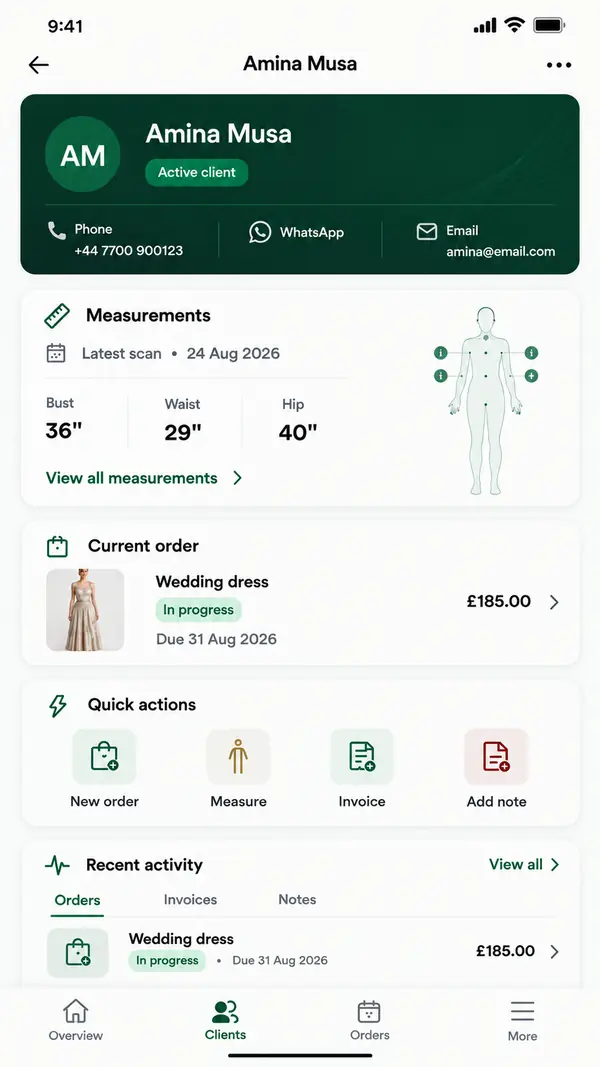
Write the costs on each order while you remember them. A client record with measurements, notes and an order total makes it simple to see which jobs earned a profit.
ZeDaq.ai's tailor tools include a client CRM, measurements through a link the client opens on their phone, orders with a delivery calendar, and invoicing in multiple currencies including NGN, GBP and USD. There is also the ZeDaq Business mobile app for iOS and Android.
Keep clients, orders and invoices in one place
FAQs
What is a good profit margin on bespoke work?
It varies by market and skill, so we do not quote a figure here. Set a margin that covers slow months, tools and your own growth, then test it against what clients accept.
Should I charge separately for fittings?
Either include a set number in the price or list them as extras. Be clear on the quote so clients know what is covered.
How do I price a rush order?
Add a rush fee that covers overtime and displaced jobs. State it before work starts.
Do I include delivery in the price?
You can, or show it as a separate line. Showing it separately avoids losing money on far-away clients.
Try ZeDaq.ai free
Virtual try-on and Find my size for your store, plus client, order and invoicing tools for tailors, in one subscription.

