Pricing Packages for Bespoke Services
By the ZeDaq.ai team · · 5 min read
On this page
- Why sell packages instead of single prices?
- What can a package include?
- How do you build good tiers?
- How do you price each tier?
- What does a package look like for a suit?
- How do you add repeat clients and referrals?
- How do you present the packages to a client?
- What mistakes should you avoid?
- What should the package terms say?
- How can software help you run packages?
Bespoke pricing packages bundle a garment with the services around it, such as fittings, alterations and delivery, at a single clear price. Build two or three tiers, price each from your real costs and spell out what is included, so clients compare options rather than haggle over a single number.
This guide is for tailors and designers, and it pairs with the tools for tailors that keep orders and invoices in one place. Start with your costs, as laid out in the cost breakdown of a bespoke garment, then shape them into packages.
Why sell packages instead of single prices?
A package answers questions before the client asks them. They know how many fittings they get, when it is ready and what extra changes cost.
For you, packages make income easier to forecast. They also stop free extras creeping into jobs, because anything outside the package has a visible price.
What can a package include?
Pick from this list, then decide what goes in each tier:
- Consultation and measuring
- The garment itself, with a fabric allowance
- A set number of fittings
- One round of alterations after delivery
- Rush production
- Delivery or courier handling
- Care or storage items such as a garment bag
How do you build good tiers?
- Start with a base tier. The garment, one fitting and standard timing.
- Add a middle tier. More fittings, a better fabric allowance and one alteration.
- Add a premium tier. Priority timing, extra alterations and delivery.
- Name the tiers plainly. Descriptive names beat clever ones.
Keep to three at most. More choices slow decisions.
| Element | Base | Standard | Premium |
|---|---|---|---|
| Fittings | Fewer | More | Most |
| Alterations after delivery | None | One round | Extra rounds |
| Timing | Standard | Standard | Priority |
| Delivery | Collect | Collect | Included |
This is an example structure. Fill it with your own amounts and terms.
How do you price each tier?
Work from your break-even cost for each tier, then add profit. Extra fittings cost real hours, so price them. Do not hide the cost inside the base tier.
If your work follows the seasons, adjust packages for busy periods. Our article on seasonal pricing for tailors explains how. For suits specifically, see how to price a bespoke suit.
What does a package look like for a suit?
Take a two-piece suit as an example. These are descriptions of what to include, not prices.
- Base package. Consultation, measuring, one fitting, the finished suit with a standard fabric allowance and collection from your studio.
- Standard package. Everything in base, plus a second fitting, one round of alterations after delivery and a choice of lining.
- Premium package. Everything in standard, plus a priority production slot, a third fitting, extra alterations and delivery.
Price each package from the cost of its parts, as in the cost breakdown. The difference between tiers should cover the extra hours and materials, plus a margin.
How do you add repeat clients and referrals?
Packages can reward loyalty without discounting the base price. Offer a free garment bag with a second order, or include one extra fitting for a client who returns within a set time. Keep the rules written down.
A referral can work the same way. Give the referring client a small credit on a later order. Record it on their account so you do not forget.
How do you present the packages to a client?
Show the options side by side, in the same order every time, so the client can compare at a glance. A simple table or a one-page quote works well. Say which tier most clients choose only if that is true for you.
Explain the reasoning in a sentence. For example: "The standard package adds a second fitting, which helps when the cut is close." That helps the client choose on need, not just price.
What mistakes should you avoid?
- Pricing the base tier too low. Most clients take the cheapest option, so it must cover your costs.
- Leaving fittings unlimited. Cap them, or charge for extra ones.
- Hiding extras. If a service costs money, list it.
- Offering too many choices. Three tiers are plenty.
- Forgetting to update. Review your packages when your costs change.
What should the package terms say?
Write the terms in plain words and send them with the quote:
- What is included and what is extra
- When the deposit is due and the balance after
- How many fittings and when they happen
- How long alterations remain available
- What happens if the client changes the design
Keep a copy with the client's record so you can point to it later.
How can software help you run packages?
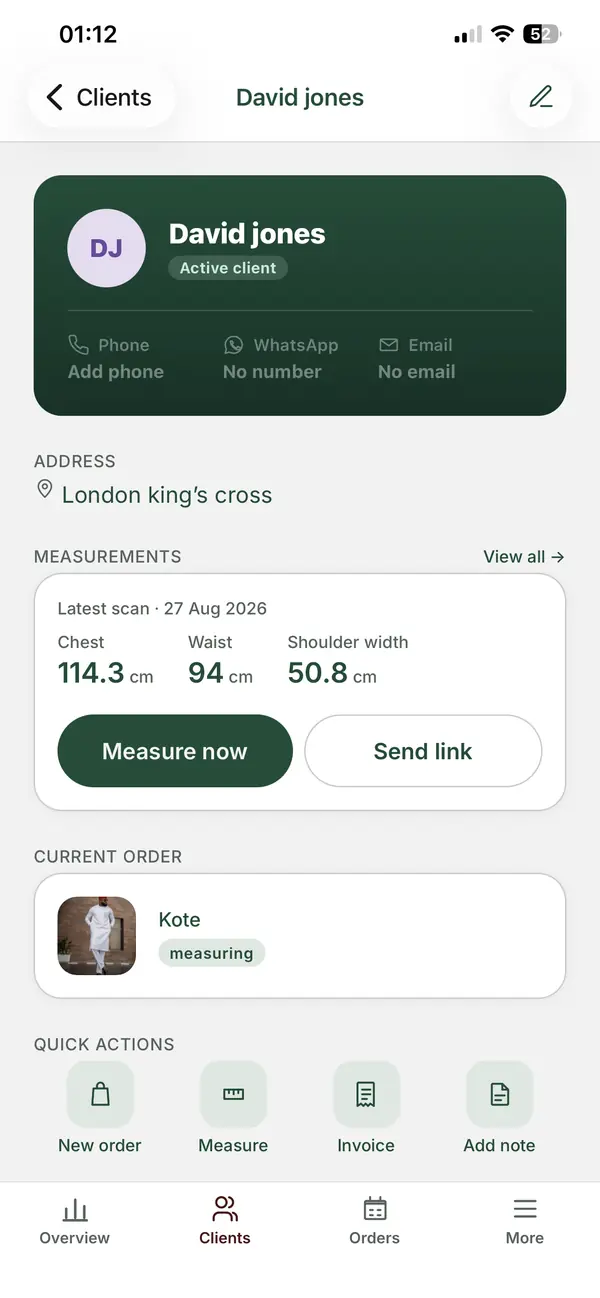
Packages create more to track: fittings, balances and dates. ZeDaq.ai's tailor tools include a client CRM, measurements through a link the client opens on their phone, orders and a delivery calendar, and invoicing in multiple currencies including NGN, GBP and USD. The ZeDaq Business mobile app runs on iOS and Android.
For a wider comparison of tools, read what software to choose as a tailor.
Track fittings, balances and deliveries in one place
FAQs
How many packages should I offer?
Two or three. More options make the choice harder for clients.
Should the deposit be the same in every tier?
Not necessarily. Many tailors take a share of the total, so the deposit grows with the package. Choose a rule and state it.
Can I change a client's package mid-job?
Yes, if the quote is updated and agreed in writing. Record the change on the order.
Do packages work for wedding parties?
They can, with a per-person price and a shared timeline. Group jobs need extra coordination.
Try ZeDaq.ai free
Virtual try-on and Find my size for your store, plus client, order and invoicing tools for tailors, in one subscription.

