Costing an Ankara Dress: Fabric, Labor and Overheads
By the ZeDaq.ai team · · 5 min read
On this page
- What goes into the cost of an Ankara dress?
- How do you cost the fabric correctly?
- How do you cost labor?
- How do you share out overheads?
- What does a full cost sheet look like?
- How do you cost an Aso-ebi group order?
- How do you check the price against discounts and wholesale?
- How can you keep costing simple every week?
Costing an Ankara dress means adding up five things: the fabric you use, the trims and notions, the labor to cut and sew it, the packaging, and a fair share of your monthly overheads. That total is your cost price, and you set your selling price on top of it, never below.
Many Nigerian designers price by feel or by what others charge on Instagram. That works until fabric goes up or a big Aso-ebi order turns out to be a loss. This guide gives you a cost sheet you can copy for every style. Once your prices are right, selling online gets easier, and our guide to virtual try-on for African fashion brands covers how shoppers can check fit before ordering.
What goes into the cost of an Ankara dress?
Split every cost into one of these lines:
| Cost line | What to include |
|---|---|
| Fabric | Ankara yards used, plus any contrast fabric |
| Lining and interfacing | Lining fabric, fusing, padding for structured pieces |
| Trims and notions | Zip, buttons, hooks, thread, elastic, stones, lace trims |
| Labor | Cutting, sewing, finishing, pressing |
| Packaging | Bag, tissue, label, care card |
| Overheads share | Rent, power, fuel, data, machine repairs, software |
How do you cost the fabric correctly?
Fabric is usually the biggest line, and the easiest to get wrong.
- Measure actual usage. Lay out the pattern for each size and note the yards used, including waste.
- Cost by size. A size 18 uses more fabric than a size 8. Cost your largest size separately, or use an average that covers it.
- Use the latest price. Take the price from your most recent receipt, not the one from months ago.
- Allow for pattern matching. Bold Ankara prints may need extra fabric to line up motifs at seams.
Ankara is often sold in set lengths. If a dress uses less than the full piece, decide whether to cost the full piece or only what you use, and whether you can sell the leftover.
How do you cost labor?
Labor is a cost even when you sew the dress yourself.
- If you pay a tailor per piece, use that rate.
- If you pay a monthly wage, divide the wage by the number of pieces the tailor makes in a month.
- If you sew it yourself, set an hourly rate for your time and multiply by the hours the dress takes.
Our guide to pricing tailoring work so you profit explains how to set a fair hourly rate.
How do you share out overheads?
Overheads are the costs that keep your workshop running, whatever you make. Spread them across your monthly output.
- Add up one month of overheads: rent, power or generator fuel, data, transport, repairs and software.
- Count how many pieces you make in a typical month.
- Divide the first number by the second. That is your overhead share per piece.
Review this number every few months. If fuel or rent goes up, so does every dress.
What does a full cost sheet look like?
Here is a worked example for a fitted Ankara midi dress. The figures are made up to show the method. Replace them with your own receipts.
| Line | Example cost |
|---|---|
| Fabric | ₦18,000 |
| Lining and interfacing | ₦4,000 |
| Zip, thread and hooks | ₦1,500 |
| Labor (cut, sew, finish) | ₦12,000 |
| Packaging | ₦1,500 |
| Overheads share | ₦5,000 |
| Total cost price | ₦42,000 |
Example figures only, not market prices.
From that cost price, add your margin to set the selling price. If you keep a target share of the price as profit, divide the cost by (1 minus that share), then round up.
How do you cost an Aso-ebi group order?
Group orders need their own costing, because the numbers change with size.
- Cost each guest's piece separately if styles or sizes differ a lot.
- Price fabric and sewing as separate lines, especially when the celebrant buys the fabric in bulk.
- Add time for coordination. Collecting measurements, chasing payments and fittings all take hours.
- Set a deadline for changes. Late style changes after cutting cost you fabric and labor.
How do you check the price against discounts and wholesale?
Your selling price has to survive more than a retail sale.
- Discounts. If you plan to run sales, make sure the sale price still sits above your cost. Our guide to discounts that protect your margin covers how to find your floor price.
- Wholesale. Boutiques expect a lower price than retail customers. Your cost sheet tells you how low you can go. See our guide to wholesale pricing for boutiques.
- Custom changes. If a customer wants longer sleeves or extra stones, cost the change and add it to the quote.
How can you keep costing simple every week?
Costing only works if you keep it up to date.
- Keep one cost sheet per style in a notebook or spreadsheet.
- Update the fabric line every time you buy fabric.
- Review overheads every quarter.
- Record measurements and orders in one place, so you can see which styles take the most time.
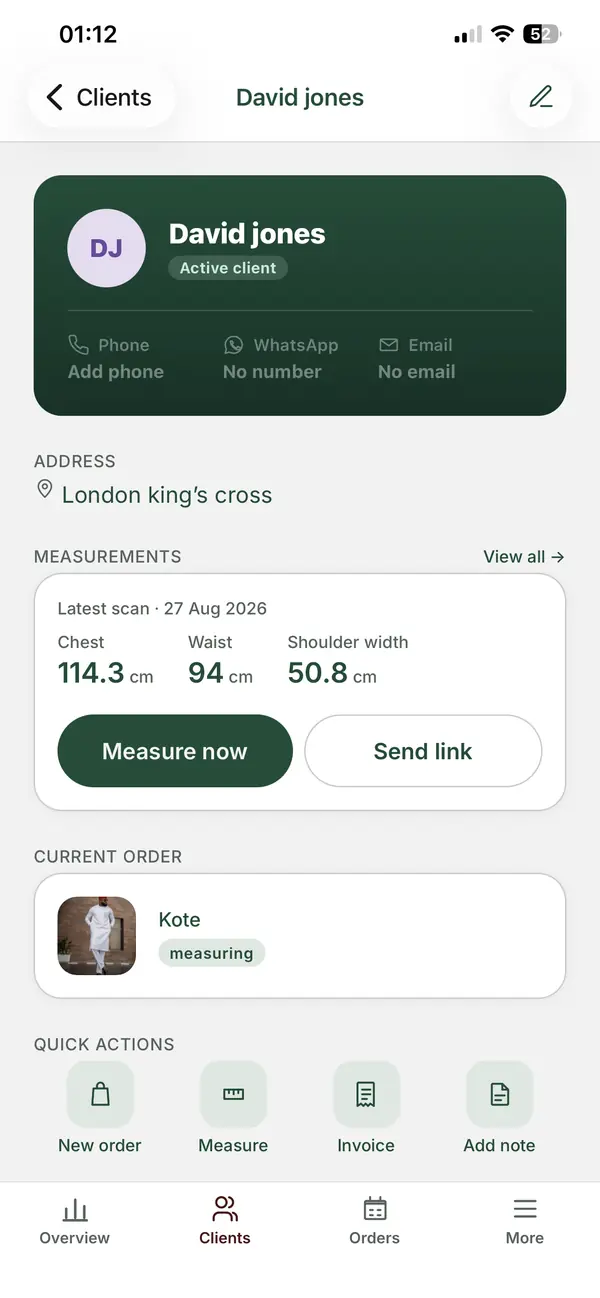
For made-to-measure designers and tailors, ZeDaq.ai's tailor tools help with the admin around costing: a client list, measurements through a link the client opens on their phone, orders on a delivery calendar, and invoicing in NGN, GBP and USD. The ZeDaq Business app runs on iOS and Android. Plans start with a Free plan at $0, and paid plans start at $14 a month.
Keep clients, measurements and invoices in one place
FAQs
Should I cost every size separately?
For styles with a wide size range, yes. Larger sizes use more fabric and sometimes more labor, so a single cost can hide a loss.
What if a customer brings their own Ankara?
Remove the fabric line and price labor, trims, packaging and overheads only. Many designers also add a small handling charge for customer fabric.
How often should I update my cost sheets?
Update the fabric line with every new purchase and review the rest each quarter. Check them before every new collection.
Do I include my own time if I don't pay myself?
Yes. If you leave it out, your price only works while you work for free.
Try ZeDaq.ai free
Virtual try-on and Find my size for your store, plus client, order and invoicing tools for tailors, in one subscription.

