
VAT for Tailors in the UK: The Basics
By the ZeDaq.ai team · · 4 min read
On this page
The basics for UK tailors: you must register for VAT when taxable turnover over the last 12 months goes above the VAT threshold, which GOV.UK currently gives as £90,000. Below that, registration is optional, and the rest of this guide explains each step. This is general information, not legal or tax advice, so confirm details with HMRC or an accountant.
This guide is for tailors, dressmakers and designers who work in the UK. For income tax and the wider picture, read tax for tailors in the UK, and see the tailor tools that keep records in one place.
What is VAT?
VAT is a tax on most goods and services. A VAT-registered business adds it to what it charges, and passes it on to HMRC, after taking off the VAT it has paid on business costs.
GOV.UK's VAT rates page lists a standard rate of 20%, a reduced rate of 5% and a zero rate. It gives children's clothes as an example of zero-rated goods. It does not set out how each tailoring service is treated, so check the specific rate for your work with HMRC.
When must a tailor register for VAT?
You must register if your taxable turnover, over any rolling 12-month period, goes over the threshold. GOV.UK says the threshold is £90,000 at the time of this article (checked November 2026).
"Rolling" means you look at the last 12 months at the end of each month, not only the tax year. Taxable turnover is the value of goods and services you sell that are not exempt from VAT.
According to the same page, if you go over, your registration date is the first day of the second month after you passed the threshold. Put a reminder in your diary each month to check your total.
Can you register before reaching the threshold?
Yes. GOV.UK says you can register voluntarily if your turnover is below the threshold. Once you register, you must pay HMRC any VAT you owe from your registration date.
Reasons tailors consider it include selling to VAT-registered businesses, such as theatre or uniform clients, who can reclaim it. Reasons to wait include more paperwork and, if your customers are private individuals, a price rise or a smaller margin.
What changes once you are registered?
You take on a few new jobs:
- Charge VAT on taxable sales at the right rate.
- Show your VAT number and VAT amounts on invoices.
- Keep records of sales, purchases and VAT.
- File VAT returns and pay what you owe on time.
- Reclaim VAT on business purchases such as fabric and equipment, when the rules allow.
Check the exact invoice details HMRC requires on its website before you issue your first VAT invoice.
How do alterations and made-to-measure work fit in?
This is a point to confirm rather than assume. Altering, repairing and making garments are all services or goods supplied for a fee, but the right treatment depends on what you supply and to whom. GOV.UK's pages above do not say how each tailoring job is rated, so ask HMRC or an accountant before you decide how to price.
What you can do now is record each job by type. Separate lines for fabric, labor and alterations make the later VAT work easier.
What mistakes should tailors avoid?
Most VAT problems come from timing and paperwork, not from the tax itself:
- Checking turnover only once a year. The test is rolling, so check every month.
- Mixing personal and business money. Use a separate account so your records are clean.
- Forgetting to count all taxable sales. Include made-to-measure orders, repairs and sales through other channels.
- Missing a deadline. Late returns and payments can bring penalties, so use calendar reminders.
When in doubt, ask HMRC's helpline or an accountant early, before the threshold is close.
How do you keep VAT-ready records?
Good habits make registration painless:
- Number every invoice and keep a copy.
- Record each client with the date and job.
- Track expenses with receipts for fabric, thread, rent and tools.
- Keep a running 12-month total of taxable sales.
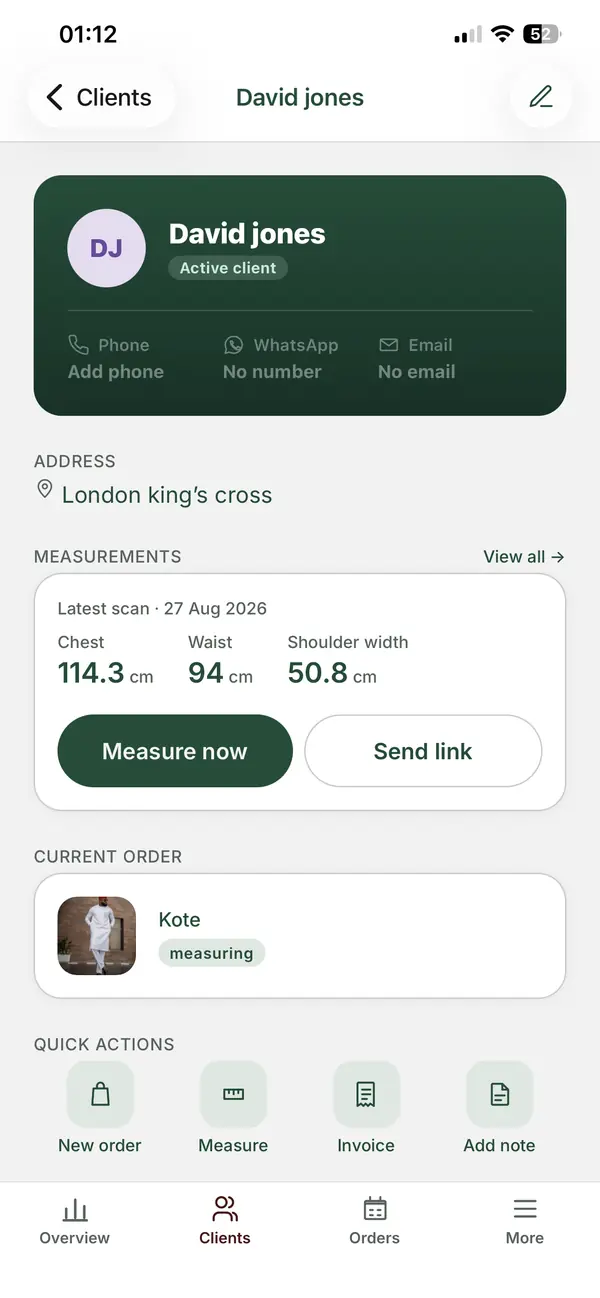
The Micro plan of ZeDaq.ai is $14 a month with a 3-day free trial and no card required. Its tailor tools include a client CRM, orders with a delivery calendar, and invoicing in multiple currencies, including NGN, GBP and USD. These help you organize records; they do not file VAT for you.
If you work with clients in Nigeria or abroad, see tax for tailors in Nigeria for that side. To pick a tool, read the guide to the best software for tailors and fashion designers.
Keep clients, orders and invoices in one place
FAQs
Do I need to register for VAT if I earn under the threshold?
No. Registering below the threshold is voluntary, according to GOV.UK.
Where do I check the current threshold?
Use GOV.UK's VAT registration page. The figure can change, so check it each tax year.
Does the threshold count profit or turnover?
It counts taxable turnover, which is sales, not profit. Check HMRC's guidance on what counts as taxable.
Do I charge VAT on a deposit?
Treatment of deposits depends on the type of payment and the supply. Ask HMRC or an accountant for your case.
Try ZeDaq.ai free
Virtual try-on and Find my size for your store, plus client, order and invoicing tools for tailors, in one subscription.

