Body Scan vs Tape Measure for Tailors
By the ZeDaq.ai team · · 7 min read
On this page
- What is the difference between a body scan and a tape measure?
- How do they compare side by side?
- When is a tape measure the better choice?
- When does a body scan or photo help?
- Which method suits which garment?
- How can you test both on your own clients?
- What does it cost to try measurement links?
- How do you explain the process to clients?
- What does a worked example look like?
- What mistakes should you avoid?
- How do you choose the right software around this?
For tailors, a tape measure remains the more dependable choice for fitted, made-to-measure work, because you can see posture, check ease and adjust on the spot. A body scan, which takes measurements from a photo, is useful when the client is far away or you need a quick first check. Most tailors get the best result by using both.
This article compares the two on practical grounds and gives you a way to test them yourself. If you want the full tool set around measuring, the tailor tools from ZeDaq.ai cover client records, measurement links, orders and invoicing.
What is the difference between a body scan and a tape measure?
A tape measure is a manual method. You or the client wrap a tape around the body at set points and write down the numbers.
A body scan is a digital method. Software estimates measurements from a photo or a short capture, usually with the person's height as a reference.
The two answer slightly different questions. The tape tells you what the body measures at a point you chose. A scan gives you an estimate quickly, without anyone touching a tape.
How do they compare side by side?
| Factor | Tape measure | Body scan or photo measurement |
|---|---|---|
| Needs the tailor present | Yes, for best results | No |
| Speed | A few minutes per client | Fast to collect |
| Handles posture and stance | Yes, you see it | Limited, depends on the photo |
| Ease and fit allowance | You judge it directly | You judge it from numbers |
| Skill needed | Training and practice | Little, but photo quality matters |
| Works for clients abroad | Only if they self-measure | Yes |
| Best for | Fitted, bespoke pieces | Remote intake, first checks |
No scan is exact, and none should be treated as a replacement for judgment. Treat scan numbers as a starting point to confirm, not as final cutting measurements.
When is a tape measure the better choice?
Pick the tape when the cost of a wrong number is high.
- Fitted garments. Suits, corsets, wedding gowns and anything cut close to the body.
- Unusual shapes or posture. You can see and adjust for what a photo flattens.
- Fittings. The tape works alongside pinning and fitting, which a scan cannot do.
- New clients. Your first order with someone sets the baseline, so take it carefully.
For technique, the guides on measuring for a suit and measuring a wedding dress go into detail on each garment.
When does a body scan or photo help?
Use a scan when the main problem is distance or time.
- Clients abroad. A diaspora client can send photos without flying in.
- First contact. A quick set of numbers helps you quote and plan before a fitting.
- Repeat clients with simple orders. A relaxed shirt or skirt needs fewer exact numbers.
- Busy periods. Collecting numbers remotely frees fitting time for harder jobs.
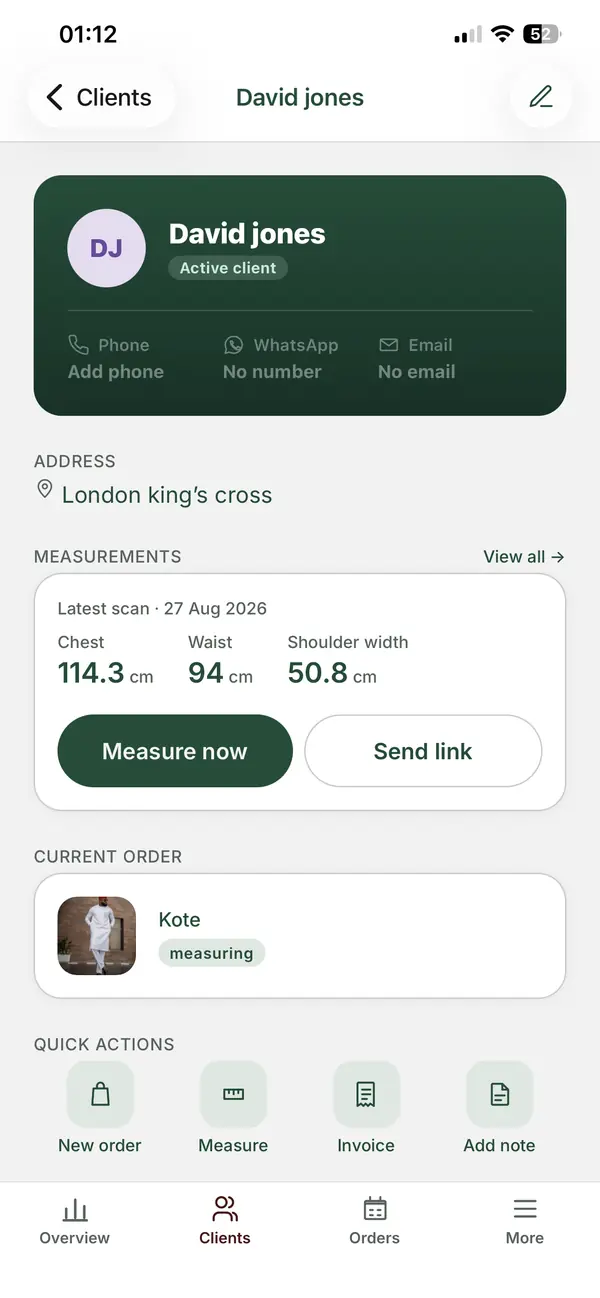
ZeDaq.ai's tailor tools collect measurements through a link the client opens on their phone, which saves you from chasing numbers over chat. The walkthrough on sending a measurement link shows the steps.
ZeDaq.ai also has a body scan for stores: the shopper gives one photo and their height, and the measurements are matched to the store's own size chart. That is a sizing feature for shoppers, so it is a different job from taking cutting measurements for a bespoke order.
Which method suits which garment?
Match the method to the risk. This table is a starting point based on how much a small error costs, so adjust it to your own experience.
| Garment | Suggested method | Why |
|---|---|---|
| Suit, tuxedo or blazer | Tape, plus fittings | Shoulders and balance need your eye |
| Wedding gown or corset | Tape, plus fittings | Close fit leaves little room for error |
| Traditional agbada or kaftan | Tape for first order, remote for repeats | Loose cut forgives small differences |
| Shirt or blouse | Remote for repeat clients, tape for new ones | Moderate risk |
| Skirt or simple dress | Remote, then confirm at fitting | Lower risk if hem and waist are checked |
| Alterations | Tape on the garment | You measure the garment, not only the body |
Whatever the garment, you decide when the numbers are good enough to cut. Software can collect and store them, but it can't take responsibility for the fit.
How can you test both on your own clients?
Do not trust a claim, including ours, until you have checked it against your own work. Here is a simple test.
- Pick a handful of willing clients. Choose a mix of body types.
- Measure each client with your tape. Record chest, waist, hips and any other key points.
- Collect remote measurements the same week. Use the method you want to test.
- Compare the two sets side by side. Note which points differ and by how much.
- Check the differences against fit. Ask whether any gap would have changed the garment you'd cut.
- Repeat with one tricky client. Choose someone with an unusual shape or posture.
If the remote numbers are close enough for simple garments, use them there. If they are not, keep the tape for everything and use remote only for early quotes.
What does it cost to try measurement links?
Check the current prices on the ZeDaq.ai pricing page. The Free plan costs $0 and includes 3 measurements a month, so you can test the idea with a few clients. Micro is $1 for the first month, then $14 a month.
The first-month price applies to monthly plans only, once per business, on its first paid plan. Every paid plan has a 3-day free trial with no card required.
How do you explain the process to clients?
Clients trust a method they understand. A short, friendly message before the appointment sets expectations and reduces back and forth.
Explain three things: why you are asking for measurements, how they will be taken, and what happens if the numbers look off. Reusable wording saves time, and the collection of WhatsApp message templates for tailors includes examples you can adapt.
For a remote client, add practical instructions:
- Wear fitted clothing, not a loose robe.
- Stand straight with arms relaxed.
- Use a plain wall and good light.
- Ask someone to help, if possible.
- Send a clear full-length photo.
What does a worked example look like?
Imagine a tailor in Lagos with a client in London who wants a fitted two-piece for a wedding.
The tailor sends a measurement link first. The client opens it on their phone and sends numbers. The tailor compares them with the garment type and notes anything that looks unusual, such as a shoulder number that seems narrow for the chest.
Because the piece is fitted, the tailor then books a video call to confirm the key points and agrees a cutting date. The finished garment is shipped with a note about how to adjust it locally if needed.
Remote collection saved a flight and a lot of messages. The tape and the video call protected the fit. Neither method did the whole job alone.
What mistakes should you avoid?
- Dropping the tape entirely. Remote numbers should confirm, not replace, your eye for fit.
- Mixing methods without noting it. Record how each set of numbers was taken.
- Accepting poor photos. Ask for good light, fitted clothing and a full-length view.
- Skipping a fitting on a bespoke piece. A fitting catches what numbers miss.
- Forgetting returning clients. Numbers age. See when and how to re-measure returning clients.
How do you choose the right software around this?
Measuring is one part of the job. You also need client records, orders, delivery dates and invoices. The comparison of the best software for tailors looks at the options.
If you want to talk through your own workflow, ask for a demo.
See how tailors collect measurements by link
FAQs
Are body scans accurate enough for bespoke tailoring?
They can be useful for early quotes and simple garments, but treat them as an estimate. For fitted bespoke work, confirm with a tape and a fitting.
Do I still need a tape measure if I use a scan?
Yes. A tape is the tool you use to confirm, to measure for fittings and to catch what a photo misses.
Can clients measure themselves with a tape?
They can, with clear instructions and a helper. Results vary, so ask for photos or a video call to check difficult points.
Does ZeDaq.ai replace the tape measure?
No. It helps you collect and store measurements, including remotely by link. Your own skill and a tape remain part of fitted work.
How should I store measurements from different methods?
Keep them in the client's record with the date and the method. That way you can tell later which numbers were taken in person and which came from a link.
Try ZeDaq.ai free
Virtual try-on and Find my size for your store, plus client, order and invoicing tools for tailors, in one subscription.

