When and How to Re-Measure Returning Clients
By the ZeDaq.ai team · · 5 min read
On this page
- Why shouldn't you reuse old measurements without checking?
- When should you re-measure a client?
- What should you ask before you pick up the tape?
- How do you re-measure step by step?
- Can clients re-measure themselves remotely?
- How do you handle a group order with many returning clients?
- What mistakes should you avoid?
Re-measure a returning client whenever their body has changed, the new garment is a different type, or the old numbers were taken long ago. For a fitted piece such as a suit or a gown, always confirm the key numbers again, even if the client says nothing has changed.
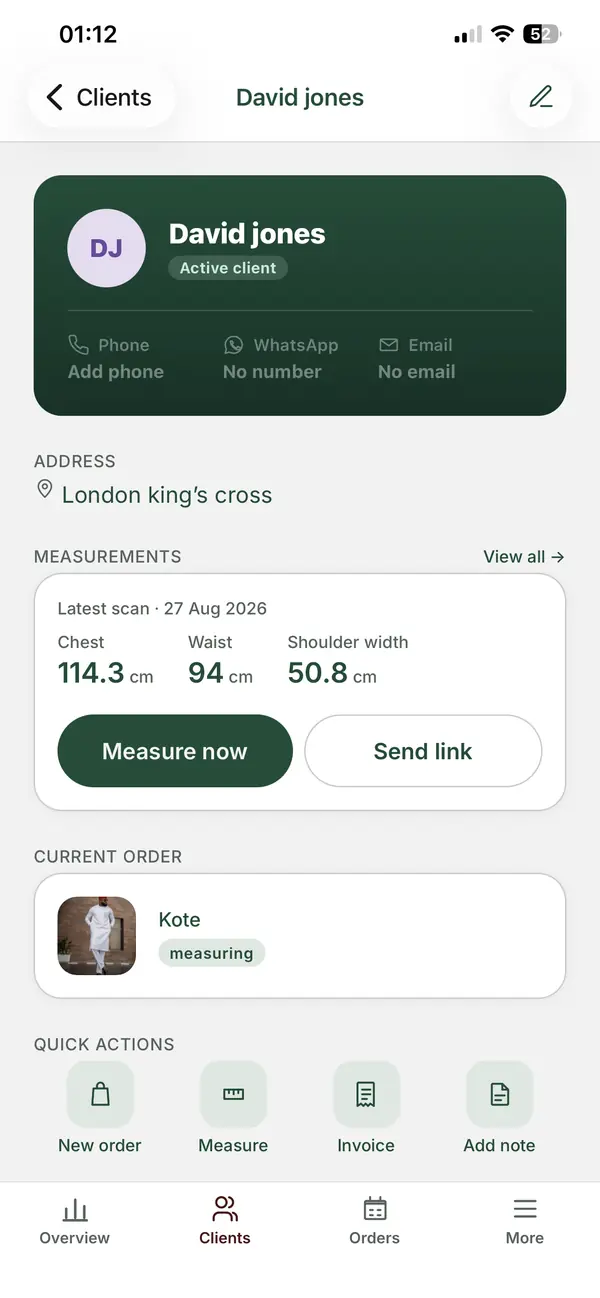
Doing this well is easier when your records are organized. A client CRM built for tailors keeps each client's details and measurements in one place, so you can see what you have before you decide what to retake.
Why shouldn't you reuse old measurements without checking?
Bodies change slowly, and clients often don't notice. A jacket cut from last year's chest number can feel tight in the shoulders today, and the client will blame the cut, not the measurement.
Old numbers can also be wrong from the start. A client who measured themselves at home in a hurry may have pulled the tape too tight. Reusing that number repeats the mistake on every new order.
A remake costs fabric, labor and goodwill. A few minutes of checking costs much less.
When should you re-measure a client?
Some triggers are obvious. Others only come up if you ask. Use this table as a starting point and adjust it to your own work.
| Trigger | What to do |
|---|---|
| Client says they gained or lost weight | Retake all key measurements |
| New garment type (shirt, then trousers) | Take the numbers that garment needs |
| Fitted or structured piece (suit, corset, gown) | Confirm every key measurement |
| Pregnancy, surgery or a new training routine | Retake in full, close to the cutting date |
| Growing children | Retake before every order |
| Your last record is old or undated | Treat it as unverified and retake |
| Large gap since the previous fitting | Spot-check chest, waist, hips and length |
Decide your own time limit for "too old" and write it into your shop rules. A fixed rule is easier to explain to clients than a judgment call each time.
What should you ask before you pick up the tape?
A short question list tells you how much to retake. Ask it on the phone or by message before the appointment.
- Has your weight changed since your last order?
- Have you started or stopped any sport or training?
- Has anything changed that affects how you stand or carry yourself?
- Is the new piece fitted, relaxed or loose?
- When do you need the outfit, and is there an event date?
Write the answers in the client's record next to the date. Over time you build a picture of how that person's size moves, which helps you spot trouble early.
How do you re-measure step by step?
You don't always need a full session. Match the effort to the trigger.
- Open the client's record. Read the last measurements, the date and any fit notes from the previous order.
- Pick the numbers that matter. For trousers, that is waist, hips, rise and inseam. For a shirt, it is neck, chest, shoulders and sleeve.
- Retake those numbers. Use the same method as last time, so the difference you see is the body and not the technique.
- Compare old and new. A small difference may be normal variation. A big difference means retake the rest.
- Record the date and the method. Note whether you measured in person or the client sent them.
- Show the client what changed. Clients trust a remake decision more when they see the numbers.
Can clients re-measure themselves remotely?
Yes, for lower-risk pieces and for clients who live far away. With ZeDaq.ai you can send a measurement link for clients that the client opens on their phone, so you don't need to chase numbers over chat.
Remote measuring works best as a first check. If the new numbers are close to the old ones, you can proceed. If they differ a lot, book a video call or an in-person fitting before you cut.
This matters most for clients abroad. If you ship finished pieces overseas, a wrong size is costly to fix, so read the notes on shipping finished outfits abroad before you promise a delivery date.
How do you handle a group order with many returning clients?
Group orders multiply the problem. A bridal party or a family event can include many people, each with different old records.
Set one deadline for fresh numbers, well before cutting begins, and send every returning client the same short message. Managing wedding and aso-ebi group orders covers how to track many people at once without losing anyone's details.
What mistakes should you avoid?
- Trusting memory. Always check the record, not what you recall about a regular client.
- Overwriting old numbers. Keep the earlier values so you can see change over time.
- Skipping the date. A measurement without a date is hard to trust later.
- Mixing methods. If last time was a tape and this time is a phone link, say so in the record.
- Retaking everything every time. It wastes your time and the client's. Retake what the garment needs.
Keep every client's measurements in one place
FAQs
How often should a tailor re-measure a regular client?
There is no single right interval. Re-measure when something has changed, when the garment type is new, or when your last record is older than the limit you set in your shop rules.
Do I need to re-measure for a small alteration?
Usually not a full set. Take only the measurements that affect the alteration, and check them against the garment on the client.
What if a client insists nothing has changed?
Politely take the key numbers anyway and compare them with the record. If they match, you've confirmed it in a minute. If they don't, you've avoided a remake.
Can I charge for re-measuring?
That is your call. Many tailors include a quick check in the order price and charge only for a full new fitting session. Put the rule in writing so clients know in advance.
Try ZeDaq.ai free
Virtual try-on and Find my size for your store, plus client, order and invoicing tools for tailors, in one subscription.

