A Short History of Virtual Fitting Rooms
By the ZeDaq.ai team · · 4 min read
On this page
- What came before the first virtual fitting rooms?
- When did webcam try-on appear?
- What happened when depth cameras arrived?
- How did online fit tools develop?
- What does modern virtual try-on look like?
- What questions should you ask when choosing a tool today?
- What lessons does the history offer store owners?
The history of virtual fitting rooms runs from in-store body scanners and RFID mirrors in the mid-2000s, through webcam and Kinect experiments around 2011, to the photo-based online try-on tools of today. Each stage solved one problem and left another.
This timeline is for store owners who want context before choosing a tool. For a practical guide, see the article on a virtual fitting room for clothing websites.
What came before the first virtual fitting rooms?
Fit technology started in stores, not on websites. According to the Wikipedia article on virtual dressing rooms, body scanner fit technology existed since at least 2005, when the Intellifit system, used by Levi's, was introduced.
In 2007, Paxar, a subdivision of Avery Dennison, introduced an RFID mirror that greeted shoppers wearing tagged clothing, according to the same source. These early systems needed hardware in the shop, so they reached few people.
When did webcam try-on appear?
Webcam tools brought the idea online. The same Wikipedia article names Zugara's Webcam Social Shopper as an example of this kind of tool, and it has its own entry with more detail.
Tools like this use the shopper's webcam to overlay clothing. They were novel, but they asked shoppers to stand in front of a camera and did not say which size to buy.
What happened when depth cameras arrived?
Depth cameras such as Microsoft's Kinect let retailers build "magic mirrors" in stores. In early May 2011, Topshop installed an experimental virtual fitting room in its Moscow flagship, designed by AR Door. Ubergizmo's report on the Topshop Moscow fitting room says it used a Kinect motion sensor, a camera and a large screen.
The same report noted that the clothes looked unnaturally overlaid, sometimes misaligned, and seemed to use one size for everyone. That sums up the problem of this era: it looked futuristic but did not tell shoppers whether a size would fit.
How did online fit tools develop?
Retailers also focused on the harder question: which size should I buy? The Wikipedia timeline above notes that fit technologies began to be widely reported in 2010. It also notes that in April 2013 several brands adopted virtual fitting rooms and Virtusize brought its fitting solution to the UK and signed a deal with ASOS, citing TechCrunch.
Later, brands tried made-to-fit products. The same article records that Weekday launched custom-fit Body Scan Jeans in Sweden in November 2020, citing Sourcing Journal.
What does modern virtual try-on look like?
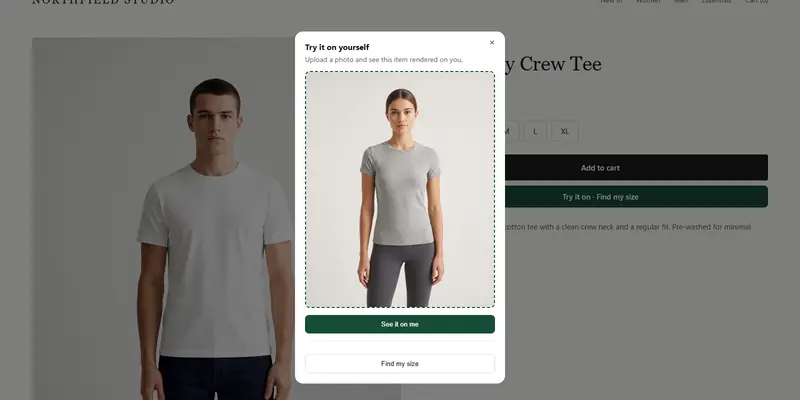
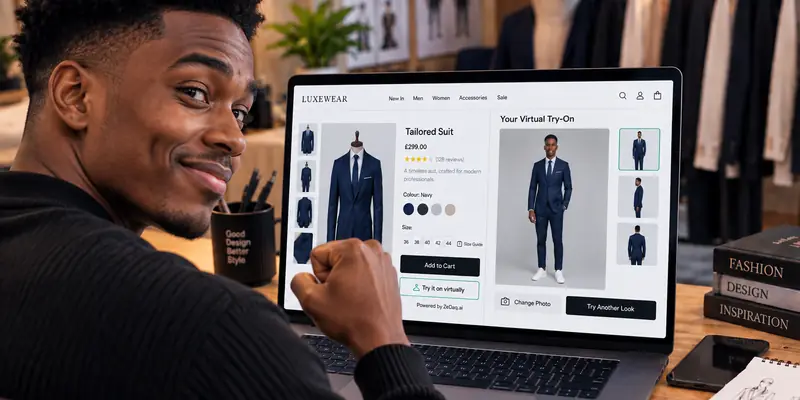
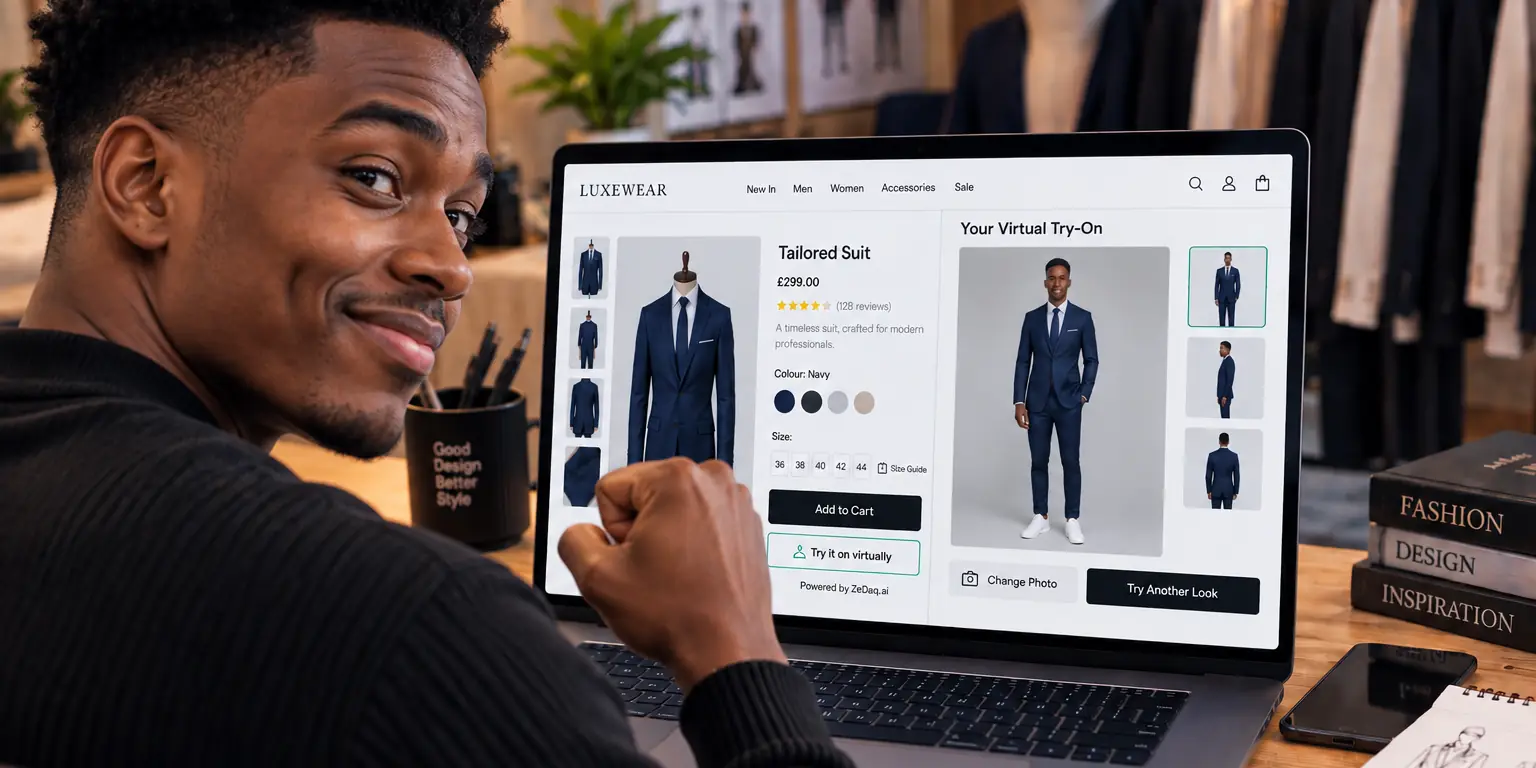
Today's tools usually work from a single photo and run in a web browser or phone, with no hardware in the store. Two jobs have become separate and clearer:
- Visual try-on shows the garment on the shopper.
- Size recommendation suggests the right size from the shopper's measurements.
ZeDaq.ai covers both for fashion stores. The shopper uploads one photo and sees the store's real garment on their body, and a 30-second scan with height gives a recommendation matched to the store's own size chart. It also offers live-camera try-on for eyewear.
See how photo-based try-on works today
Try it on yourself
Live renderUpload a photo, pick a piece, see it rendered on you.
Pick something to try on
The article on the difference between a virtual fitting room and virtual try-on explains how the two terms differ.
What questions should you ask when choosing a tool today?
History shows where tools fell short. Use it to guide your questions to any vendor:
- Does it need hardware, or does it work from a phone or browser?
- Does it only show the garment, or does it also help with sizing?
- Does it use my own size chart, or only a generic one?
- Can I try it on my real products before paying?
- What happens to shoppers' photos and measurements?
Ask for answers in writing, and test on your own products before you decide. A good tool should still make sense for your store a year from now.
What lessons does the history offer store owners?
A few patterns repeat across the timeline:
- Hardware limits reach. Tools that need special equipment stay in a few stores.
- Looks are not enough. Early overlays showed a garment but not whether it fit.
- Your own data matters. Size accuracy depends on matching to a real size chart.
- Setup should be simple. Tools that install quickly are more likely to be used.
Variants matter too. See how try-on works with product variants and colorways.
Stores that are not on Shopify can use a script-tag widget, as covered in virtual try-on for WooCommerce.
Try a modern virtual fitting room yourself
FAQs
When was the first virtual fitting room?
It depends on the definition. Body scanner fit systems existed in stores by at least 2005, according to the Wikipedia timeline linked above.
Did Topshop really use a virtual fitting room?
Yes. Topshop installed an experimental system in its Moscow flagship in early May 2011, according to Ubergizmo's report.
Is today's virtual try-on the same as the early mirrors?
No. Modern tools work from a photo on the shopper's own device and need no store hardware.
Will virtual fitting rooms replace size charts?
They work best together. A size chart gives the numbers, and a tool matches the shopper to them.
Try ZeDaq.ai free
Virtual try-on and Find my size for your store, plus client, order and invoicing tools for tailors, in one subscription.