3DLOOK Alternatives for Fashion Stores
By the ZeDaq.ai team · · 8 min read
On this page
The main 3DLOOK alternatives for fashion stores are ZeDaq.ai, which also measures from a photo, and tools that size shoppers without a scan, such as Sizebay, True Fit, Easysize and Kiwi Size Chart & Recommender. The right choice depends on whether you need detailed body measurements or simply a size recommendation on your product pages.
ZeDaq.ai runs this blog. Every competitor detail below comes from that company's own website or Shopify App Store listing, linked in the text and checked November 2026. Prices and features change, so confirm them before you buy. If try-on matters to you as much as sizing, our list of AI virtual try-on apps for Shopify covers that side of the market.
What does 3DLOOK offer?
3DLOOK's website (checked November 2026) describes body measurement from photos taken on a phone. It says the process needs two photos and gives many body measurements in under a minute, with real-time pose feedback and a detector that flags loose clothing.
Its current products include:
- FitXpress, aimed at health and fitness: weight loss programs, fitness apps, telehealth and insurance
- Mobile Tailor, for made-to-measure, on-demand manufacturing and uniform fitting
- A wrist measurement product
- A mobile camera SDK for Android and iOS, plus an API
3DLOOK also describes its privacy setup, including encryption and deleting photos after processing or within a set period, according to the customer's instructions.
Prices are listed on 3DLOOK's pricing page (checked November 2026). FitXpress plans start at $1,000 a month and Mobile Tailor plans start at $499 a month for up to 100 scans, with custom pricing at higher volumes.
Try a one-photo size scan yourself
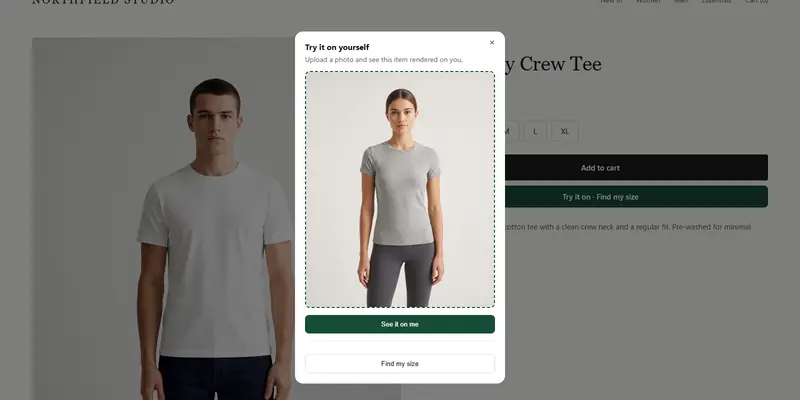
Try it on yourself
Live renderUpload a photo, pick a piece, see it rendered on you.
Pick something to try on
Why do fashion stores look for body scan alternatives?
3DLOOK's current site leans toward health, fitness, uniforms and made-to-measure. A fashion store selling ready-to-wear sizes may need something different. Common reasons stores compare options:
- They sell standard sizes. A shopper picking S, M or L needs a size label, not a full set of body measurements.
- They want a self-serve app. Smaller stores often prefer something they can install and test without a sales call.
- Budget. A store with modest traffic may want a monthly plan closer to its revenue.
- Shopper effort. Some stores want no photo at all, just a quick quiz.
- Try-on. Others want the shopper to see the garment as well as get a size.
How do mobile measurement options compare?
The table sorts the main options by what the shopper has to do.
| Tool | What the shopper does | Output | Published price | Source (checked November 2026) |
|---|---|---|---|---|
| 3DLOOK | Takes two photos on a phone | Detailed body measurements | FitXpress from $1,000/mo; Mobile Tailor from $499/mo | 3dlook.ai/pricing |
| ZeDaq.ai | Uploads one photo and enters height | A size from your own chart | Free, then from $14/mo | zedaq.ai/en/pricing |
| Sizebay | Enters height, weight and age | Size recommendation | Not published; demo | sizebay.com |
| True Fit | Shares body details and brands they wear | Single size recommendation | Not published; demo | truefit.com |
| Easysize | Answers a short fit quiz | Size, plus fit, width or length where relevant | Not published; demo | easysize.me |
| Kiwi Size Chart & Recommender | Reads your chart or uses a recommender | Size from your chart | Free, then $7.99, $14.99 and $26.99/mo | Shopify App Store |
ZeDaq.ai
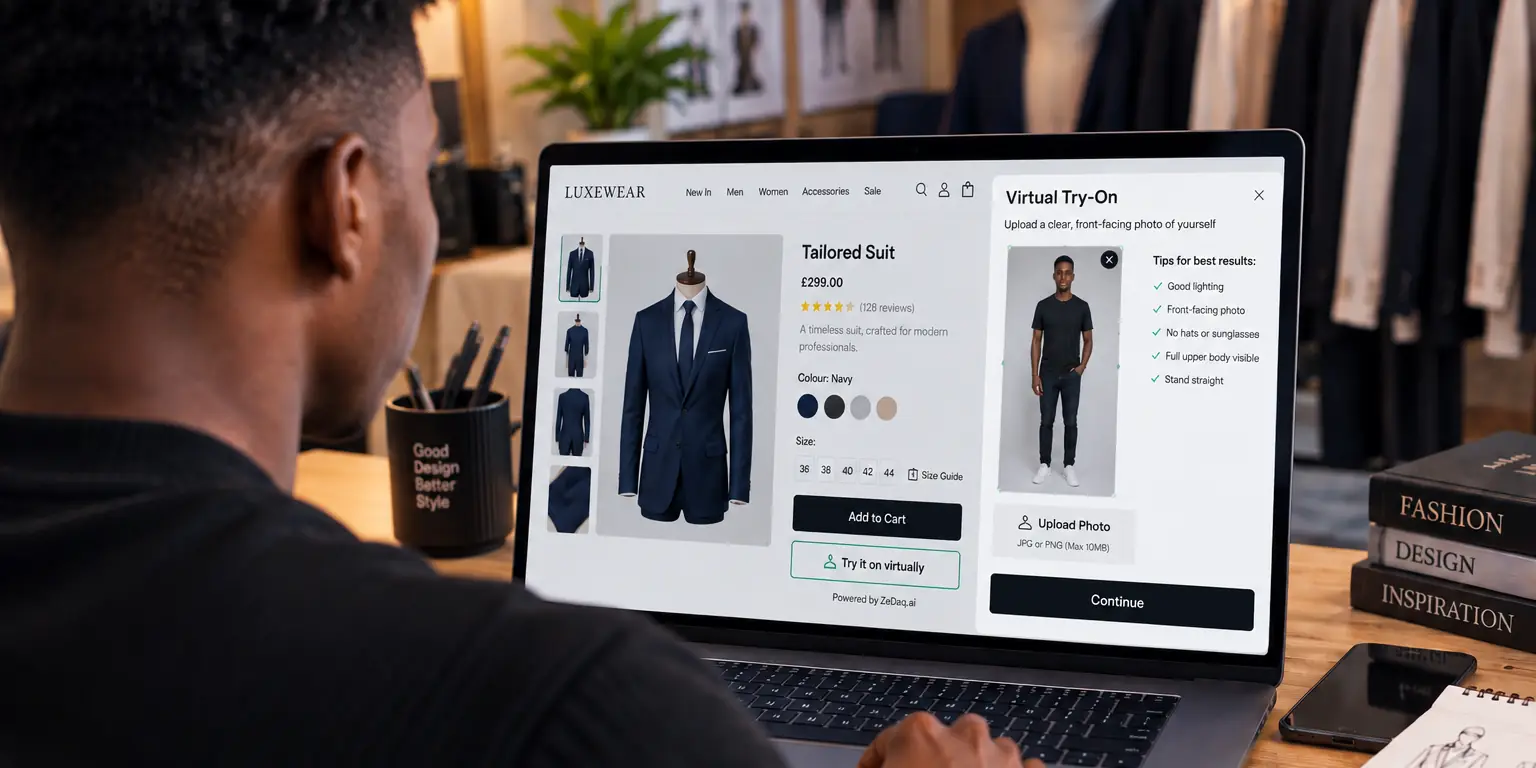
ZeDaq.ai is the closest to 3DLOOK in method, because it also measures from a photo. The shopper uploads one full-length photo and types their height. The measuring runs on the shopper's own device, and the result is matched to your store's size chart.
You enter one chart per garment type: tops, outerwear, dresses and bottoms. When a shopper falls between two sizes, ZeDaq.ai suggests the larger one. If you haven't added a chart yet, it falls back to a standard UK, US, EU or AU chart.
ZeDaq.ai also includes AI virtual try-on and live-camera eyewear try-on. It is a newer product with no Shopify App Store reviews yet.
Sizebay
Sizebay sizes clothing from height, weight and age, and sizes shoes from foot shape and past size preferences. It also lists try-on with the shopper's own photo, managed size charts and product discovery tools. For a full look at its competitors, see Sizebay alternatives for fashion stores.
True Fit
True Fit recommends one size using body characteristics, past purchases and fit preferences. It covers apparel and footwear, including kids' sizes, and works through a demo-led sales process.
Easysize
Easysize is the lowest-effort option for shoppers on this list. Its Fit Quiz asks no questions about weight or body measurements and uses no body scan. There's a version built for Shopify and one for other platforms. Our guide to Easysize alternatives compares it with other quiz and chart tools.
Kiwi Size Chart & Recommender
Kiwi's Shopify listing centers on size charts: importing them, applying them to collections and adding AI size recommenders on higher plans. It suits stores whose first problem is an unclear or missing size guide.
Which approach suits your store?
Use this quick guide to match the tool type to your business.
| Your situation | Approach to consider |
|---|---|
| Made-to-measure or uniforms, needing many measurements | A dedicated body measurement platform such as 3DLOOK |
| Ready-to-wear, want a size from your own chart | Photo scan matched to your chart, such as ZeDaq.ai |
| Shoppers dislike photos | Quiz tools such as Easysize, or height-weight-age tools such as Sizebay |
| No clear size guide yet | A size chart app such as Kiwi |
| Large retailer with years of sales data | Shopper-data tools such as True Fit |
A worked example: two very different buyers
A uniform supplier fits staff for hotels and airlines. Each order needs a full set of body measurements so garments can be made or altered. A body measurement platform built for that work, such as 3DLOOK with its Mobile Tailor product, matches the job.
A ready-to-wear jacket brand sells in S to XL. Its shoppers only need to know which label to pick, and the brand wants to set it up without a sales call. A photo scan matched to its own outerwear chart, such as ZeDaq.ai, or a quiz tool like Easysize, is closer to what it needs.
The same technology question, "can we measure shoppers?", leads these two buyers to different answers because their output differs.
Questions to ask any vendor
- What does the shopper see at the end: measurements or a size label?
- Does the result use my own size chart?
- Can I install it myself, or is setup sales-led?
- How are photos and body data stored and deleted?
If you are a tailor rather than a store, ZeDaq.ai also has tailor tools, including measurement links that clients open on their phones.
What should you test before switching?
Run each shortlisted tool against the same shoppers and products. A short test plan:
- Choose your three most-returned styles. These show where sizing matters most.
- Ask four people to try each tool. Record the size it suggests and the size they actually wear in that style.
- Time the shopper journey. Note how long it takes from opening the tool to seeing a size.
- Check what the shopper is asked for. Photos, height, weight, age or brand history.
- Read the privacy terms. Note how photos and body data are handled and how long they are kept.
- Price your real volume. Use each vendor's published plans, or ask for a written quote.
If a tool recommends the wrong size on your fitted items, check your size chart first. Gaps between sizes cause more wrong answers than the tool itself.
How do you add a photo-based size scan to Shopify?
With ZeDaq.ai, you install the Shopify app, add your size charts and switch on the app embed in your theme. The full walkthrough is in our guide on how to add virtual try-on to Shopify, which uses the same app and embed for both try-on and "Find my size."
Stores on WooCommerce, Wix, Squarespace or custom sites can paste a script tag into the product template instead. The key is locked to your store's domain. Developers can also use the REST API.
What does ZeDaq.ai cost?
ZeDaq.ai has a Free plan with 3 try-ons and 3 measurements a month. Paid plans are Micro at $14 a month, Starter at $49, Growth at $129 and Scale at $299. Each paid plan includes a 3-day free trial with no card required.
Try photo-based sizing on your own charts
FAQs
How many photos does each tool need?
3DLOOK's site says it uses two photos. ZeDaq.ai uses one photo plus the shopper's height. Easysize and Sizebay's clothing sizing don't need a photo.
Is 3DLOOK built for fashion stores?
Its current site focuses on health, fitness, made-to-measure and uniforms, with Mobile Tailor for made-to-measure work. Check with 3DLOOK directly if you sell ready-to-wear sizes.
Does ZeDaq.ai give the shopper full body measurements?
ZeDaq.ai measures the shopper and matches the result to your size chart, so the shopper sees a size label such as "M" or "UK 12." The aim is choosing a size, not producing a measurement report.
Which option suits a store with no size chart yet?
Start by building a clear chart for each garment type. A chart app such as Kiwi can display it, and a scan tool like ZeDaq.ai can then recommend sizes from it.
Can a non-Shopify store use a photo-based scan?
Yes. ZeDaq.ai offers a script-tag widget for WooCommerce, Wix, Squarespace and custom sites, plus a REST API. 3DLOOK offers an SDK and API.
Try ZeDaq.ai free
Virtual try-on and Find my size for your store, plus client, order and invoicing tools for tailors, in one subscription.