
Writing Terms and Conditions for a Tailoring Business
By the ZeDaq.ai team · · 4 min read
On this page
- Why does a tailor need written terms?
- What should the terms include?
- What do consumer laws say about services?
- What about custom-made items that cannot be resold?
- How do you handle disputes?
- What should you update over time?
- What should you do with cancelled or abandoned orders?
- How do you make terms easy to follow?
- How do clients accept your terms?
- What example wording can you adapt?
Terms and conditions for a tailoring business should state your deposit, how measurements are taken, how many fittings are included, your delivery dates, and what happens to uncollected garments. Keep them short, in plain language, and give clients a copy before they pay.
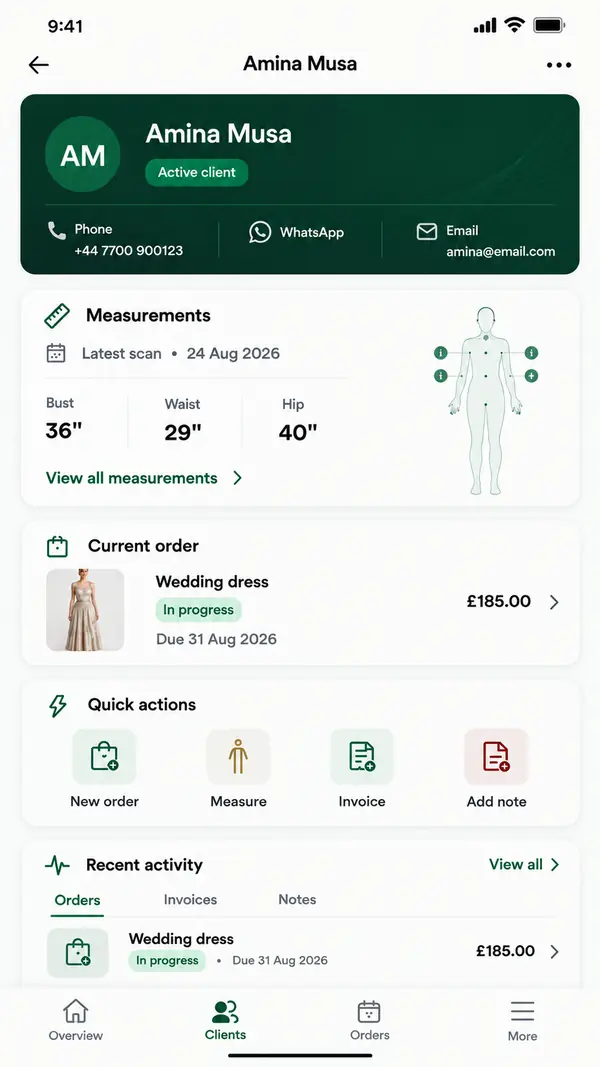
Written terms prevent arguments, and tools such as the ZeDaq.ai tailor tools keep orders, measurements and delivery dates in one place, so you can refer to them. This is general information, not legal or tax advice.
Why does a tailor need written terms?
Custom work is personal. The client expects a garment made for them, and you cannot easily resell it. Without terms, disagreements about price, timing and fit come down to memory.
Terms also show professionalism. A clear one-page document tells the client what to expect.
What should the terms include?
Cover these points:
- Deposit and payment schedule. How much is paid up front and when the balance is due.
- Measurements. Who took them and what happens if they were wrong.
- Fittings. How many are included, and the cost of extras.
- Delivery date. The agreed date, and what could change it.
- Changes after cutting. Say what happens if the client changes the design once fabric is cut.
- Alterations. What is free and what is charged.
- Collection. How long you keep a finished garment.
- Fabric supplied by the client. Who is responsible for flaws.
Deposits and cancellation
Say whether the deposit is refundable. Many tailors keep it once fabric is cut, because the work has started. State the point at which this applies.
Fit and alterations
Custom clothing needs fittings. Say how many adjustments are included in the price. Be clear about what counts as a fitting problem and what counts as a change of mind.
What do consumer laws say about services?
Rules depend on where you work. In the UK, section 49 of the Consumer Rights Act 2015 says every contract to supply a service is treated as including a term that the trader must perform the service with reasonable care and skill.
Your terms cannot remove a legal right like that. Check the official guidance for your country or state before you publish. For starting out in the US, see how to start a tailoring business in the US, and for Kenya, how to start a tailoring business in Kenya.
This is general information, not legal or tax advice. Ask a local lawyer to review your terms.
What about custom-made items that cannot be resold?
A garment made to someone's measurements has little resale value, so tailors often treat it differently from ready-made goods. Many tailors say that once cutting starts, the deposit is not refundable.
Whether that is allowed depends on local law, so do not copy a rule from another country. Look up your own official consumer guidance, and have the wording checked. State the rule early and in plain words.
How do you handle disputes?
Disagreements usually involve fit, delay or price. Plan your steps in advance and put them in the terms:
- Ask the client to explain the problem in writing, with photos for fit issues.
- Offer a fix first, such as an adjustment at a fitting.
- Agree on a date for the fix.
- Record the outcome with the order.
Keeping your measurements and orders in one record helps here. The client's measurements, the agreed design and the dates are the evidence you need.
What should you update over time?
Review your terms once a year, or whenever the same problem comes up twice. If clients keep missing collection dates, add a collection period. If rush requests cause trouble, add a lead time.
What should you do with cancelled or abandoned orders?
Sometimes a client cancels or never returns. Decide what happens in each case and write it down.
For cancellations, say when the deposit is kept. For abandoned garments, say how long you will hold them and what you will do afterward, such as contacting the client first. Check your local rules before you sell or dispose of anything.
How do you make terms easy to follow?
- Use short sentences and headings.
- Keep to one page if you can.
- Put the key points, like deposit and date, at the top.
- Use the same words every time.
How do clients accept your terms?
Ask the client to confirm before work begins. A reply by message saying "I agree" is better than silence. Keep the message with the order.
Many tailors take orders through chat. If that is you, see ZeDaq.ai vs WhatsApp Business for tailoring for how to keep records tidy.
What example wording can you adapt?
Short examples:
- "A deposit is required to start work. The balance is due at final fitting."
- "Delivery dates are agreed when the order is placed. Late changes may move the date."
- "Please collect finished garments within the agreed period."
Adjust the wording for your business, and have it reviewed.
Keep orders, dates and measurements together
FAQs
Do small tailors need terms and conditions?
Yes. Even a short page helps, because it sets expectations on price, timing and fittings.
Should I put terms in writing or send them by chat?
Either can work. Make sure the client sees them and agrees before work starts, and keep a copy.
Can terms override the law?
No. Consumer rights set by law still apply, so check official guidance for your country.
Where do I get a lawyer's help?
Ask a local business or small-claims advisor to review your terms once, then reuse them.
Try ZeDaq.ai free
Virtual try-on and Find my size for your store, plus client, order and invoicing tools for tailors, in one subscription.

