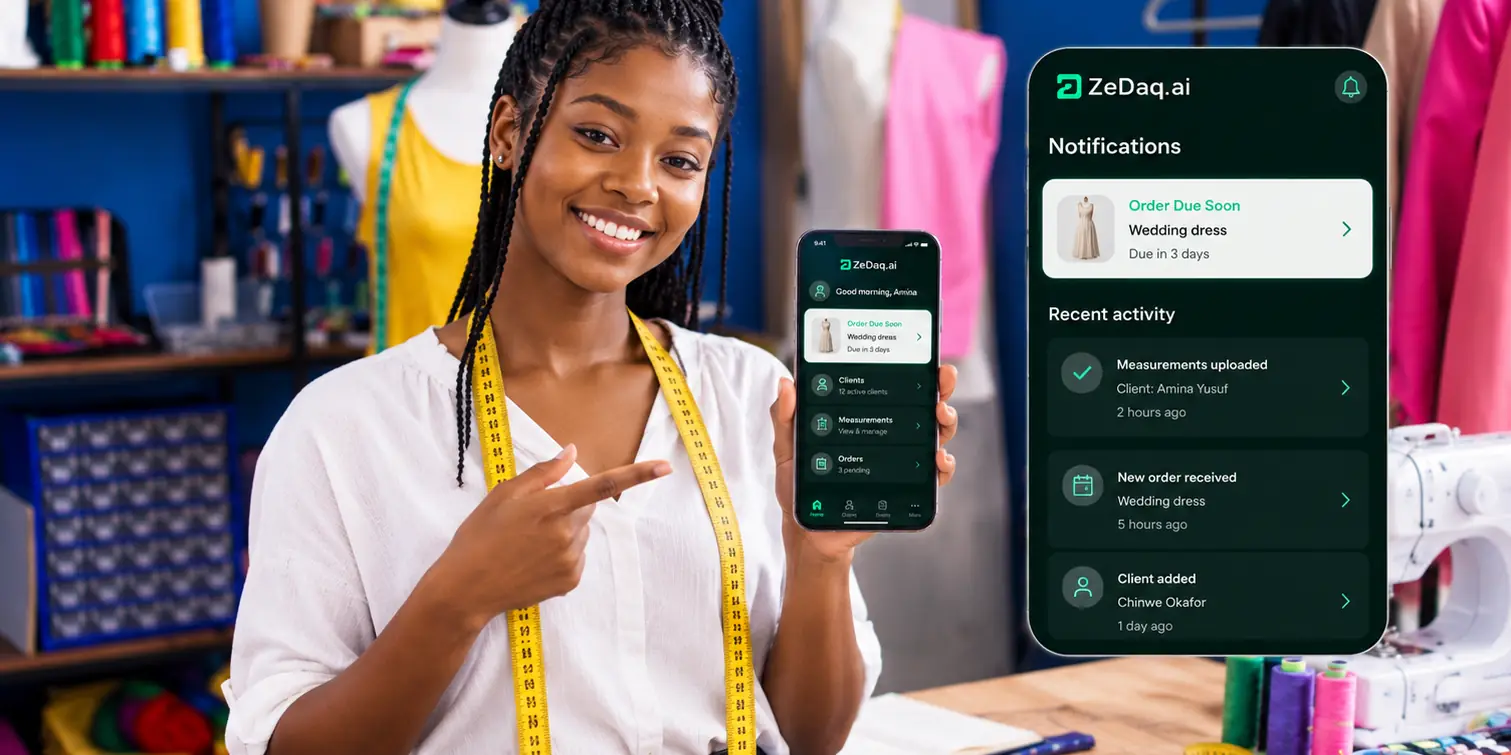
How to Start a Tailoring Business in Kenya
By the ZeDaq.ai team · · 5 min read
On this page
- What kind of tailoring business should you start?
- How do you register a tailoring business in Kenya?
- How does tax work for a small tailoring shop?
- Where should you set up and what do you need?
- How do you price your work?
- How do you keep client measurements and orders organized?
- How do you find your first clients?
To start a tailoring business in Kenya, pick a niche, register your business name online, register with the Kenya Revenue Authority (KRA), and set up a simple system for measurements, orders and payments. You can begin small, from home or a shared shop, and grow as repeat clients arrive.
This guide is for fundis and designers who want to run a proper business. If you want to compare tools first, see what software to choose, or look at the ZeDaq.ai tailor tools. This is general information, not legal or tax advice.
What kind of tailoring business should you start?
Pick one clear niche so clients know what to ask you for. A focused shop is easier to market than one that does everything.
Common options in Kenya include:
- Everyday and office wear. Shirts, trousers and dresses made to measure.
- Suits and formal wear. Wedding suits, bridesmaid dresses and graduation outfits.
- African print and kitenge. Dresses, shirts and matching sets.
- Uniforms. School, church and workplace uniforms for groups.
- Alterations and repairs. A steady, low-cost way to start.
Start with the type of work you already do well. Add a second line once orders are steady.
How do you register a tailoring business in Kenya?
For a sole trader, the usual route is to register a business name. The Business Registration Service (BRS) says name reservation and business registration have been merged into one online step, where you submit three preferred names with the full application.
Before you start, have your ID and a KRA PIN ready. Check the BRS site for current fees and requirements, because they can change.
If you plan to take on partners or investors, ask a lawyer or the BRS whether a company structure suits you better.
How does tax work for a small tailoring shop?
Many small shops pay turnover tax. KRA says turnover tax is 1.5% of gross sales for resident businesses with annual turnover above KSh 1,000,000 and up to KSh 25,000,000. Returns and payment are due by the 20th of the month after the tax period.
The same KRA page says that businesses with vatable supplies and turnover of KSh 5,000,000 or more must also register for VAT. Whether this applies to you depends on your sales, so confirm with KRA or an accountant.
Keep every sale and expense record from day one. It makes filing easier and shows banks and landlords that you run a real business.
Where should you set up and what do you need?
You can start at home, but clients usually prefer a shop where they can try on and collect. Choose a location close to your clients, such as near offices, markets, schools or estates.
You will need:
- A sturdy sewing machine, and an overlocker if you can afford one
- Cutting table, shears, tape measure, chalk and pins
- An iron and ironing board
- A rack, mirror and fitting space
- Good light
Buy used equipment if you need to keep costs down, and test every machine before you pay. Ask your county government whether a business permit applies to your premises.
How do you price your work?
Price from your costs, not from what the shop next door charges. Work out your fabric cost, your time and your overheads, then add a margin.
A simple method:
- Estimate hours for each garment type.
- Multiply by an hourly rate you want to earn.
- Add materials such as thread, lining, buttons and zips.
- Add a share of rent, power and transport.
- Add a margin so you can replace tools and handle slow months.
Ask for a deposit on every custom order so you aren't left carrying the fabric cost. Many clients in Kenya pay by M-Pesa, so make sure you can receive and record those payments clearly.
How do you keep client measurements and orders organized?
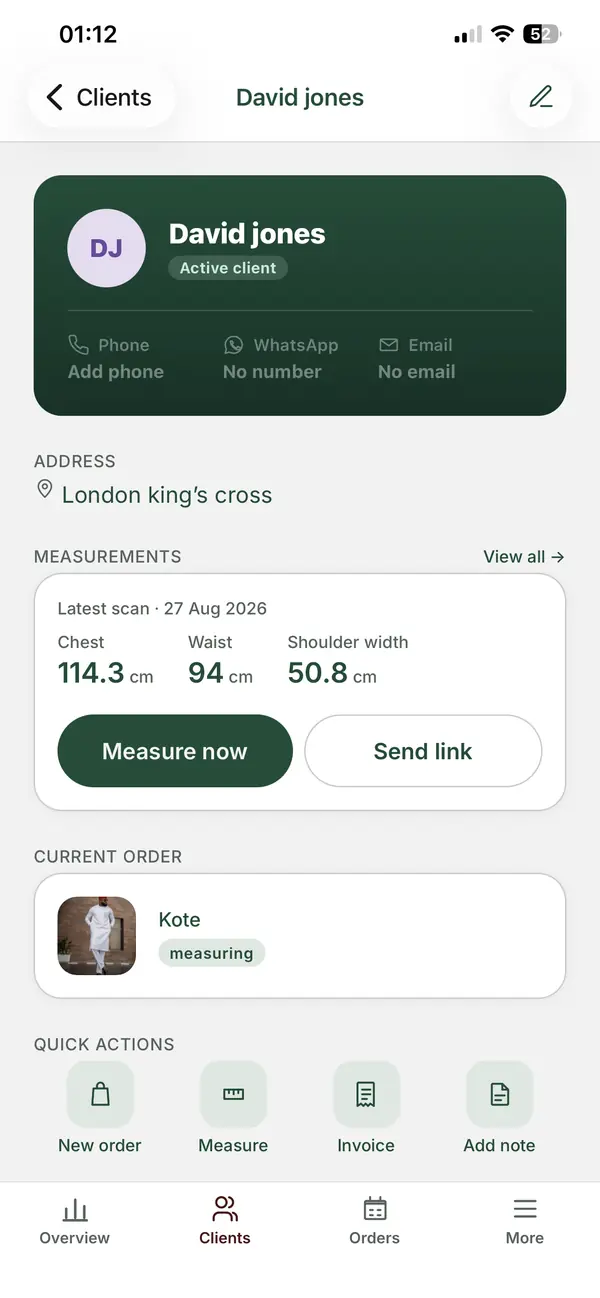
A notebook works at the start, but it gets lost and is hard to search. Move to a digital system as soon as you have repeat clients.
ZeDaq.ai has tailor tools built for this:
- A client list with their details and history
- Measurements that the client submits through a link they open on their phone
- Orders with a delivery calendar
- Invoicing in multiple currencies, including NGN, GBP and USD
- The ZeDaq Business mobile app for iOS and Android
The Free plan includes 3 measurements and 5 invoices a month, so you can test the workflow before paying. If you outgrow spreadsheets, see how ZeDaq.ai compares with Excel.
How do you find your first clients?
Start with people who already know your work: family, friends, colleagues and neighbors. Ask each happy client to introduce you to one more.
Post finished work on Instagram, Facebook and WhatsApp Status. Show the garment, the fabric and a short note about the fit. Always ask clients before you post their photos.
Once you have a steady stream, read how other regions begin. Our guides to starting a tailoring business in Ghana and in the US show how the steps change from market to market.
See how tailors run clients and orders in one place
FAQs
How much money do I need to start a tailoring business in Kenya?
It depends on your location and equipment. Used machines and a small space cost far less than a new shop, so list your needs and get real quotes.
Do I need a license to sew clothes for clients?
Rules differ by county and premises. Register your business name and tax details first, then ask your county government what permit applies.
Can I run a tailoring business from home?
Yes, many people start this way. Check your lease or local rules, and set aside a clean space for fittings.
Should I take deposits?
Yes. A deposit covers fabric and shows the client is serious. Record it with the order so there are no disputes at collection.
Try ZeDaq.ai free
Virtual try-on and Find my size for your store, plus client, order and invoicing tools for tailors, in one subscription.

