Which Measurements Does a Tailor Need for Trousers?
By the ZeDaq.ai team · · 4 min read
On this page
- What is the full list of trouser measurements?
- How do you take the waist and seat?
- How do you measure the thigh and knee?
- What is the difference between inseam and outseam?
- How do you take the rise?
- Which fit notes should you record?
- What order should you measure in?
- How should you store and reuse the numbers?
For trousers, a tailor needs waist, seat, thigh, rise, knee, hem, inseam and outseam, plus a few notes on posture and preferred fit. Those eight numbers cover almost every cut, from slim chinos to wide-leg pleated trousers.
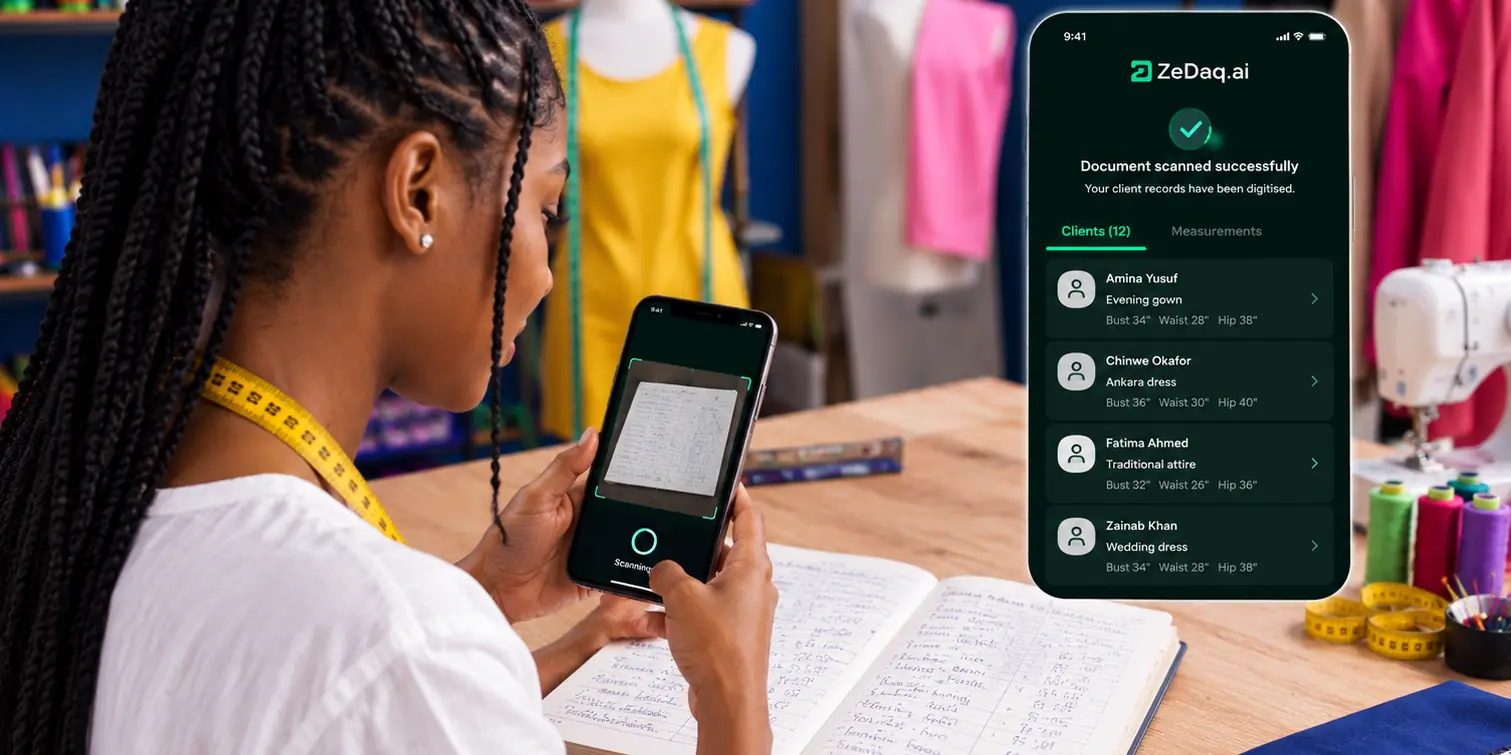
Keeping them in one place matters as much as taking them. A client record, as described on the ZeDaq Business page for tailors, lets you reuse the numbers on the next order. This guide lists each measurement and how to take it.
What is the full list of trouser measurements?
Use this table as a checklist. Adapt the order to how you work.
| Measurement | Where to measure | Notes |
|---|---|---|
| Waist | Where the trousers will sit | Ask the client where they wear them |
| Seat (hip) | Fullest part of the seat | Tape level all the way around |
| Thigh | Top of the thigh, below the crotch | Tape snug, not tight |
| Rise | Crotch seam to the waist, seated or standing | Say which method you used |
| Knee | Around the knee | Needed for tapered legs |
| Hem (leg opening) | Bottom of the leg | Often chosen from the style, not the body |
| Inseam | Crotch to the ankle bone or hem | Inside leg |
| Outseam | Waist to the hem along the outer leg | Gives total length |
This is a working list, not a published standard. Different tailors name the points differently, so agree on terms with your team.
How do you take the waist and seat?
If you also make shirts, the list differs, as covered in which measurements a tailor needs for a shirt.
Measure the waist where the trousers will sit, which may be lower than the natural waist. Keep one finger under the tape for ease.
For the seat, stand behind the client and measure around the fullest part of the buttocks. Keep the tape level and check in a mirror if you can.
How do you measure the thigh and knee?
Measure the thigh at the top, close to the crotch, with the client standing with weight on both feet. The knee is measured around the middle of the kneecap.
These two numbers decide how the leg tapers. A client with strong thighs often needs a roomier thigh and the same knee as a slimmer cut.
What is the difference between inseam and outseam?
The inseam runs along the inside of the leg from the crotch to the hem. The outseam runs along the outside of the leg from the waist to the hem.
Take both. The outseam gives overall length. The inseam tells you the crotch-to-hem length, which matters for the break at the shoe. If you only need one number for a basic ready-to-wear hem, the inseam is the usual choice. For a guide aimed at shoppers, see how to measure your inseam for jeans.
How do you take the rise?
Rise is the distance from the crotch seam up to the top of the waistband. Take it by measuring from the crotch to the waist on the side of the client, either seated on a stool or standing.
Write down which method you used. Seated and standing rise differ, and mixing them up is a common reason for a bad fit in the crotch. The article on measurement mistakes tailors make lists others.
Which fit notes should you record?
Numbers do not capture everything. Add these notes to each client:
- Rise preference: low, regular or high.
- Leg shape: slim, straight, wide or tapered.
- Break at the shoe: none, slight or full.
- Waist details: belt loops, side adjusters or elastic.
- Posture: a prominent seat, a sway back or one hip higher than the other.
- Wears with: dress shoes or sneakers.
What order should you measure in?
A fixed order helps you avoid skipped points. Work from the top down:
- Waist.
- Seat.
- Rise.
- Thigh.
- Knee.
- Hem.
- Inseam.
- Outseam.
Say each number out loud as you write it, so the client or an assistant can catch a slip.
How should you store and reuse the numbers?
Use a standard sheet for every client so you never miss a point. The guide to a measurement sheet template for tailors gives a layout you can copy.
If a client cannot visit, you can collect numbers by sending a measurement link they open on their phone. Accuracy depends on how well they follow instructions, so read measurement capture tips for getting accurate numbers from clients at home before you rely on remote numbers.
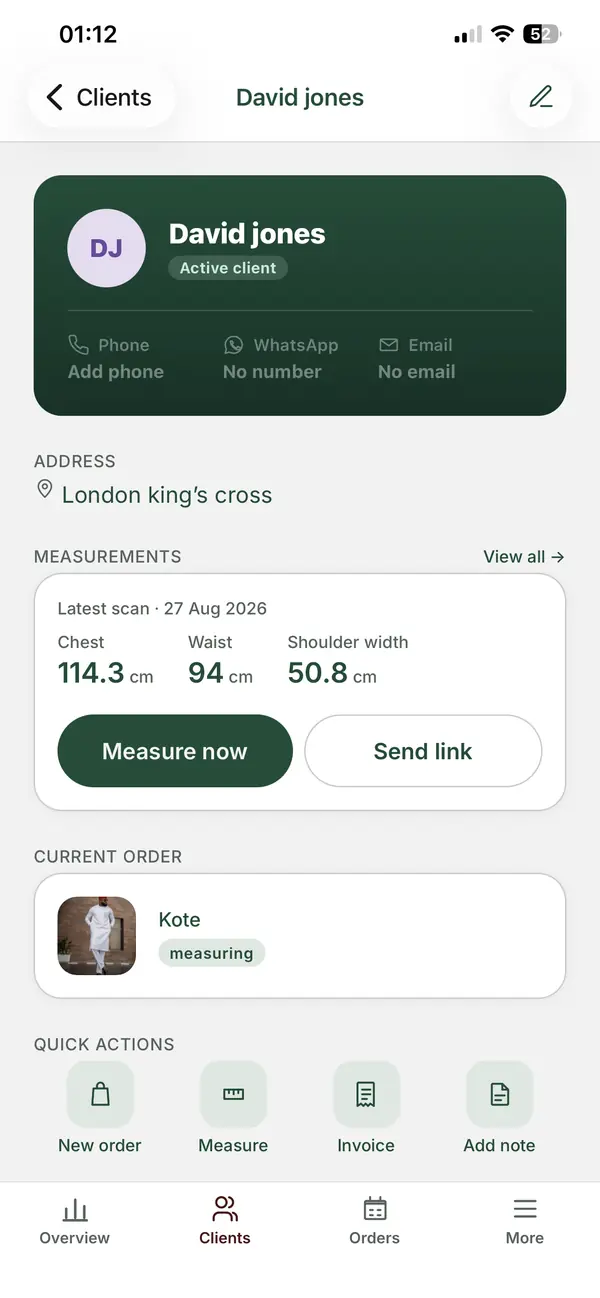
ZeDaq Business is a mobile app for iOS and Android that stores client measurements, orders and invoices in one place.
Keep every client's trouser measurements in one place
FAQs
How many measurements do you need for a pair of trousers?
Eight cover most styles: waist, seat, thigh, rise, knee, hem, inseam and outseam. Add fit notes for posture and preference.
Should I measure over clothing?
Measure over light clothing, such as thin trousers or underwear, so the tape sits close to the body. Thick fabric adds false inches.
Can a client measure trousers themselves?
Some measurements, such as waist and inseam, are easy to take at home. Seat and rise are harder, so ask for help or a second person.
Is it better to measure the body or an existing pair of trousers?
Body measurements are more reliable. A well-fitting pair can help as a reference for rise and leg shape.
Try ZeDaq.ai free
Virtual try-on and Find my size for your store, plus client, order and invoicing tools for tailors, in one subscription.

