What Diaspora Shoppers Expect From African Fashion Brands
By the ZeDaq.ai team · · 4 min read
On this page
- Who are diaspora shoppers, and why do they buy from home brands?
- What do they expect from your sizing?
- What do they expect on shipping and duties?
- What do they expect on payment and price?
- What do they expect on returns and fit problems?
- What do they expect from customer service?
- What do they expect on cultural details?
- How do you build trust with people who have never met you?
African diaspora shoppers expect the same things as any online buyer abroad, plus a few extras: sizes they can trust, honest delivery times, clear duties and an easy way to pay in their own currency. Brands that explain these things up front earn repeat orders.
This article is a checklist for brand owners. It follows our overview of virtual try-on for African fashion brands, and it focuses on what shoppers abroad need to see before they buy.
We do not quote market-size figures here. If you need those for a plan, find the original research and cite it.
Who are diaspora shoppers, and why do they buy from home brands?
They are people with roots in Africa who live elsewhere, often in the UK, US, Canada or Europe. Many buy for weddings, naming ceremonies, church and cultural events, and many want to wear a brand from home.
Their reasons differ, so do not assume one profile. Some know your sizes well. Others left years ago and are guessing.
What do they expect from your sizing?
They expect size information they can check against clothes they already own. Many think in UK or US sizes, not your labels, and our guide to sizing for diaspora shoppers goes into the detail.
Give each product:
- Body measurements for every size, in centimeters and inches.
- A note on fit, such as relaxed, close or stretch.
- A model height and the size the model wears.
- A route for custom measurements on formal pieces.
AI size recommendation can reduce guessing. ZeDaq.ai matches a 30-second body scan to your own size chart, with a generic UK, US, EU and AU chart as a fallback. Read more on AI size recommendation for fashion stores.
What do they expect on shipping and duties?
They expect a clear delivery window, a tracking link and no surprise bill at the door. Say who pays import duties and taxes at the destination, and say it before checkout.
Duty rules differ by country, so link to the official government page for each market you serve. For example, the UK's rules are on GOV.UK import guidance. Do not guess rates.
Be honest about production time. For made-to-order pieces, show the sewing time and the shipping time as separate lines.
What do they expect on payment and price?
They expect to pay in their own currency by card or a familiar wallet. Showing a price in pounds, dollars or euros removes a step of doubt.
If your base prices are in naira or another local currency, explain how you convert them. Avoid changing prices daily without a note.
What do they expect on returns and fit problems?
They expect to know the policy before they buy. International returns can be costly, so many brands offer an alteration credit, an exchange or a store credit instead of a refund.
Whatever you choose, write it in plain words on the product page. A short, fair policy builds more trust than a long one with hidden conditions.
What do they expect from customer service?
They expect a reply in their own time zone, or at least a clear note on when you will answer. A short FAQ page and a WhatsApp or email address reduce repeat questions.
Write messages in plain language and confirm the order, the size and the dispatch date in one message. Misunderstandings across time zones are expensive, and a written summary prevents most of them.
What do they expect on cultural details?
They notice when a name, a fabric or a style is described wrongly. Use the correct names for fabrics and garments, and explain them briefly for buyers who grew up elsewhere. The guide to Ankara, adire, kente and aso oke descriptions can help.
Describe the occasion too. A buyer shopping for a wedding in two months needs a different message from one shopping for a weekend outfit.
How do you build trust with people who have never met you?
Show real people, real fabric close-ups and real making. Share where pieces are made and who makes them.
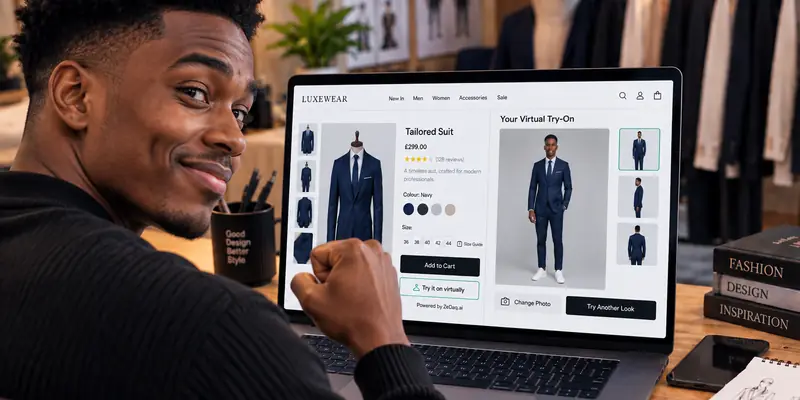
Let shoppers see the garment on a body like theirs. On your product page, a virtual try-on lets a shopper upload one photo and see your garment on them. It helps buyers who cannot visit a shop.
For menswear and abaya buyers, the details differ, so see African men's fashion online and what shoppers want from an online abaya store.
Help diaspora buyers see the fit before they order
FAQs
Should I price in several currencies?
It helps, because shoppers compare prices quickly. Pick a few main markets, and explain your conversion in one line.
Do diaspora shoppers prefer made-to-order or ready-to-wear?
It depends on the occasion. Ready-to-wear suits quick needs, and made-to-order suits weddings and formal wear.
What is the most common reason for a lost sale?
Uncertainty about size and delivery. Clear measurements, fit notes and delivery dates remove most of it.
Is a free plan enough to test try-on?
ZeDaq.ai's Free plan includes 3 try-ons, 3 measurements and 5 invoices a month. That is enough to test it on your own products.
Try ZeDaq.ai free
Virtual try-on and Find my size for your store, plus client, order and invoicing tools for tailors, in one subscription.