African Men's Fashion Online: What Shoppers Look For
By the ZeDaq.ai team · · 4 min read
On this page
Shoppers buying African men's fashion online look for four things: fabric they can trust, a size they are confident about, clarity on what is in the set, and photos that match what arrives. Brands that answer those questions on the product page earn more trust than brands that rely on style alone.
This guide covers each of those, for brands selling kaftans, agbada, senator wear and similar pieces. It is part of our wider look at virtual try-on for African fashion brands.
What do men look for first in African menswear online?
Most shoppers decide on a few things before they read the description.
- The occasion. Wedding, church, office, naming ceremony or casual wear.
- The silhouette. Flowing, tailored, long or short.
- The fabric. Cotton, lace, brocade, aso oke, Ankara and others.
- The price. Often judged against what a local tailor would charge.
Show these early, because shoppers scan quickly on a phone and many leave if the basics are missing. A short line under the title such as "Three-piece set for weddings, in brocade" answers the first questions at a glance.
Why is fit the biggest worry?
Many African menswear styles are loose, layered or sewn to order, and they don't follow standard shirt sizes. A kaftan can be cut long or short, and an agbada has wide sleeves and a lot of fabric.
That makes labels such as M or L less useful. Shoppers worry about:
- Length of the top and sleeves.
- Width across the chest and shoulders.
- How the trousers sit at the waist.
- Whether the set looks right on their build.
Our guide on how an agbada should fit explains what to look for, and size recommendation for menswear stores shows how to turn measurements into a size.
How should you describe sets and pieces?
Be literal about what the buyer receives. Many sets have several parts, and shoppers are often unsure.
| Item | What to state |
|---|---|
| Agbada set | Which pieces are included (outer robe, inner top, trousers, cap) |
| Kaftan | Length, sleeve length, neckline and whether it is lined |
| Senator wear | Top and trouser details, and the embroidery style |
| Dashiki | Fit (loose or tailored) and fabric weight |
The table is a checklist of details to include. If a piece is sold as a set, say so in the title, and list each part in the description. Our guide to selling ready-to-wear agbada online goes deeper.
How do you build trust in fabric and quality?
Shoppers can't touch the cloth, so words and photos carry the weight.
- Name the fabric and describe how it feels: crisp, soft, heavy or light.
- Say how it is made. Hand-woven, machine-woven or printed matters to buyers who care about authenticity.
- Photograph close-ups of stitching, embroidery and the inside of a seam.
- Show the color in daylight, and note that screens vary.
- Be honest about care. Some fabrics need dry cleaning.
Authenticity matters especially for cultural pieces. See what brands should know about cultural appropriation for how to handle origins and references respectfully.
What about shipping, lead times and returns?
Menswear for events has fixed dates. Shoppers want to know when it will arrive and what happens if it doesn't fit.
- State production time separately from shipping time for made-to-order pieces.
- Explain returns clearly, including whether made-to-measure items can be returned.
- Offer alterations or exchanges where you can.
- Be upfront about international shipping, since many buyers live abroad.
- Give a latest order date for each event, so buyers know when to stop waiting and choose another option.
If you are building a brand from scratch, how to start an African fashion brand online covers the basics.
How can virtual try-on and size recommendation help?
For many men, the question is "will this suit me, and which size?" A try-on and a size suggestion answer both on the product page.
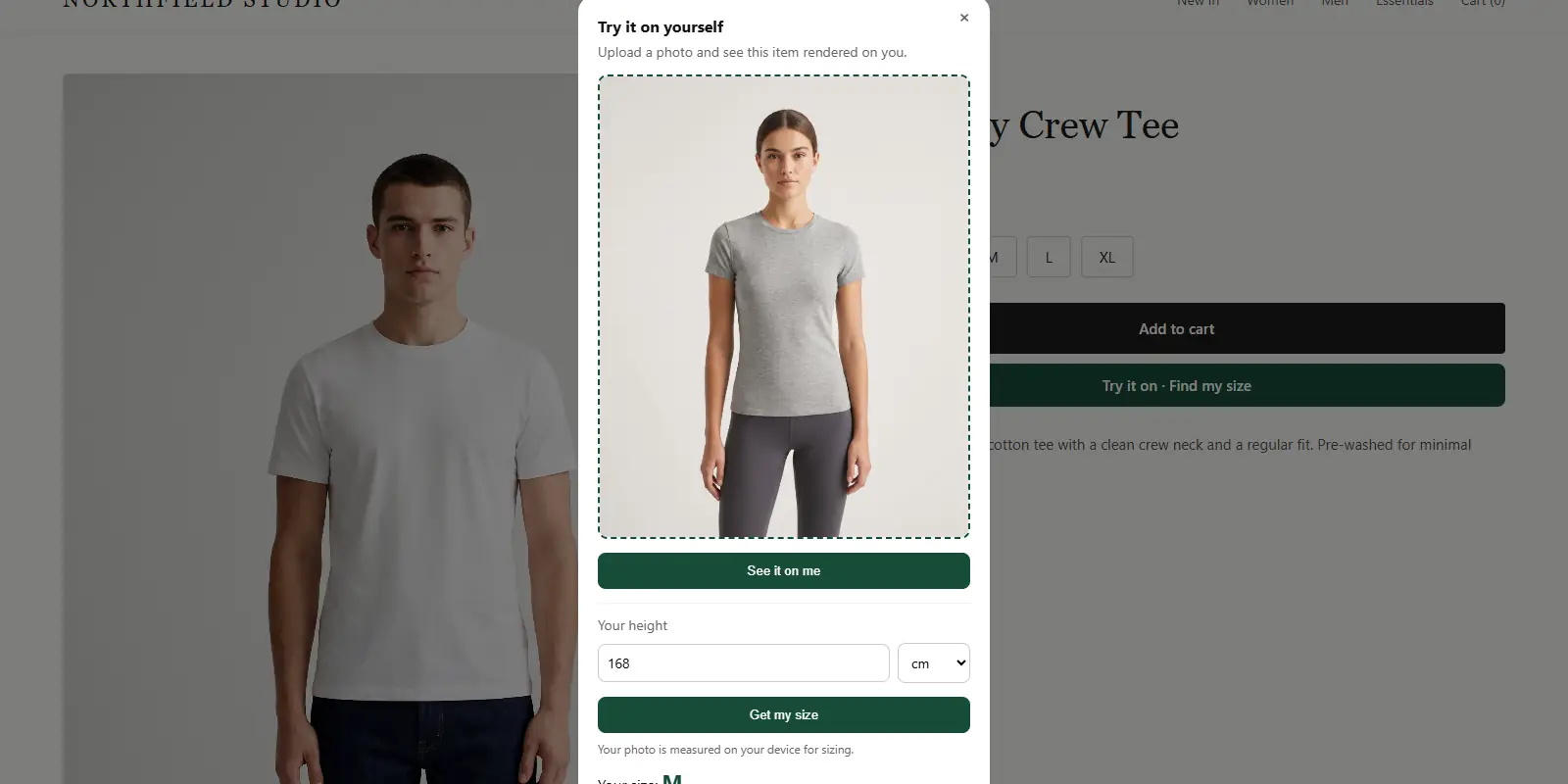
With ZeDaq.ai, the shopper uploads one photo and sees your real garment on their body. A 30-second body scan, using the photo plus height, recommends a size from your own size chart. Merchants add a chart for each garment type, so tops and trousers can differ.
Whether it renders a particular flowing garment well is worth checking yourself, using your own products and the live demo. Shopify stores can install the app; see adding virtual try-on to Shopify for the steps. Other stores can use the script-tag widget.
Let shoppers see the fit before they order
FAQs
What sizes should an African menswear brand offer?
That depends on your customers. Publish body measurements for each size, and consider made-to-measure for fitted styles.
Are agbada sold in standard sizes?
Some are, but many are made to order. State clearly which type you are selling.
How can I show fabric quality online?
Name the fabric, add close-up photos and describe the feel. Say how it is made if authenticity matters to your buyers.
Do shoppers abroad buy African menswear online?
Many do, particularly for weddings and ceremonies. State shipping times and returns clearly.
Should I show a size chart for loose garments?
Yes. Even a loose kaftan has a length, a chest width and a sleeve length, and shoppers use those numbers to compare it with a garment they already own.
Try ZeDaq.ai free
Virtual try-on and Find my size for your store, plus client, order and invoicing tools for tailors, in one subscription.

