What Shoppers Look For in an Online Abaya Store
By the ZeDaq.ai team · · 4 min read
On this page
- Which measurements do abaya shoppers need?
- How should you describe the fabric?
- What do photos need to show?
- How can shoppers check fit without trying it on?
- What do shoppers want from your policies?
- How do you check your store like a shopper?
- What do shoppers worry about when they buy an abaya online?
- How should you organize an abaya collection?
- What should the product page say about care?
Shoppers in an online abaya store look for four things: clear length and sleeve measurements, honest fabric details, proof of coverage in the photos, and a returns policy they can trust. Get those right and your store answers the questions a shopper would otherwise ask in a fitting room.
This guide is a checklist for store owners. It builds on our wider guide to virtual try-on for African fashion brands. It reflects common sense about fit and fabric, not survey data, and cites no statistics.
Which measurements do abaya shoppers need?
An abaya is cut long and loose, so bust and waist alone are not enough. Show these:
- Total length, from shoulder to hem.
- Sleeve length, from shoulder to cuff.
- Bust or chest width, for the fit through the body.
- Hem sweep, if the cut flares.
Our guide to how an abaya should fit explains how each measurement affects the look. Give measurements in centimeters and inches.
How should you describe the fabric?
Fabric decides comfort, opacity and care. Name it and describe how it behaves.
| What to say | Why it helps |
|---|---|
| Fabric name | Sets expectations for drape and weight |
| Opaque or not | Shoppers need to know about coverage |
| Breathable or warm | Matters for climate and season |
| Wrinkle behavior | Affects daily care |
| Washing instructions | Prevents damage and returns |
This table is a content checklist, not data. Use your own product facts.
What do photos need to show?
Shoppers want to see the abaya moving. Show front, back, sleeve and fabric close-ups, plus a walking shot. Photograph in daylight so color is true. For a full shot list, read our guide to modest fashion product photography.
State the model's height and the size she wears. That one line helps a shopper compare.
How can shoppers check fit without trying it on?
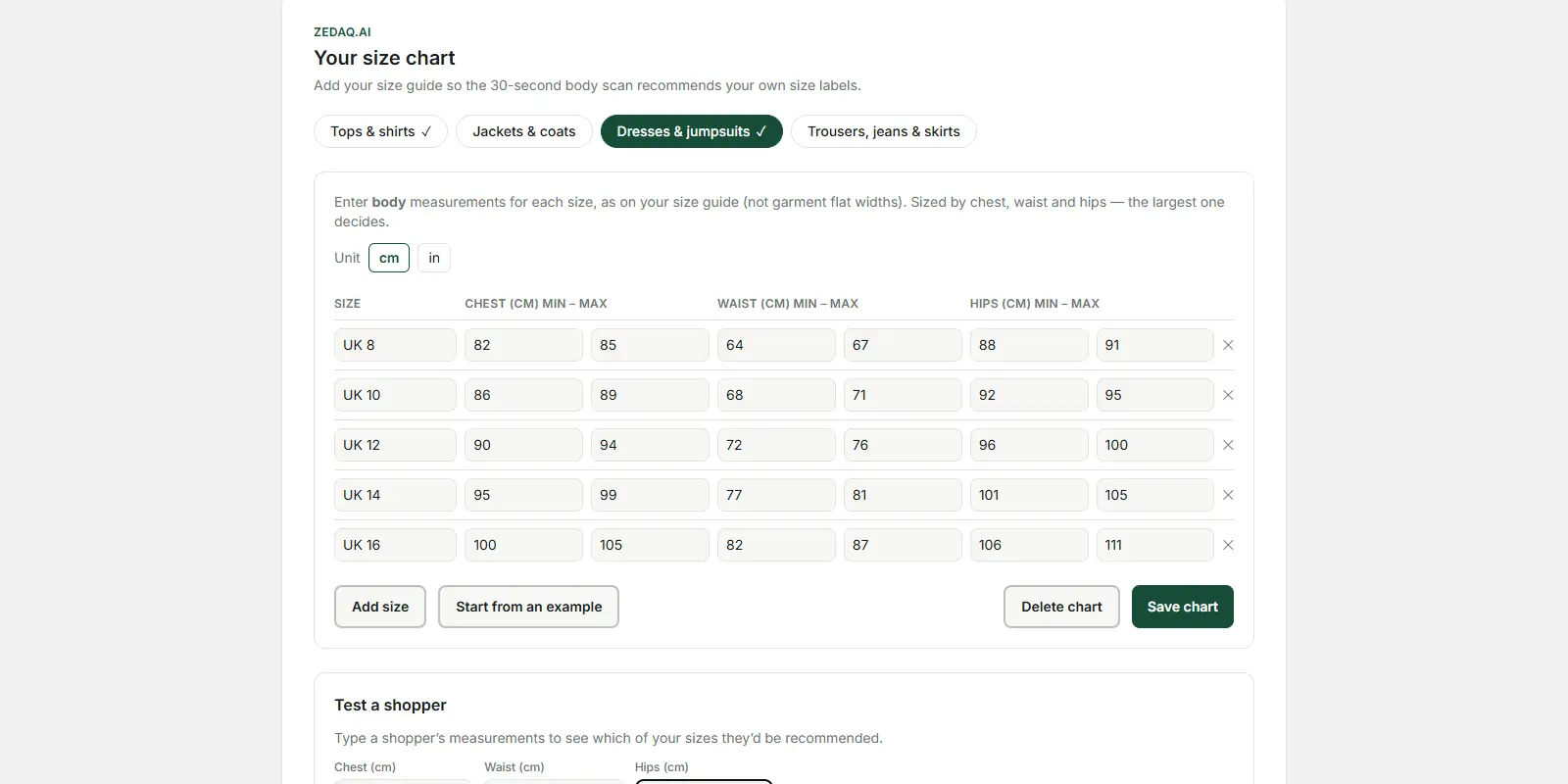
This is where a store can stand out. Besides a size chart, you can offer a size recommendation. ZeDaq.ai asks the shopper for one photo and their height, then suggests a size from your own chart, and it can show your real abaya on their body. It is available as a Shopify app and as a widget for other sites. Our guide to virtual try-on for abaya stores covers setup in detail.
See how a shopper tries a garment on
Try it on yourself
Live renderUpload a photo, pick a piece, see it rendered on you.
Pick something to try on
What do shoppers want from your policies?
Shoppers will look for answers before they buy:
- A returns and exchange policy that explains who pays for shipping.
- Delivery times and tracking.
- Care instructions.
- A way to contact you.
If you also sell menswear or other regional styles, see how shoppers evaluate African men's fashion online for another view of the same questions.
How do you check your store like a shopper?
- Open a product page on your phone.
- Find the length, sleeve and fabric details within a few seconds.
- Check that the photos show coverage clearly.
- Find your returns policy without searching.
- Ask a friend who has never seen the store to pick a size.
What do shoppers worry about when they buy an abaya online?
Most worries come down to a few simple questions. Will it be long enough? Is the fabric see-through? Will it be too hot or too stiff? Does the color match the photo?
Answer each of these on the page, before the shopper has to ask. A short "fit and fabric" box near the top works well:
- Length on a model of stated height.
- Opacity in daylight.
- Weight and breathability.
- Color accuracy note, such as "true to the photo in daylight".
If you already get repeated questions by message, turn each one into a line on the page. Your inbox is the best source for what to add.
How should you organize an abaya collection?
Shoppers browse by occasion and by style. Offer simple filters and clear names.
- By occasion: everyday, work, Eid and weddings.
- By style: open front, closed, butterfly, kimono cut.
- By fabric: crepe, chiffon, linen and cotton blends.
- By length: state it in the title or the first line.
Use plain product titles that include style, fabric and color, such as "Black crepe open abaya". Avoid invented names with no meaning to a new visitor.
What should the product page say about care?
Care affects how long the abaya looks good. Include washing instructions, ironing advice and storage tips. If the fabric creases easily, say so, along with a way to handle it.
Add size help to your abaya store
FAQs
Do abaya shoppers prefer custom or ready-made sizes?
It varies by shopper. Offer clear ready-made sizes first, and consider made-to-measure if you can handle the lead time.
Is a size recommendation tool useful for loose garments?
Yes, if it uses your own chart and your sizes reflect the cut. Test it on your products first.
How long should an abaya product description be?
Long enough to cover length, sleeve, fabric, opacity and care. Use short lines or bullets so a shopper on a phone can scan it.
Should I show prices in more than one currency?
If you sell internationally, it can help. Check your platform's currency options.
What is the most common fit complaint?
We have no verified data on this. Ask your own customers, and check the returns reasons you get.
Try ZeDaq.ai free
Virtual try-on and Find my size for your store, plus client, order and invoicing tools for tailors, in one subscription.

