
Wedding Season Planning for Tailors
By the ZeDaq.ai team · · 4 min read
On this page
- Why is wedding work different from other orders?
- How do you plan the wedding calendar?
- How many wedding orders should you accept?
- How do you handle deposits and cancellations?
- How do you get accurate measurements for wedding outfits?
- What does a week-by-week checklist look like?
- How do you keep clients informed without endless messages?
- What should you do after the season ends?
Plan wedding season by working backward from each wedding date: book fittings early, limit how many bridal orders you accept, and give every client fixed deadlines for measurements and payment. Then track each order in one place so nothing slips.
Weddings are the busiest and least forgiving work a tailor takes on. A late dress cannot be moved to next week. This guide covers how to plan the season, and the ZeDaq.ai tools for tailors can hold the client, measurement and delivery details.
Why is wedding work different from other orders?
The date is fixed, the stakes are high, and one order often means many outfits. A bride may bring a wedding party, family and a groom's side.
That creates three pressures:
- Fixed deadlines. The outfit has to be ready days before the event, not on the day.
- Group orders. Several people need matching colors, fabrics or cuts.
- Changing bodies. Measurements taken months ahead may need rechecking before the final fitting.
How do you plan the wedding calendar?
Put every wedding on one calendar and work backward from each date.
- Note the wedding date and the date the client needs the outfit in hand.
- Subtract a final-fitting and fix window.
- Subtract your sewing time for that outfit.
- Subtract time for fabric sourcing and the first fitting.
- The result is your "must start by" date. Write it on the order.
Do this for every booking, then look for weeks where too many "must start" dates cluster. Those are your danger weeks. Refuse or reschedule new bookings that land there.
For group orders, see how wedding and aso ebi tailors manage group orders, which goes deeper on batches of matching outfits.
How many wedding orders should you accept?
Fewer than you think. A bridal gown takes much more attention than a simple shirt, so don't count them equally.
Use a points method. Give each outfit a weight based on how much effort it needs, then set a weekly points budget.
Here is an illustration with invented numbers, not an industry figure: a simple outfit is 1 point, a lined dress is 3 points, and a bridal gown is 6 points. If your team can do 12 points a week, you might finish one gown and two dresses.
Keep a waitlist. Weddings get postponed and cancelled, and a waitlist lets you refill the slot.
How do you handle deposits and cancellations?
Take a deposit before you buy fabric or cut anything. State the terms in writing, including what happens if the date changes.
Include these in your terms:
- Deposit amount and due date.
- Balance due before delivery.
- What happens if the client changes size, style or date.
- A cutoff after which design changes cost extra.
Invoicing in the client's currency helps with clients abroad. ZeDaq.ai supports invoicing in multiple currencies, including NGN, GBP and USD.
How do you get accurate measurements for wedding outfits?
Take measurements early, then confirm them close to the final fitting. Bodies can change between booking and the wedding.
Send a measurement link that the client opens on their phone, and ask for a photo of their posture if you need it. Our guide to getting accurate measurements from clients at home explains how to reduce mistakes.
Record the date you took each measurement. If it is old, remeasure.
What does a week-by-week checklist look like?
Use this as a template and adjust the gaps to your own sewing time.
- Booking. Confirm the date, the outfit and the deposit.
- Design and fabric. Agree the style, choose fabric and note the price.
- Measurements. Collect them and record the date.
- Cutting and sewing. Start by your "must start" date.
- First fitting. Note changes and send fixes to the bench.
- Final fitting. Confirm the fit and settle the balance.
- Delivery. Hand over with care instructions and ask for feedback.
Print this list or keep it in your order record so every helper follows the same steps.
How do you keep clients informed without endless messages?
Set milestones and message at each one: deposit received, fabric chosen, cutting, first fitting, final fitting, ready. Template messages save time, and our WhatsApp message templates for tailors give you wording to start from.
Festive periods overlap with wedding season in many places, so read planning for the December and Eid rush as well.
Track every bridal order, measurement and delivery date
What should you do after the season ends?
Review what happened while it is fresh. Note which weeks were overloaded, which outfits took longer than planned and where deadlines slipped.
Ask happy clients for a referral or a photo with permission. Then update your capacity numbers for next year.
FAQs
How far ahead should brides book a tailor?
It depends on the outfit and your workload. Set your own minimum lead time based on your sewing time plus fittings, and tell clients at booking.
Should I take bridal orders and everyday orders together?
You can, but protect wedding dates first. Block out the final weeks before each wedding so everyday jobs don't push bridal work late.
What if a bride changes size close to the wedding?
Plan a final fitting with enough time for fixes, and write in your terms that late size changes may cost extra.
Can ZeDaq.ai manage wedding orders?
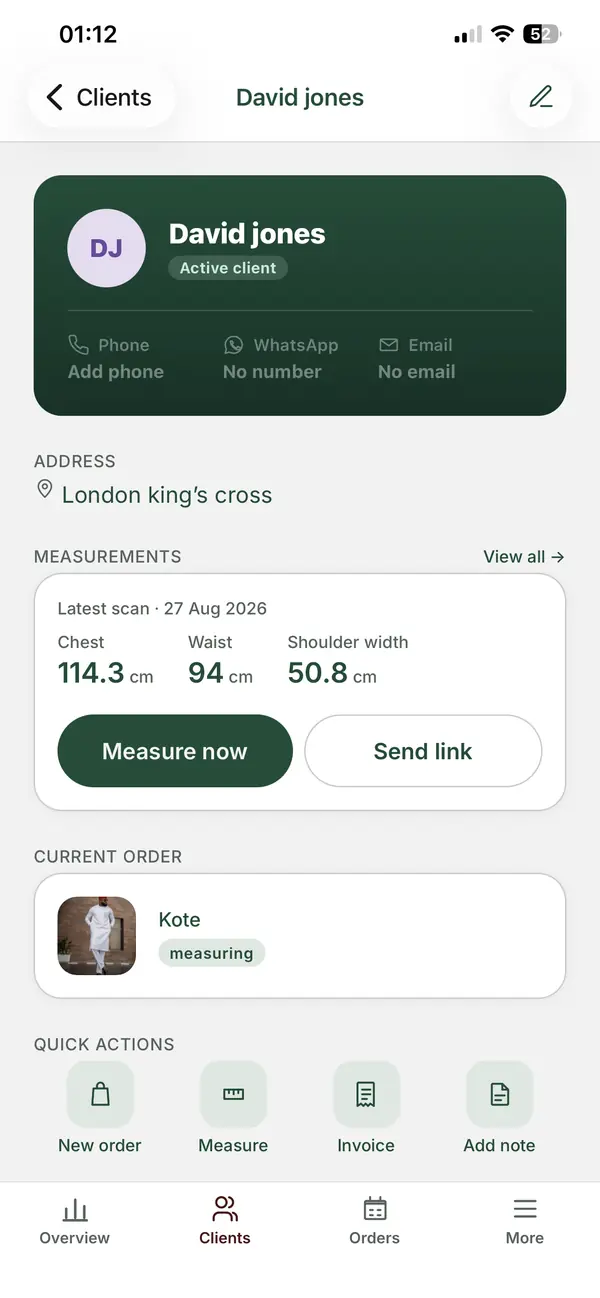
It stores client records and measurements, tracks orders on a delivery calendar and creates invoices. It does not replace your judgment on capacity.
Try ZeDaq.ai free
Virtual try-on and Find my size for your store, plus client, order and invoicing tools for tailors, in one subscription.