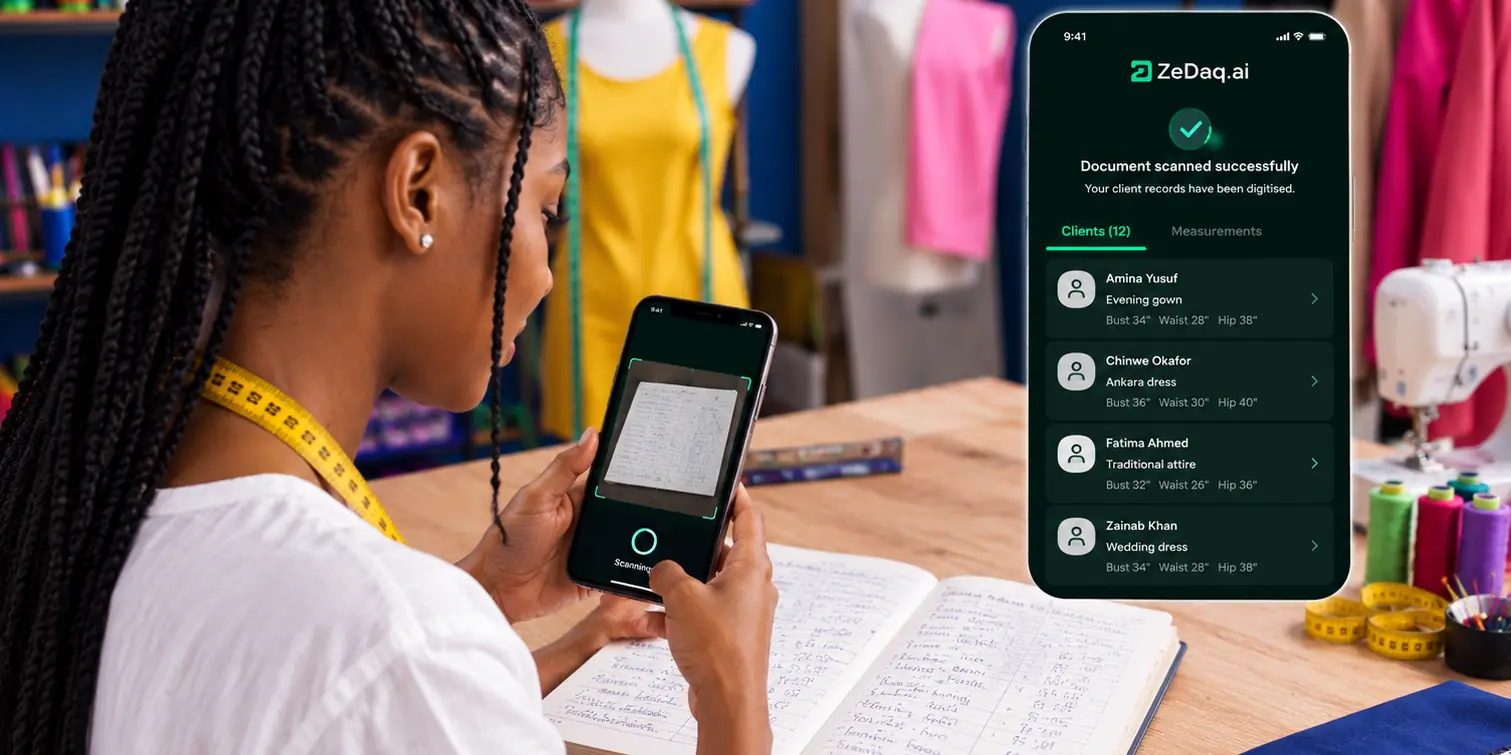
Festive Season Rush: Planning for December and Eid
By the ZeDaq.ai team · · 4 min read
On this page
To survive the festive season tailoring rush, set a last-order date, cap the number of orders to what your team can actually sew, and collect every client's measurements early. Then give each client a clear delivery date and stick to it.
Christmas and Eid both bring a wave of "I need it by" orders. This guide gives you a plan you can start this week. If you run the shop day to day, pair it with a production plan for a small tailoring shop, and see the ZeDaq.ai tools for tailors for managing clients, orders and invoices in one place.
Why does the festive rush hurt tailors so much?
Orders arrive late, all at once, and with fixed deadlines. A client who wants an outfit for a family gathering cannot accept "next week".
The usual problems are:
- Too many orders accepted with no limit.
- Measurements chased by message on the days you should be sewing.
- Promised dates that nobody wrote down.
- Payments and balances lost in chat threads.
None of these are sewing problems. They are planning problems, and you can fix them before the rush starts.
How do you work out how many orders you can take?
Count your capacity honestly, then stop selling when it is full. Use this simple method.
- List your outfit types, such as a shirt, a dress, a two-piece or a full suit.
- Write down how many working hours each one takes you or your team, including fitting and finishing.
- Add up the hours you and your staff can really work between now and your last-order date.
- Divide the available hours by the hours per outfit. That is your order cap.
- Subtract a buffer for alterations and rework. Leave some room for surprises.
Here is a worked example with made-up numbers, not a benchmark: if you have 200 working hours and an average outfit takes 10 hours, you can take about 20 outfits, so book fewer, say 17, to leave a buffer.
Rank your outfits by effort. A simple top counts for less than a lined, beaded gown, so don't count every order as equal.
What should your last-order date and deadlines be?
Set three dates and publish them:
- Last date to place an order. After this, you only accept a waitlist.
- Last date for measurements and fabric. Work cannot start without these.
- Delivery or pickup window. Give a day range, not "soon".
Work backward from the day the client needs the outfit. Leave a gap for one fitting and one fix. If Eid or a holiday date moves, check the date with an official calendar for your country and update your own dates.
Post the dates on your profile, in your order confirmation and in your replies. A visible deadline stops most last-minute pressure.
How do you collect measurements before the rush?
Ask for measurements as soon as the client pays a deposit. Waiting until sewing day is how shops fall behind.
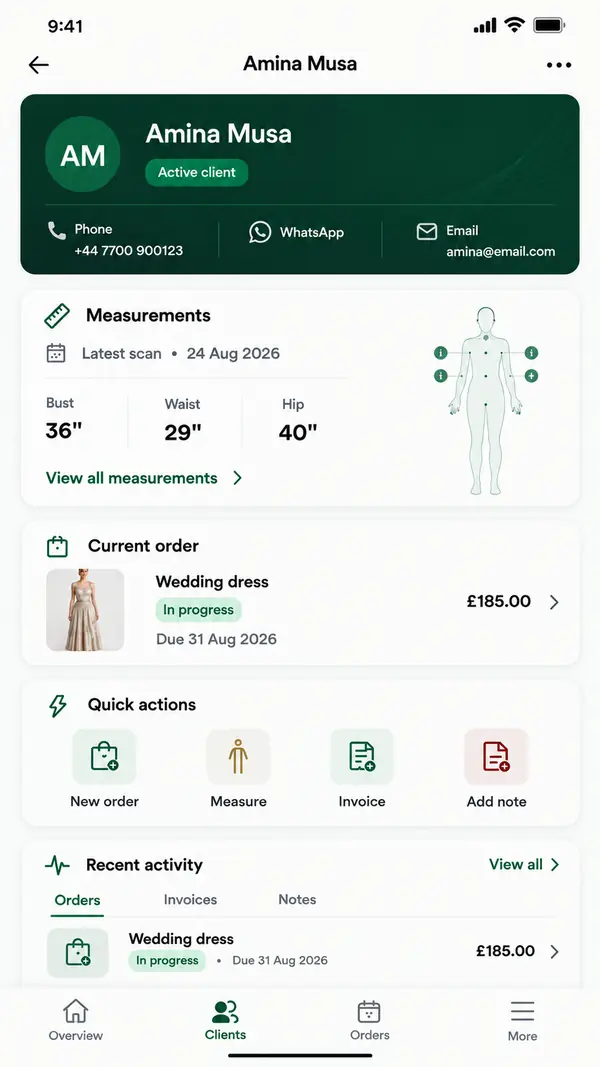
With ZeDaq.ai, you send the client a link they open on their phone, and their measurements go into their record. Our guide to getting accurate measurements from clients at home covers how to help them get it right.
Returning clients are your easiest wins. Their measurements are already saved, so you can confirm them and move on. Ask whether anything has changed since the last order.
Weddings often overlap with the festive period, so also read our guide to wedding season planning for tailors.
How do you manage payments and delivery during the rush?
Take a deposit before you cut any fabric, and write the balance and due date on the order. Use one place for orders and a delivery calendar so you can see which days are overloaded.
ZeDaq.ai includes orders, a delivery calendar and invoicing in multiple currencies, including NGN, GBP and USD, which helps if you have clients abroad. The ZeDaq Business mobile app for iOS and Android keeps this on your phone.
Many tailors run the rush through chat apps. That can work, but see our comparison of ZeDaq.ai and WhatsApp Business for tailoring to decide where chat stops helping.
What should you do when you are already behind?
Triage. Don't try to rescue every order the same way.
- Sort orders by promised date and by how much work is left.
- Contact clients at risk before they contact you, and offer a new date or a simpler finish.
- Pause new orders until you are back on schedule.
- Move simple tasks, such as hemming or buttons, to a helper.
Honest early messages protect your reputation better than a silent missed date.
Keep every festive order, measurement and delivery date in one place
FAQs
When should a tailor stop taking festive orders?
Stop when your order cap is full or your last-order date passes, whichever comes first. Keep a waitlist for cancellations.
Should I charge extra for rush orders?
Many tailors do, because rush work displaces other jobs. Decide the rule in advance, state it before the client pays, and apply it the same way to everyone.
How do I keep clients from asking for updates all day?
Send a status message at fixed points, such as "cutting started" and "ready for fitting". Clients ask less when they already know what comes next.
Can ZeDaq.ai help during the rush?
It gives you a client record, measurements through a phone link, orders with a delivery calendar and invoices. It does not sew for you, but it keeps the information organized.
Try ZeDaq.ai free
Virtual try-on and Find my size for your store, plus client, order and invoicing tools for tailors, in one subscription.

