Try Before You Buy for Fashion Stores: Is It Worth Offering?
By the ZeDaq.ai team · · 6 min read
On this page
- What is try before you buy?
- What are the main ways to run it?
- What does try before you buy cost you?
- When does it make sense?
- When should you avoid it?
- Does it change how shoppers behave?
- What can you do instead?
- What should a try-before-you-buy policy say?
- How does it affect your cash flow?
- How do you decide? A short checklist
- How do you pilot it safely?
Try before you buy is worth offering only if your margins, stock and operations can absorb shoppers sending items back. For most small fashion stores, it is a poor first step. Cheaper tools such as accurate size guidance, virtual try-on and alterations tackle the same worry with less risk.
This guide explains how try before you buy works, what it costs you in effort, and how to decide. It sits alongside our work on AI size recommendation for fashion stores, which is the lighter route to the same goal.
What is try before you buy?
With try before you buy (TBYB), the shopper receives items first and pays only for what they keep. Some stores take payment up front and refund quickly. Others delay the charge until the trial ends.
The goal is to remove the fear of ordering the wrong size or style. The shopper tries things on at home, which is the experience they would have in a physical shop.
What are the main ways to run it?
There are three common models:
- Deferred payment. The shopper is charged only after a trial period, for the items they keep.
- Pay now, refund fast. The shopper pays up front and gets a quick refund for items they send back. This is basically a generous returns policy.
- Home try-on box. The store ships a selection, and the shopper returns what they do not want.
The third model overlaps with the topics in home try-on programs versus virtual try-on.
What does try before you buy cost you?
The cost is mostly work and cash flow, not software. Think through each item:
- Outbound and return shipping for every parcel.
- Inspecting and restocking each returned piece.
- Tied-up stock. Items in transit cannot be sold to someone else.
- Payment handling. Deferred charges need a payment setup that supports them.
- Damaged or missing items. You need clear rules and a way to enforce them.
- Customer service. More parcels mean more questions.
If you sell made-to-order or limited pieces, these costs can be harder to absorb.
When does it make sense?
TBYB tends to suit stores that match most of these conditions:
- Your products are standard sizes you can restock easily.
- Your average order value is high enough to cover double shipping.
- Shoppers regularly say they are unsure about fit.
- You can inspect and repack items quickly.
- You have enough stock that holding some in transit does not cost you sales.
When should you avoid it?
Skip it, or delay it, if any of these are true:
- You sell custom, made-to-order or seasonal one-off pieces.
- Your margins are thin after shipping.
- You are a small team without a returns process.
- Your main problem is fit, which better sizing could solve first.
Does it change how shoppers behave?
It can. Shoppers who hold several items at home may keep one and return the rest, which is the pattern behind bracketing. The guide to why shoppers order two sizes explains it. Watch your own data for this before you expand a program.
What can you do instead?
If fit is the worry, tackle it before you ship anything. These options cost less than a full TBYB program:
- Better size guidance. A size chart written for your own garments helps. The guide to generic size charts versus brand-specific ones explains why.
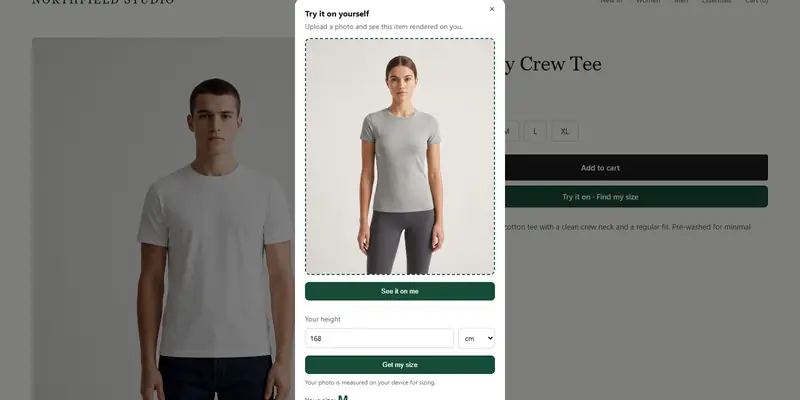
- Size recommendation. ZeDaq.ai gives a size suggestion from a 30-second body scan: one photo plus height, matched to your own size chart.
- Virtual try-on. The shopper uploads one photo and sees your real garment on their body.
- Alterations. Offer a fix instead of a return. The retailer's guide to offering alterations instead of returns shows how.
ZeDaq.ai has a Free plan at $0, with 3 try-ons and 3 measurements a month. Paid plans start at Micro for $14 a month, and each paid plan has a 3-day free trial with no card required. You can test the effect on your own shoppers before you commit to anything bigger.
What should a try-before-you-buy policy say?
If you decide to offer it, put the rules in writing before the first order. A clear policy protects you and the shopper.
- Trial window. How long the shopper can keep items before deciding.
- Condition. Items must be unworn, with tags attached and no marks or odors.
- Return method. Who pays for return shipping, and how to send it.
- Charges. When the shopper is charged for kept items, and what happens to items not returned.
- Limits. How many items per order, and whether sale or custom pieces are excluded.
- Contact. Who to ask when something goes wrong.
Link the policy from the product page and at checkout, so nobody finds out the rules after the parcel arrives.
How does it affect your cash flow?
TBYB delays or reverses income. Stock leaves your shelf, but the money may not arrive until the trial ends. If you pay suppliers or tailors before you get paid, that gap matters.
Work out your worst case: a large batch of parcels out at once, all returned. If that would strain you, keep the program small.
How do you decide? A short checklist
Answer yes or no to each question:
- Do shoppers tell you they hesitate over size or style?
- Have you already improved your size chart and fit notes?
- Can you process returned parcels within a few days?
- Does your margin survive both shipping legs?
- Can your payment setup handle deferred or refunded charges?
If you answered no to the second question, fix that first. If you answered no to the third or fourth, TBYB would likely cost more than it earns. If every answer is yes, run a small pilot with one product line.
How do you pilot it safely?
Start with a small test:
- Pick one category with standard sizes.
- Limit the number of items per order.
- Write a clear policy on timing, condition and fees.
- Track outcomes in your own data: orders, returns and customer comments.
- Review after a set period and decide whether to expand.
Developers who want to build a custom flow, such as a size check before checkout, can look at the virtual try-on API for ecommerce developers.
Reduce the guesswork before you ship
FAQs
Is try before you buy the same as free returns?
Not exactly. Free returns let a shopper pay first and send items back. TBYB lets them hold the items and pay only for what they keep.
Can a small fashion store offer try before you buy?
It can, but the work falls on a small team: shipping, inspecting and restocking. Test with one product line first.
Does virtual try-on replace try before you buy?
They solve the same worry in different ways. Try-on shows how a garment looks on the shopper's body, and no parcel is shipped.
How do I stop abuse of a TBYB policy?
Set clear rules on condition and timing, and require items to be returned unworn. Review repeated cases individually.
Try ZeDaq.ai free
Virtual try-on and Find my size for your store, plus client, order and invoicing tools for tailors, in one subscription.