Bracketing: Why Shoppers Order Two Sizes and What Stores Can Do
By the ZeDaq.ai team · · 5 min read
On this page
Bracketing is when shoppers order the same item in two or more sizes, keep the one that fits and send the rest back. Stores can reduce it by making size information easier to trust: clearer charts, fit notes, a size recommendation on the product page and a returns policy that doesn't reward ordering extras.
Bracketing is a fit-confidence problem more than a returns problem. That is why tools for AI size recommendation in fashion stores focus on the moment before the shopper picks a size.
Why do shoppers order two sizes?
Shoppers bracket because guessing wrong costs them time, and ordering two sizes feels safer. The usual triggers are:
- Sizes vary between brands. A medium in one store is a small in another.
- The size chart is hard to use. It needs a tape measure, or it lists garment measurements the shopper doesn't understand.
- Mixed cuts in one store. A slim shirt and a relaxed shirt share the same labels.
- Free returns. If sending one back costs nothing, ordering two is the easy choice.
- High-stakes purchases. Shoppers ordering an outfit for an event want a backup.
None of these mean the shopper is doing something wrong. They are reacting to uncertainty the store can often reduce.
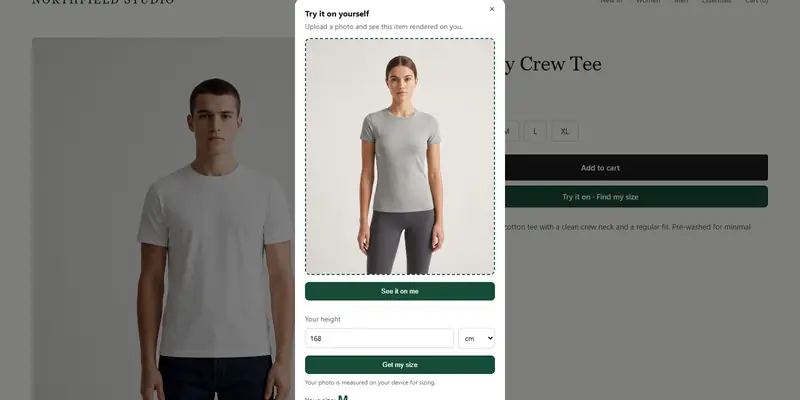
See how a size suggestion looks to a shopper
Try it on yourself
Live renderUpload a photo, pick a piece, see it rendered on you.
Pick something to try on
What does bracketing cost a store?
Every bracketed order creates at least one return. That means return shipping, staff time to inspect and restock, and stock tied up while it travels.
It also hides demand. While the extra size is in transit, another shopper may see it as sold out. Fast-moving sizes are hit hardest.
Bracketing can also distort your data. Sales of each size look higher than real demand, which can lead to over-ordering the wrong sizes next season.
How can you tell if shoppers are bracketing?
You can spot bracketing in your own order data. Use this checklist once a month:
- Search orders for the same product in two sizes. Most store platforms let you export orders to a spreadsheet and sort by product.
- Match those orders to returns. If one size almost always comes back, that is bracketing.
- Note which products repeat. Bracketing usually clusters on a few items, not the whole catalog.
- Check the return reason. "Ordered more than one size" or "too big" on the larger size points the same way.
- Read customer messages. "Which size should I get?" on a product is an early warning.
Worked example
Say you export last month's orders and find a linen dress ordered in two sizes several times. In almost every case, the larger size was kept. That pattern suggests the dress runs small against your chart. Fix the chart or add a fit note saying "runs small, size up," and check the same report next month.
When a spike like this hits a single product, our guide to fixing a size chart after a spike in returns walks through the correction step by step.
What can stores do to reduce bracketing?
Work from the product page outward. Fixes before the order are usually cheaper than fixes after it.
Make the size chart easier to trust
- List body measurements, not flat garment widths.
- Make each size range meet the next, so no shopper falls into a gap.
- Show both inches and centimeters.
- Put the chart link right next to the size selector.
A clear guide is the base for everything else. Our article on writing size guides that work covers wording and layout.
Add fit notes to every product
One line does a lot: "Runs small, size up," "Relaxed fit, true to size," or "Model is 5'9" and wears an S." This gives shoppers a reason to choose one size.
Offer a size recommendation
A recommendation answers the question directly. ZeDaq.ai's "Find my size" uses a 30-second scan from one photo plus height. It matches the shopper's measurements to your own size chart and returns one label. When the shopper is between sizes, it sizes up to the largest relevant measurement, so they get one clear answer instead of two options.
Show the garment on the shopper
Some bracketing is about look, not fit. Shoppers order two sizes to see which one hangs better. Virtual try-on lets them see the real garment on their own photo before ordering.
Offer alterations as an option
For tailored items, a small alteration can replace a return. See our guide to offering alterations instead of returns for how retailers set this up.
Should you change your returns policy to stop bracketing?
Policy changes work best after you've fixed the information problem. If shoppers still can't tell which size to pick, a stricter policy may lose sales rather than stop bracketing.
Options stores use include:
- Clear wording. Explain that the size tool is there so shoppers can order once.
- Exchanges first. Make swapping a size quick and free, so a single order feels safe.
- Limits on repeat bracketers. Some stores review accounts that bracket very often, but use this carefully and say so in your policy.
Be careful with return fees. They can reduce bracketing, but they also put off first-time shoppers.
How do you know if your changes are working?
Run the same monthly report from the checklist above. Track three things for the products you changed:
- How many orders contain two sizes of the same item.
- How many returns give fit as the reason.
- How many "which size?" messages you receive.
Compare month to month on the same products. If all three fall, your fixes are working. If not, look again at the chart and the fit notes for those items.
ZeDaq.ai's Free plan includes 3 try-ons and 3 measurements a month for testing. Paid plans start with Micro at $14 a month, and every paid plan has a 3-day free trial with no card required.
Give shoppers one size to order
FAQs
Is bracketing the same as wardrobing?
No. Bracketing is ordering several sizes to find one that fits. Wardrobing is wearing an item and then returning it.
Should I block shoppers who bracket?
Usually not at first. Most bracketing comes from size uncertainty, so fix the information first and only review extreme cases.
Does free shipping on returns cause bracketing?
It makes bracketing easier, but uncertainty about size is usually the root cause. Fix sizing before changing return terms.
Which products get bracketed most?
Items where fit is hard to judge, such as jeans, dresses and tailored pieces. Your own order export will show which ones.
Try ZeDaq.ai free
Virtual try-on and Find my size for your store, plus client, order and invoicing tools for tailors, in one subscription.