
Tax for Tailors in Nigeria: The Basics
By the ZeDaq.ai team · · 4 min read
On this page
Tax for tailors in Nigeria starts with three steps: register your business, get a Tax Identification Number (TIN) and keep clear records of what you earn and spend. Which taxes you owe, and how much, depends on how your business is set up, so confirm the details with the tax authority.
This guide gives a general starting point for tailors and fashion designers. It does not give tax rates, because rates and rules change and we could not confirm current figures from official pages for this article. This is general information, not legal or tax advice. If you manage clients and orders in one place, the ZeDaq.ai tailor tools can keep your order and invoice records tidy.
Which authorities should you know?
Start with the official sources. They are the only ones to rely on for rules and rates.
- Nigeria Revenue Service (NRS). The federal tax authority's website is nrs.gov.ng. Older guidance often refers to the Federal Inland Revenue Service (FIRS), for example on SMEDAN's FIRS page, so you may see both names.
- Corporate Affairs Commission (CAC). It handles business registration at cac.gov.ng.
- SMEDAN. The agency for small and medium businesses publishes registration guidance at smedan.gov.ng.
Ask each authority directly when your case is unclear. A short question to the right office saves costly mistakes.
Do you need to register your tailoring business?
Registering gives your business a legal identity and makes it easier to get a TIN, open a business account and work with larger clients. SMEDAN's page on the Corporate Affairs Commission lists the items needed for a business name registration. These include a business address, a residential address, two name options, the nature of business, a passport photograph, an ID card and a phone number.
Limited companies need more, such as share details and directors' IDs, according to the same page. Check the CAC site for current requirements before you apply.
What is a TIN and why does it matter?
A Tax Identification Number is the number the tax authority uses to identify you or your business. SMEDAN's FIRS page lists a TIN among the documents for registration, together with a CAC certificate, a VAT registration form and a company income tax registration form for companies.
A TIN is also listed as a document for some financing applications, for example in SMEDAN's pages on the Central Bank of Nigeria. In practice, a tailor who wants a bank loan, a government tender or a large corporate client may be asked for one.
For the steps to get a TIN, use the official NRS site, since the process may change.
Which taxes might apply to a tailoring business?
Do not assume. Ask the authority which of these apply to you, based on your structure and income:
- Income tax, either on you as an individual or on your company.
- Value added tax (VAT), which depends on your registration and what you sell.
- Withholding tax, which can apply when a business pays you for a service.
- State and local charges, which are set by authorities outside the federal one.
The SMEDAN page for the Nigerian Export Promotion Council mentions tax clearance, company income tax, VAT and withholding tax among documents exporters need. See that SMEDAN page if you plan to export outfits.
For each tax, write down who collects it, how often you file and the deadline.
What records should a tailor keep?
Good records make any tax question easier to answer. Keep these in one place, on paper or in an app:
- Every order, with client name, date and the agreed price.
- Every payment received, including deposits, with date and method.
- Every invoice you issue, with a number.
- Every business expense, such as fabric, thread, rent, electricity and transport.
- Receipts or photos of receipts for those expenses.
Separate business money from personal money. A separate account makes the records much cleaner.
How can software help with tailor tax records?
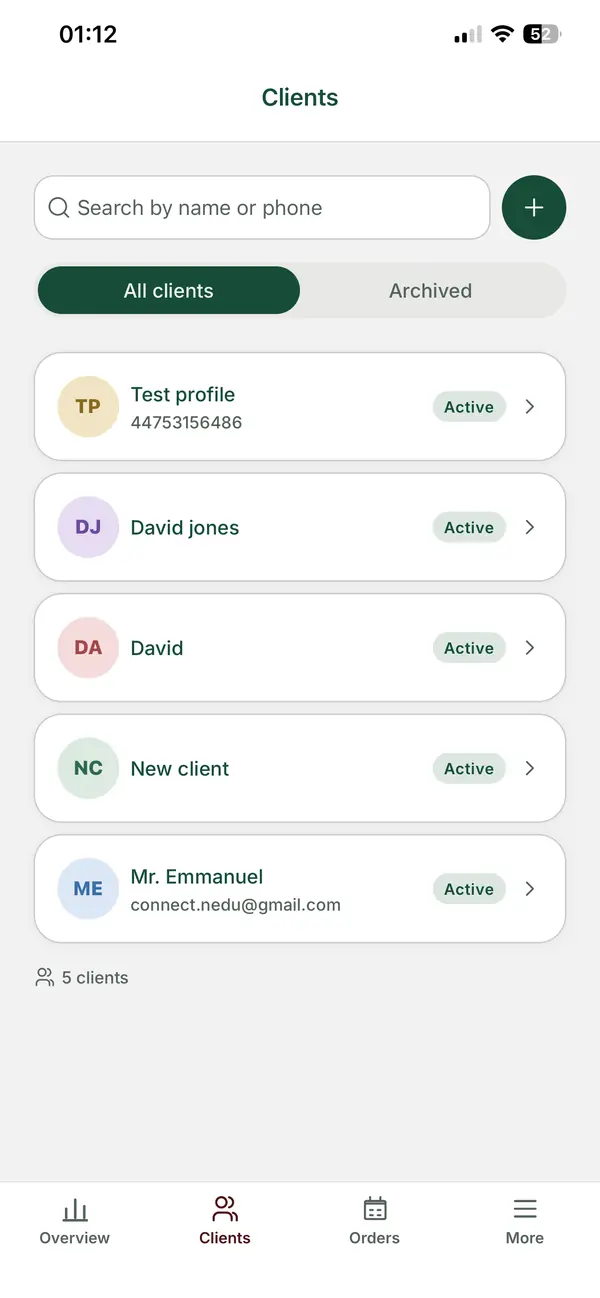
ZeDaq.ai's tailor tools include a client CRM, orders and a delivery calendar, and invoicing in multiple currencies, including NGN, GBP and USD. Invoices and payment records in one place help when you need to show your income. The tools do not file taxes or calculate what you owe.
If you work with groups, such as aso ebi parties, clean records matter more. See how wedding and aso ebi tailors manage group orders. To think about pricing before tax, read how much tailors charge in Nigeria. Seasonal peaks also change your income, so see seasonal pricing for tailors.
Keep orders and invoices in one place
FAQs
Do I have to register my tailoring business?
Rules depend on your situation, so check with CAC and the tax authority. Registration is useful even where it is optional, because it helps you get a TIN and work with larger clients.
Where do I get a TIN?
Use the official site of the tax authority, nrs.gov.ng. Avoid agents who ask for large fees before you have checked the official process.
Does invoicing software file my tax?
No. Invoicing software keeps your records. You still need to file with the tax authority or through an adviser.
Should I hire an accountant?
If your business is growing, or you are unsure about VAT or withholding tax, a qualified accountant is a sensible step. This article is not legal or tax advice.
Try ZeDaq.ai free
Virtual try-on and Find my size for your store, plus client, order and invoicing tools for tailors, in one subscription.

