Tailoring KPIs: Numbers Worth Tracking
By the ZeDaq.ai team · · 4 min read
On this page
The tailoring KPIs worth tracking are orders per week, average order value, on-time delivery, unpaid balances and repeat clients. A KPI (key performance indicator) is just a number you check regularly to see whether your business is healthy. Five or six is enough.
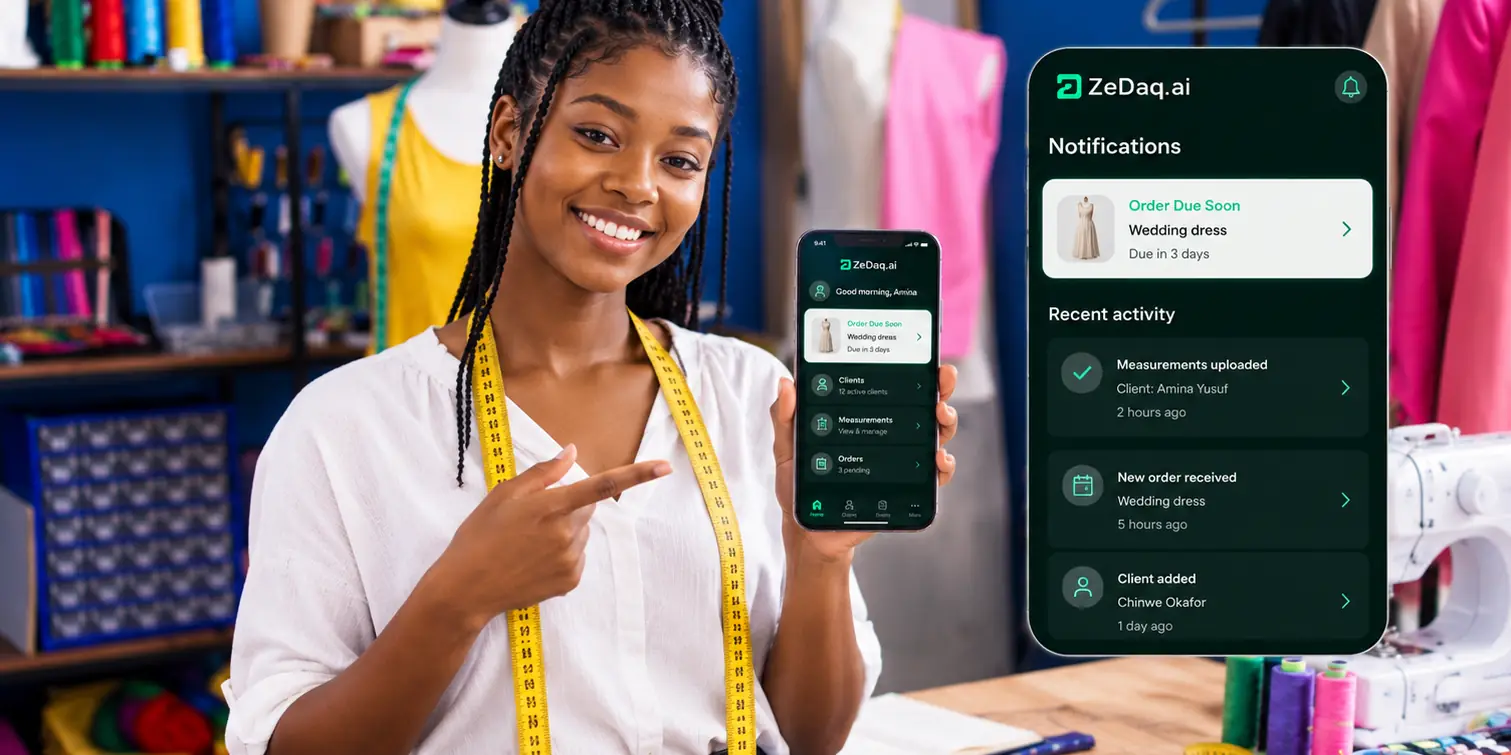
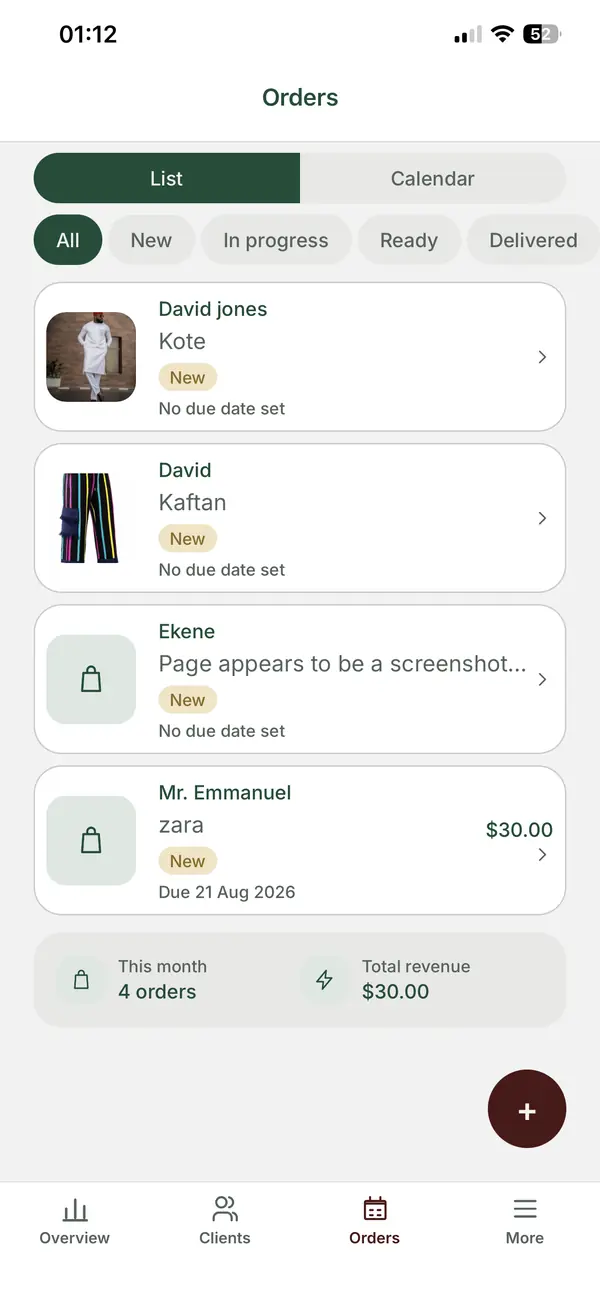
This guide is for tailors and designers who keep records in notebooks, chats or spreadsheets. If you want orders, clients and invoices in one place, ZeDaq.ai's tools for tailors include a client CRM, orders with a delivery calendar and invoicing.
Why track numbers at all?
Numbers show problems before they get expensive. A busy shop can still lose money if deposits are small, deliveries run late or clients never pay the balance.
You do not need software to start. A weekly ten-minute check of a few figures is enough to spot trends.
Which tailoring KPIs should you track?
Orders per week
Count new orders taken each week. This tells you whether demand is rising or falling and helps you plan fabric and staff time. Note busy seasons such as weddings and holidays, so a quiet week is not a surprise.
Average order value
Add up the value of orders in a period and divide by the number of orders. For example, if you took four orders worth $200, $120, $80 and $100, the total is $500 and the average is $125.
If the average is falling, check whether you are taking more small alterations or discounting more.
On-time delivery
Count orders delivered by the promised date, then divide by all orders delivered. Late delivery is a common reason clients leave bad reviews or ask for refunds.
If many orders are late, you may be promising dates too soon. Using a delivery calendar helps you see when you are overbooked.
Unpaid balances
Add up all money clients still owe you. Also note how many days overdue each balance is. A growing unpaid total is a warning even when new orders look healthy.
Clear deposit rules help here. See the guide to setting deposit rules clients accept.
Repeat client rate
Count how many orders come from clients you have served before. Repeat clients cost less to win than new ones and often refer friends. A simple tally is enough.
Remakes and alterations
Count how many garments need fixing after delivery. Frequent fixes point to a measuring or communication problem. Accurate numbers at the start prevent most of them, as the guide to measurement capture tips for clients at home explains.
What does a worked example look like?
Say a shop took six orders in a week, delivered five on time and one two days late. On-time delivery is five out of six. Balances owed at the end of the week were $180 across three clients, and two of the six orders came from repeat clients.
Read together, those numbers say demand is steady, one delivery slipped and a third of orders came from returning clients. The unpaid $180 is the number to act on first: send reminders that day. That is far more useful than a feeling that "the week went fine."
How do you record these numbers simply?
- Give every order a record with the client name, date taken, promised date, price and deposit.
- Mark the delivery date and payment status when the order finishes.
- Once a week, total each KPI from those records.
- Write the results in one table and compare with last week.
A basic weekly table looks like this:
| Week | New orders | Average order value | Delivered on time | Balance owed |
|---|---|---|---|---|
| Week 1 | Your count | Your figure | Your count | Your figure |
| Week 2 | Your count | Your figure | Your count | Your figure |
Should you keep your units consistent?
Yes. If some measurements are in inches and others in centimeters, comparisons and remakes get messy. The guide on choosing inches or centimeters for your shop helps you pick one.
Which numbers are tempting but less useful?
Some figures look impressive without guiding decisions. Social media follower counts and total sales alone say little about profit. Revenue can rise while costs and unpaid balances rise faster.
If you track costs, add fabric spend and labor time per garment. Then you can see which kinds of orders actually pay. Keep that analysis separate from your weekly check so the weekly check stays quick.
What should you do with the numbers?
Pick one KPI to improve each month. If balances are growing, tighten your deposit terms. If deliveries run late, add buffer days. If the average order is low, offer fitted add-ons.
When you grow and hire help, shared records matter more. The guide to training apprentices in a tailoring shop covers passing on good habits.
Keep orders, deposits and deliveries in one place
FAQs
How many KPIs should a small tailoring shop track?
Start with four or five. Orders per week, average order value, on-time delivery and unpaid balances cover most needs.
Do I need software to track KPIs?
No. A notebook or spreadsheet works. Software saves time once you have many orders and want figures calculated for you.
How often should I check my numbers?
Weekly for orders and balances, and monthly for trends such as repeat clients and average order value.
What is a good average order value?
It depends on your market and garment types. Compare your own figure month to month rather than against other shops.
Try ZeDaq.ai free
Virtual try-on and Find my size for your store, plus client, order and invoicing tools for tailors, in one subscription.

