Showing Wholesale Buyers Your Line on Real Bodies
By the ZeDaq.ai team · · 4 min read
On this page
- What do wholesale buyers need to see?
- What should your line sheet include?
- Where can virtual try-on help?
- How should you present different bodies?
- How do you handle sizing for wholesale?
- What does a buyer-ready fit pack contain?
- What does it cost to try?
- How do you follow up after the buyer meeting?
- What should you avoid?
To show wholesale buyers your line on real bodies, add photos of the garments on people of different sizes to your line sheet, state each model's height and size, and give buyers a way to see fit on their own customers. Virtual try-on can support this, but it is not a purpose-built wholesale tool.
This guide is for fashion brands that sell to retailers. It builds on virtual fitting rooms for clothing websites and looks at the buyer's side of the problem.
What do wholesale buyers need to see?
A buyer is deciding whether your pieces will sell to their customers. They look for fit, quality and range.
Flat lays and one sample-size model rarely answer those questions. Buyers want to know how a style looks across sizes and how it falls on a body.
What should your line sheet include?
Add details that help a buyer judge fit without a sample in hand.
- Model details. Height and the size worn for every photo.
- Size range. The sizes you produce, with a size chart in body measurements.
- Fit notes. Relaxed, true to size or fitted, plus any length details.
- Fabric notes. Stretch, drape and weight.
- More than one body. Show the same style on at least two different people if you can.
Link the size chart to your store's size guide. Our guide on writing size guides that reduce returns explains how to build one.
Where can virtual try-on help?
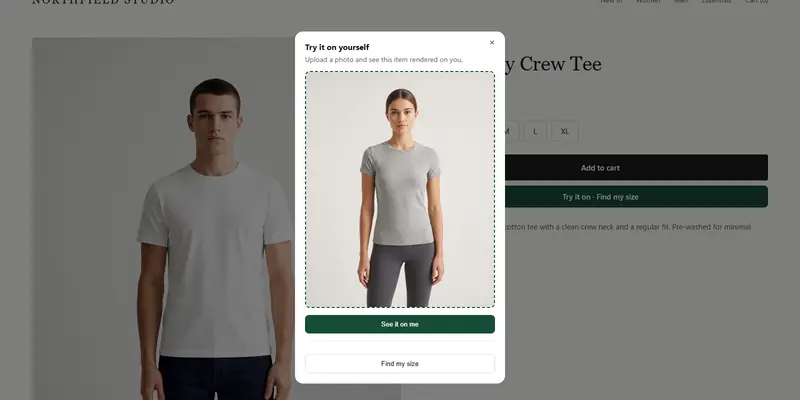
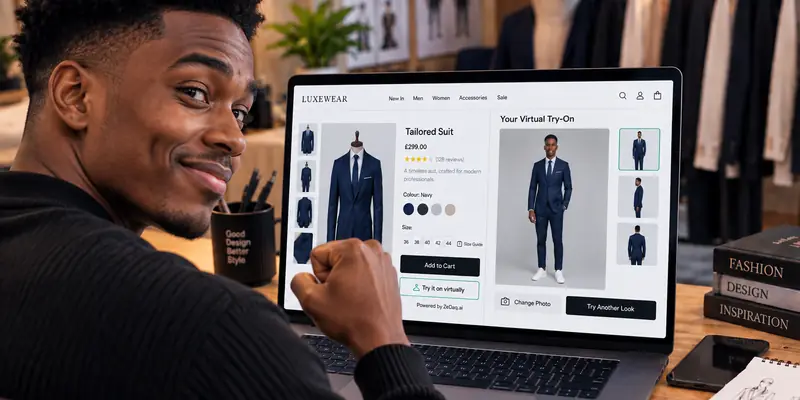
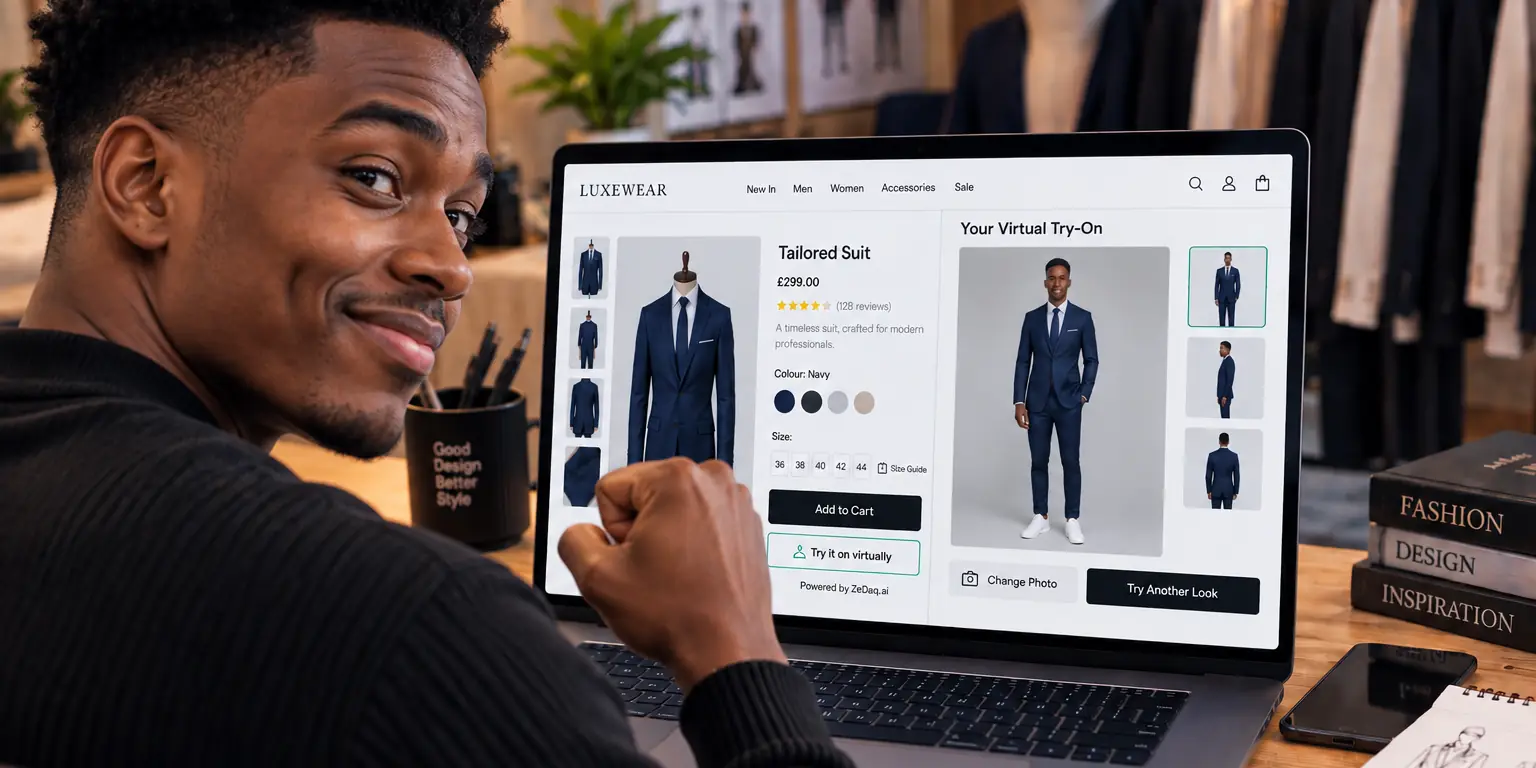
ZeDaq.ai lets a person upload one photo and see your real garment on their body. Brands can use that in a few ways.
- On your own retail site, where the buyer can test pieces.
- In a preview session, where you run a try-on with photos from willing team members or models and share the images.
- For the buyer's team, who can try styles on themselves to judge the fit.
Try one garment on yourself
Try it on yourself
Live renderUpload a photo, pick a piece, see it rendered on you.
Pick something to try on
This is a use of the existing try-on, not a feature made for wholesale. It gives a rough visual, not a fabric or fit guarantee. Only use photos of people who agree to it.
How should you present different bodies?
Show real range, not just the sample size. Buyers know their customers vary, and so should your imagery.
Related work on this is in showing gender-neutral fashion on different bodies. For outerwear, the length and volume can look different across heights, which is covered in virtual try-on for jackets and coats.
How do you handle sizing for wholesale?
Buyers order in size runs, so they need to know which sizes sell. Give guidance without making promises you can't support.
- Share your size chart with body measurements.
- Explain how your sizes compare with common UK, US or EU scales.
- Tell buyers which sizes you have sold most, if you have your own data.
If your retail site uses a size recommendation, buyers can see how it works. A shopper uploads one photo, types a height and gets a size from your chart.
What does a buyer-ready fit pack contain?
Think of a fit pack as a short file you send with the line sheet. It answers fit questions before the buyer has to ask.
- Size chart in body measurements, one per garment type.
- Fit photos of each style on at least two bodies, with height and size.
- Fit notes on stretch, length and cut.
- Try-on previews, if you made any, marked as previews.
- A contact line for fit questions.
Keep the pack to a few pages. Buyers see many lines, and a short, clear pack gets read.
What does it cost to try?
The Free plan includes 3 try-ons, 3 measurements and 5 invoices a month, which is enough to test the idea. Paid plans start with Micro at $14 a month, and every paid plan has a 3-day free trial with no card required. Current plans are on the ZeDaq.ai pricing page.
How do you follow up after the buyer meeting?
Send the fit pack within a day, while the line is fresh. Keep the email short and list the styles the buyer showed interest in.
Offer to answer fit questions and say how you handle sizing issues after delivery. Buyers value a brand that explains how it deals with fit problems, because it shows you have thought about their customers.
What should you avoid?
- Do not use someone's photo without clear permission.
- Do not present try-on images as exact fit proof.
- Do not hide the size and height of the models.
- Do not use only one sample size.
Test your garments on a real photo
FAQs
Is ZeDaq.ai a wholesale platform?
No. It is AI virtual try-on and size recommendation for fashion stores. You can use it to create visuals, but it has no wholesale ordering features.
Can buyers see my garments on their own customers?
Only through a store site where your try-on is installed, or through images you create with permission.
Do I need new photos for every buyer?
No. Keep one set of fit photos with model details and update it each season.
What is a line sheet?
A line sheet is a short document that lists your styles with photos, sizes, fabrics and wholesale prices for buyers.
Try ZeDaq.ai free
Virtual try-on and Find my size for your store, plus client, order and invoicing tools for tailors, in one subscription.